
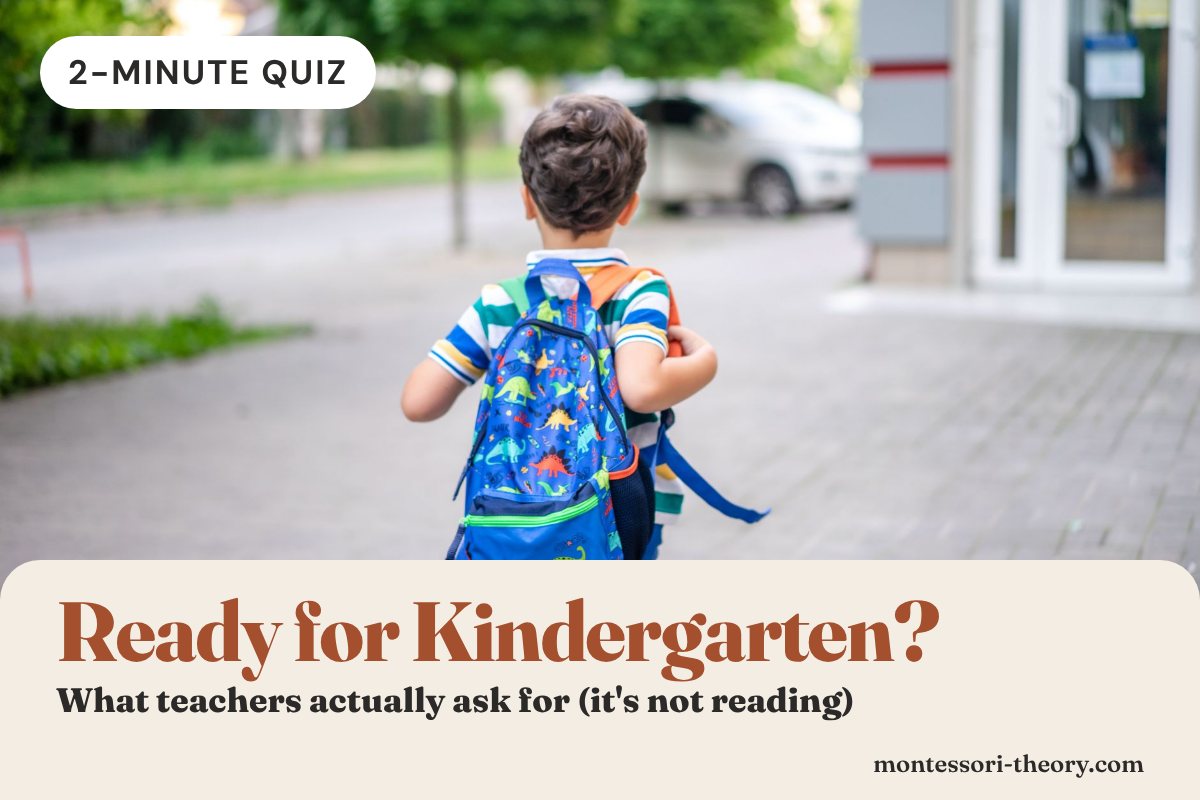
Kindergarten teachers rarely ask for reading. They hope children can use the bathroom alone, manage a coat and a lunchbox, listen to a short instruction, wait a turn and say goodbye. Letters and numbers help, but they come after. Here’s the real list, a 2-minute quiz and a plan if your child isn’t there yet.
For the Montessori version of this year, see Montessori kindergarten.
What kindergarten teachers hope for on day one
- Bathroom. Uses the toilet, wipes, flushes and washes hands, mostly alone.
- Coat, shoes, lunchbox. Can try first, then ask for help.
- Listening. Follows a short instruction given to the whole group.
- Talking. Can say what they need, including “I need help.”
- Waiting. Takes turns, waits briefly, copes with losing a game.
- Goodbye. Can separate from you, even with a few tears.
- Hands. Holds a crayon with fingers, uses child scissors.
The 2-Minute Readiness Quiz
Answer “yes” or “not yet” for each line, thinking of a normal day, not a perfect one. Count your yes answers at the end.
- Uses the toilet and washes hands with little or no help
- Puts on a coat and shoes, even if zippers or laces need help
- Opens their own lunchbox and most containers
- Follows a two-step instruction, like “Put your bag away and sit on the rug”
- Says what they need to an adult who isn’t you
- Pays attention to a story or activity for about 5 to 10 minutes
- Takes turns in a simple game, most of the time
- Holds a crayon between fingers and thumb, not in a fist
- Recognizes their own first name in writing
- Can say goodbye to you and settle within a few minutes
Reading your score. 8 to 10 yes, your child is in a good place. 5 to 7, keep practicing the “not yet” items this year, most children catch up quickly. Fewer than 5, talk to the preschool teacher and your pediatrician, and read the last section below. The quiz is a conversation starter, not a test.
Self-Care Comes First
Ask a kindergarten teacher what makes the first weeks hard, and self-care tops the list. One teacher, twenty children and a bathroom down the hall leave little time for help with every button.
- Bathroom. Practice wiping, flushing and handwashing at home. Dress your child in pants they can pull down and up alone.
- Coat. Teach the Montessori coat flip. Coat on the floor, hood at the feet, arms in, flip over the head.
- Shoes. Velcro or slip-ons for school, laces later.
- Lunchbox. Pack it at home for a week and let your child open every container. Swap anything they can’t open.
Our practical life guide has more self-care jobs by age.
Listening and Talking
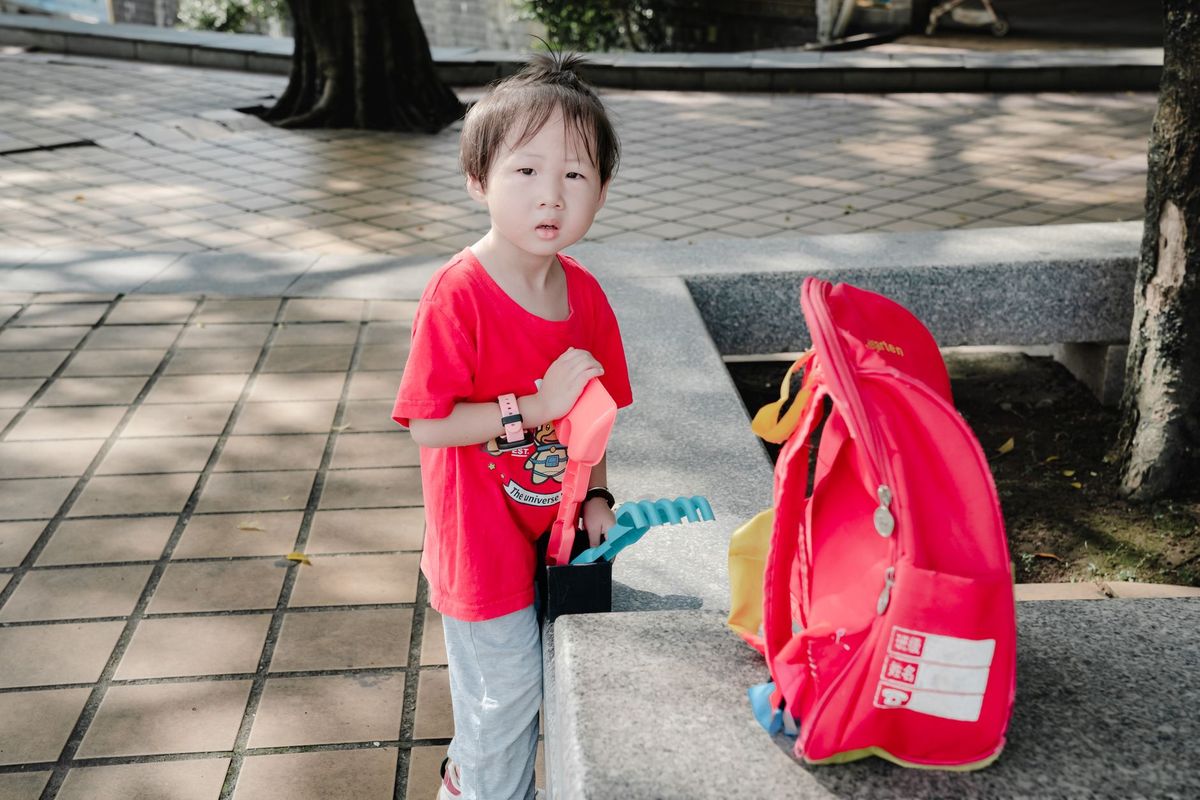
Kindergarten runs on group instructions. Children who can listen to “Put your folder in your cubby and come to the rug” without a personal repeat have an easier day.
Practice at home with two-step requests and games like Simon Says. Just as important is speaking up. Role-play asking a teacher for help, saying “I need the bathroom” and telling an adult when something is wrong. See how to get kids to listen for the home side.
Hands, Crayons and Scissors
By around 4, the CDC milestones include holding a crayon or pencil between fingers and thumb. In kindergarten, children color, cut, glue and start writing.
Build hand strength with real work rather than worksheets. Pouring, spooning, playdough, clothespins, tearing paper, cutting strips with child scissors. Drawing freely counts as writing practice at this age.
Being Part of a Group
- Taking turns. Board games and card games teach waiting and losing. Let your child lose sometimes.
- Sharing an adult. At home, practice “I’ll help you as soon as I finish this.”
- Sitting for a story. Library story time is perfect practice.
- Solving small conflicts. Teach “Stop, I don’t like that” and “Can I have a turn when you’re done?”
Saying Goodbye
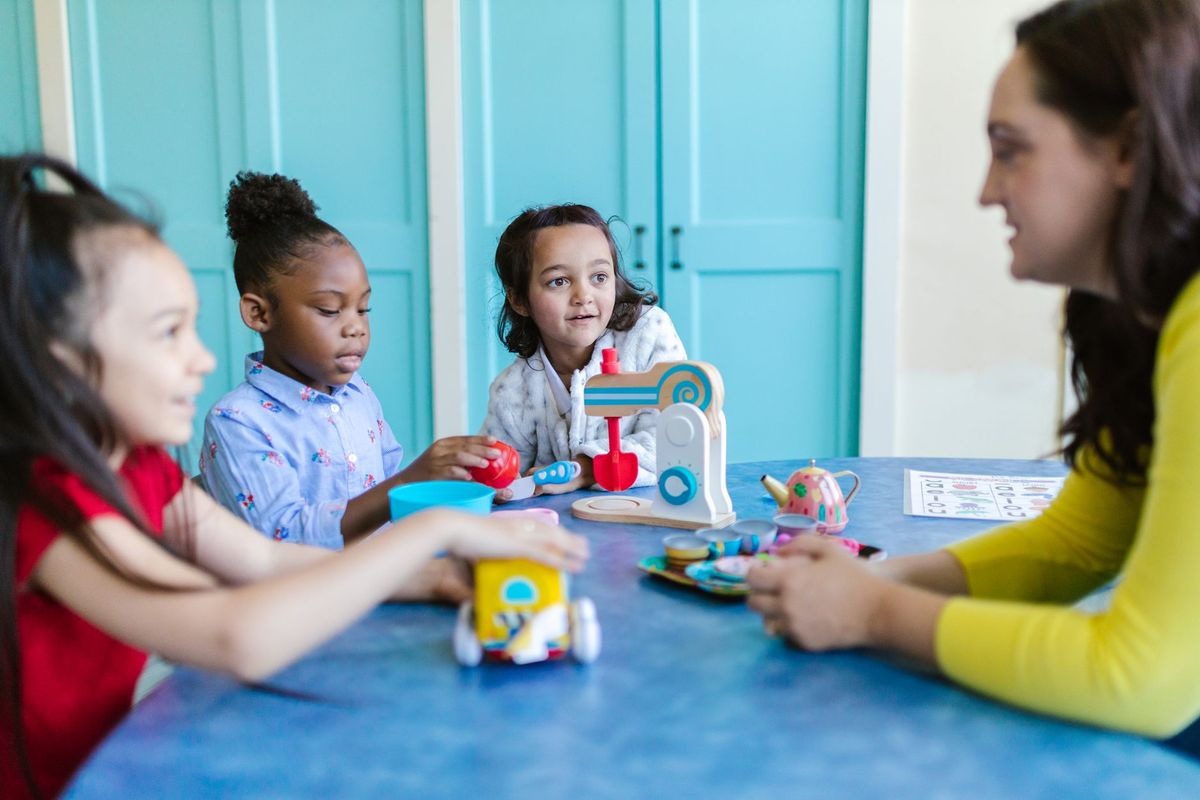
Tears at drop-off are common and usually short. A predictable goodbye helps more than a long one. Same words, a hug, then leave. Don’t sneak out, it makes the next goodbye harder.
You can say, “I’ll pick you up after snack time. Hug, then I go.” Practice short separations before school starts, like a playdate at a friend’s house or an hour with a grandparent.
What About Letters and Numbers?
Kindergarten is where formal reading and math begin, so children don’t need to read beforehand. The CDC’s milestones by age 5 include counting to 10, naming some letters when you point to them and writing some letters of their name. Many children do more, some do less, and both are normal.
Keep it playful. Sound games in the car, counting stairs, finding the first letter of their name on signs. If you want a gentle, hands-on path, see sandpaper letters and the movable alphabet.
If Your Child Isn’t Ready Yet
- Pick two skills. Choose the two “not yet” items that matter most, often bathroom and coat, and practice them daily for a month.
- Talk to the preschool teacher. Ask what they see in the group, not just at home. Children often do more at school.
- Talk to your pediatrician. The 4- and 5-year checkups include development. Bring your list.
- Know that help is allowed. Kindergarten teachers expect some help with zippers and lunch. Readiness isn’t perfection.
The American Academy of Pediatrics notes that social, emotional and behavior skills matter as much as academics, and that kindergarten screening should guide teaching rather than keep children out. If you’re thinking about waiting a year, discuss it with your child’s teacher and pediatrician before deciding.
Normal, Watch, Ask
Normal
- Needing help with zippers, laces or tricky containers
- Not reading yet
- Tears at drop-off for the first weeks
- Some accidents in the first weeks
Watch
- Still rarely uses the toilet alone at 5
- Hard to understand for adults outside the family
- Can’t settle for a short activity in any setting
Questions Parents Ask
What Should a Child Know Before Kindergarten?
Mostly self-care and group skills. Using the bathroom, managing a coat and lunchbox, following short instructions, asking for help and taking turns. Some letters and counting to 10 help too.
Should My Child Read Before Kindergarten?
No. Kindergarten teaches reading. Playing with sounds, sharing books and recognizing their own name are plenty.
How Do I Know If My Child Is Ready for Kindergarten?
Use the quiz above, ask the preschool teacher what they see, and bring any concerns to the 4- or 5-year checkup.
What If My Child Isn’t Ready for Kindergarten?
Pick a few skills to practice, ask the teacher and pediatrician, and remember that schools expect a range. Waiting a year is an option in some situations, best decided with professionals who know your child.
Go Deeper
The Everyday Montessori Preschooler
Book 3 of the Montessori for Real Life series, for ages 3 to 6. It includes a teacher-style readiness list, a three-month practice tracker and a page to share with your child’s teacher. Coming December 8, 2026.
Sources
- American Academy of Pediatrics, HealthyChildren.org, Is Your Preschooler Ready for Kindergarten?
- Centers for Disease Control and Prevention, Learn the Signs. Act Early. Milestones by 4 years and by 5 years.
- American Academy of Pediatrics, HealthyChildren.org, Your Checkup Checklist, 5 Years Old.
- Photos from Pexels (free licence).