
Montessori for Real Life · Book 2 · 18 months to 3 years
The Everyday
Montessori Toddler
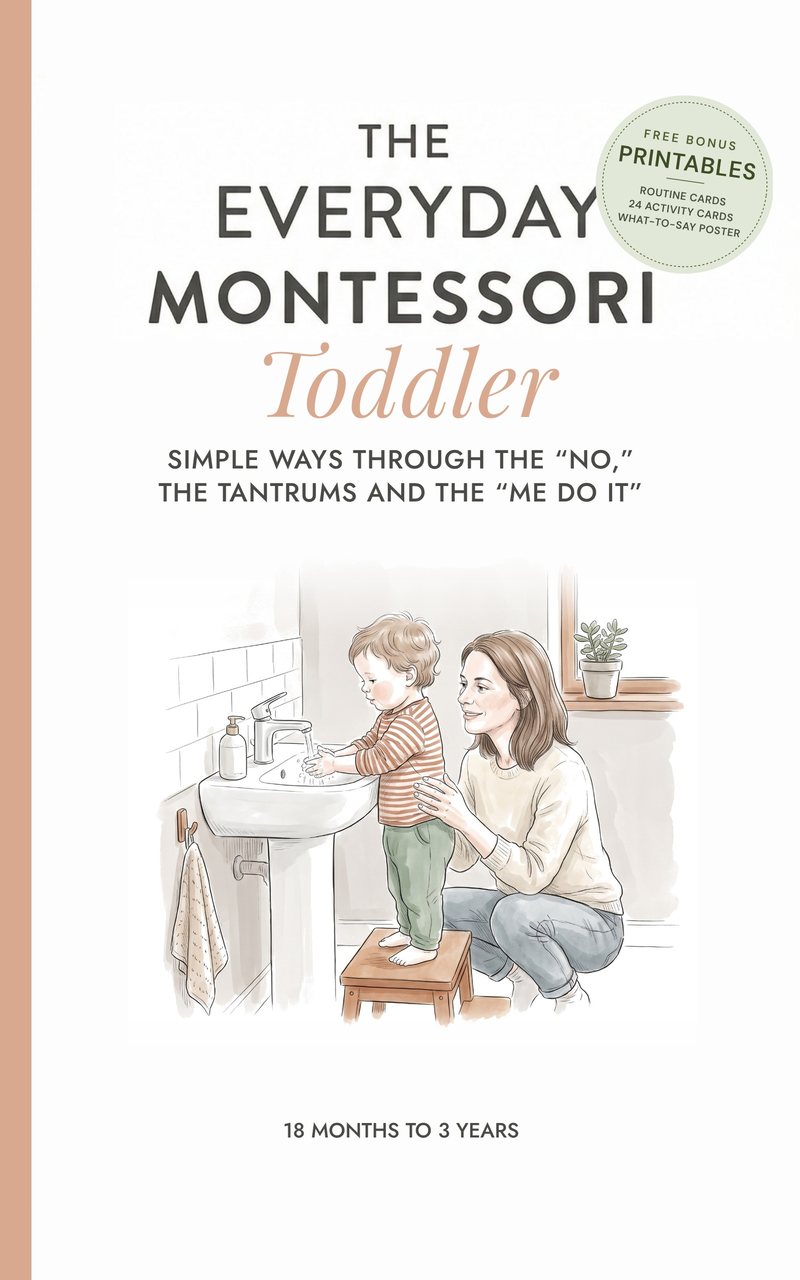
Your toddler isn’t giving you a hard time. They’re having one. Clear, kind ways through the “no,” the tantrums and the “me do it,” in the home you actually live in.
- A step-by-step guide to tantrums, before, during and after
- Limits without punishments or rewards, with the exact words to use
- Dressing, eating and tidying without the daily battle
- 24 activities made with things you already have
Kindle edition out November 17, 2026.
Free sample
Your child isn’t giving you
a hard time.
The introduction and the start of module 1. Read it on this page, or download the PDF to keep on your phone. No email needed.
In this sample
- What your toddler is actually doing when they push back
- The four Montessori ideas that matter most at this age
- What your 18 to 24 month old is working on
- The three milestones of this age, “no,” “me do it” and “again”
12 pages, A5 format, cover included.
Inside the book
One hard moment at a time,
so you start where you are.
Go straight to the module you need today. No need to read from the beginning.
Your Child Isn’t Giving You a Hard Time
What your toddler is actually doing, what Montessori gives you, three things to try today. Plus 7 Montessori myths that keep toddler parents stuck.
The Explosion, “No,” “Me,” “Again” (18 to 24 months)
What your child is working on, the three milestones of this age, a day with a 20-month-old and activities for 18 to 24 months.
All ages
Tantrums, a Practical Guide
What’s happening in their brain, prevention that works, five simple steps during, meltdowns in public, and repair after.
2 to 3 years
Doing It Myself, Dressing, Eating, Tidying
A day with a 2½-year-old, getting dressed, mealtimes, tidying up and activities for everyday independence.
18 months to 3 years
Language, the Explosion and the Frustration
What helps language grow, the milestones to watch and when to talk to your pediatrician.
Reference
The Prepared Home, Room by Room
The principle first, room by room, a starter kit that’s mostly free, and the toy question.
Reference
Limits Without Punishments or Rewards
Four qualities of a Montessori limit, what backfires, what to say instead, limits at each age and holding them when you’re tired.
Reference
Play, the Work of Childhood
Six kinds of play, five classic activities, 24 activities with things you already have, and screens.
Reference
The Real Questions, Straight Answers
Daycare, screens, siblings, biting, grandparents, sleep, the potty, and the questions nobody asks out loud.
From the sample
What your toddler is actually doing
“The behavior looks like the problem. Most of the time, it’s the message.“
What Montessori gives you
“What is your child actually trying to do? Do they need help, or room? More often than you’d think, the answer is room.“
The three milestones of this age
“You didn’t ask whether the coat goes on. You offered a real choice about how. The limit is clear and the independence is real, both at once.“
How the book works
Short, practical,
built for interrupted reading.
Each module follows the same pattern, so you always know where to look.
In every module
What your child is working on, in plain words
What to say, word for word, for the moments that go wrong
Activities with things you already have
“The Hard Questions”, biting, daycare drop-off, the potty, a new sibling
Also in the book
A three-day tantrum tracker and a rotation log
Checklists and a one-page note for grandparents and caregivers
Language milestones and when to ask your pediatrician
Three printables, picture routine cards, 24 activity cards and a what-to-say poster (see them here)
Free sample · Introduction and module 1
Read it here,
no email needed.
What your toddler is really doing when they push back, and the three big milestones of 18 to 24 months, in about 10 minutes of reading.
These pages are taken from The Everyday Montessori Toddler, a practical Montessori guide for parents of children from 18 months to 3 years. Read them here, free, no email needed.
Prefer to keep it? Get this sample as a PDF.

Introduction
Your Child Isn’t Giving You
a Hard Time
They’re having one. Hold on to that sentence. It changes how you stand in the room with your toddler.
“I thought it would get easier once they could walk and talk. Somehow it’s harder.”
You’re not imagining it. The baby months wear you out physically. The night feeds, the constant carrying, the work of keeping a tiny person alive. The toddler years ask something else of you. Your child is becoming a person right in front of you, and that process is loud, contradictory and sometimes spectacular. You need a different set of tools. This book is that toolbox.
Somewhere around 18 months, your child discovers something enormous. They are a separate person, with a will of their own. And that will has opinions.
Strong ones. About the spoon. About which shoe goes on first. About whether the sandwich is cut in triangles or rectangles (triangles, always, except on the days when it has to be rectangles and you should have known). You’re watching a self appear, and it doesn’t arrive quietly.
The gap is what makes it hard. Your toddler can now want things clearly, but their brain is years away from handling the distance between what they want and what they get. The parts of the brain that manage frustration, wait and plan keep developing well into early adulthood. At two, they’ve barely started.
That’s why the “terrible twos” label does toddlers a disservice. A two-year-old melting down because they can’t say what they need isn’t being terrible. They’re doing exactly what two-year-olds do. Your job isn’t to stop that development. It’s to keep everyone safe while it happens, and to help it along.
What Your Toddler Is Actually Doing
Almost every “difficult” toddler behavior has something sound underneath it, happening in a body and brain that don’t yet have better ways to express it. The behavior looks like the problem. Most of the time, it’s the message.
What Montessori Gives You
Montessori isn’t a set of activities, a shelf or a look. It’s a way of seeing your child, and of deciding what to do next based on what you see. For the toddler years, it rests on four ideas.
Four ideas to hold on to
Before you help, correct or redirect, take a breath and look. What is your child actually trying to do? Do they need help, or room? More often than you’d think, the answer is room.
Toddlers need both. Too few limits feel frightening, because they need to know where the edges are. Too many feel suffocating, because they need room to practice being a person. The Montessori way is neither strict nor permissive. It’s clear, warm and consistent.
Everything in this approach moves toward your child doing things for themselves. A toddler who can hang their own coat or pour their own water feels capable, and a capable toddler has fewer reasons to fight you.
A home set up only for adults means constant help and constant “no.” A few changes, like a low hook, a drawer they can open or a step stool at the sink, let your toddler run more of their own day, and you spend less of yours negotiating.
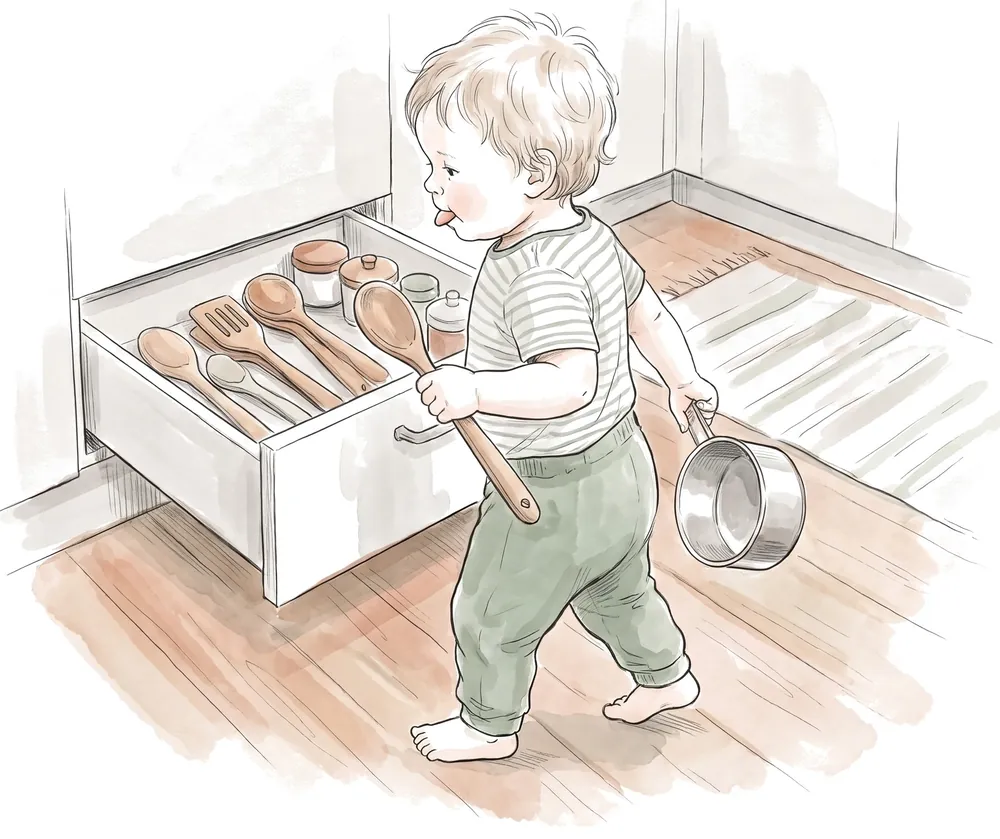
18 – 24 months
Module one
The Explosion
“No,” “Me,” “Again”
Your child has discovered they’re a person. That’s excellent news, even on the days it doesn’t feel like it.
“It happened overnight. They used to be so easy. What changed?”
Nothing went wrong. This is the leap your child has been building toward since birth, the moment they realize they’re separate from you, that they have a will, and that they can try to use it. It’s loud and it’s relentless, and it’s completely normal. It gets easier to live with the moment you stop trying to make it go away.
Between 18 and 24 months, three things change everything. “No” becomes a tool, “me do it” becomes a mission, and repetition becomes the main way your child learns.
None of these is a phase to get through. Each one is a skill being born. “No” is the first exercise of a will. “Me do it” is where competence starts. Repetition is how a young brain locks in anything new. Knowing this won’t make your mornings effortless, but it changes what you’re aiming for.
What Your Child Is Working On
Under the noise, your toddler is doing some of the hardest work of their life. Here’s what’s happening across these six months.
- Using their own name, then “me” and “mine”
- “No” with real intent, sometimes to things they want
- A strong drive to do things alone
- Recognizing themselves in a mirror
- Fierce ideas about who owns what
- From a handful of words to many more (the range is huge)
- First two-word combinations, often near the second birthday
- Pointing to name things and to ask for words
- Understanding far more than they can say
- Frustration when the word won’t come
- Walking steadily, starting to run
- Climbing everything they can
- Carrying the heaviest thing they can lift
- Kicking and throwing a ball
- Turning pages, stacking, opening lids
- Playing next to other children, not yet with them
- Separation protests that may come back for a while
- First signs of empathy, like offering a toy to a crying child
- Frequent, intense, mostly short tantrums
- Big affection, given on their terms
The Three Milestones of This Age
1 · The “no,” and why it’s progress
Before this stage, your child mostly responded to the world. Now they’ve discovered they can start things. They want something and try to make it happen, refuse something and try to stop it. That’s the beginning of agency, and of the ability, years from now, to say no to a friend pushing them toward something they don’t want to do.
This doesn’t mean “no” never meets a limit. It means you’re not trying to get rid of it. When your child refuses their coat, the coat still goes on, because it’s cold and you’re going out. But you hold that limit without a battle, and without making them feel that having a will is a problem.
“I know you don’t want your coat. It’s cold outside, so the coat is coming with us. Do you want to put your arm in first, or should I hold it open for you?”
You didn’t ask whether the coat goes on. You offered a real choice about how. The limit is clear and the independence is real, both at once.
2 · “Me do it,” and where competence comes from
When your toddler says “me do it,” they’re not being difficult. They’ve spotted something they can’t do yet and they’re closing the gap through practice. Every try, every fail and every try again builds the skill.
The urge to help, to zip the zipper or pour the water, is loving and natural. It also takes the practice away, and quietly tells your child you don’t think they can manage. So wait before you help. Watch. Offer help when they ask, or when they’re clearly stuck and getting upset. The phrase to practice is “Would you like some help?” Then respect the answer.
“Never help a child with a task at which he feels he can succeed.”
A line often attributed to Maria Montessori
3 · “Again,” the work that looks like annoyance
Read it again. Do the puzzle again. Fill and pour, fill and pour, until the water is everywhere and your patience isn’t. Repetition isn’t stubbornness, boredom or a plan to wear you down. It’s how toddlers master things, the way a musician plays scales. When your child repeats something with the same focus every time, they’re working. When they stop, usually suddenly, the work is done.
The Montessori response is to let it happen. Don’t redirect (“Let’s try something new”), don’t sigh (“Again? Really?”). Let them repeat, and do something of your own nearby while they do.
A rough timeline
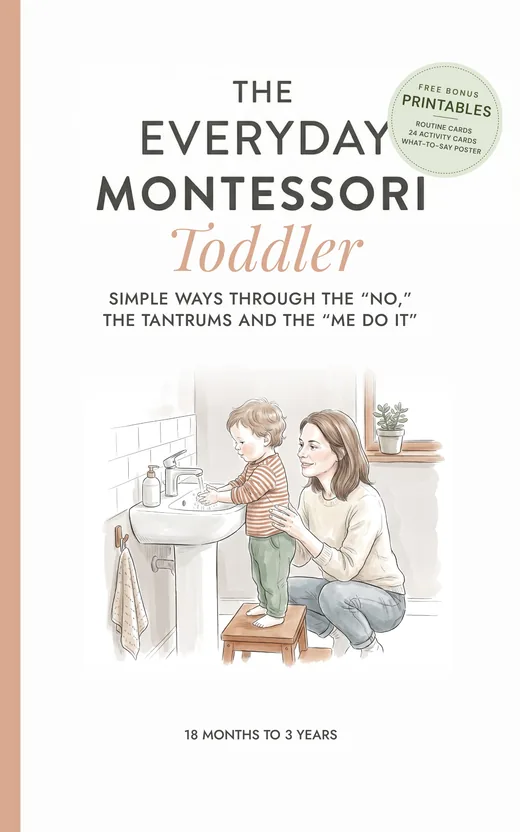
The whole book, one hard moment at a time
This sample is a small part of the book. Here is what the full guide covers.
- 7 Montessori myths that keep toddler parents stuck
- Tantrums, a practical guide, and limits without punishments or rewards
- Doing it myself, dressing, eating and tidying
- Language, the explosion and the frustration
- The prepared home room by room, and 24 activities that cost almost nothing
- Straight answers on daycare, screens, siblings, biting, sleep and the potty
- Free printables, picture routine cards, 24 activity cards and a what-to-say poster
The free printables for the book are on the toddler printables page.
Book 2 of Montessori for Real Life
Keep going,
one hard moment at a time.
Kindle edition out November 17, 2026, paperback to follow (5.83 × 8.27 in). Before 18 months, start with The Everyday Montessori Baby. From 3 to 6, The Everyday Montessori Preschooler picks up the story.
Already have the book? Your printables are on this page. Comparing with Simone Davies’ books? See our side-by-side comparison.