
Montessori for Real Life · Book 3 · 3 to 6 years
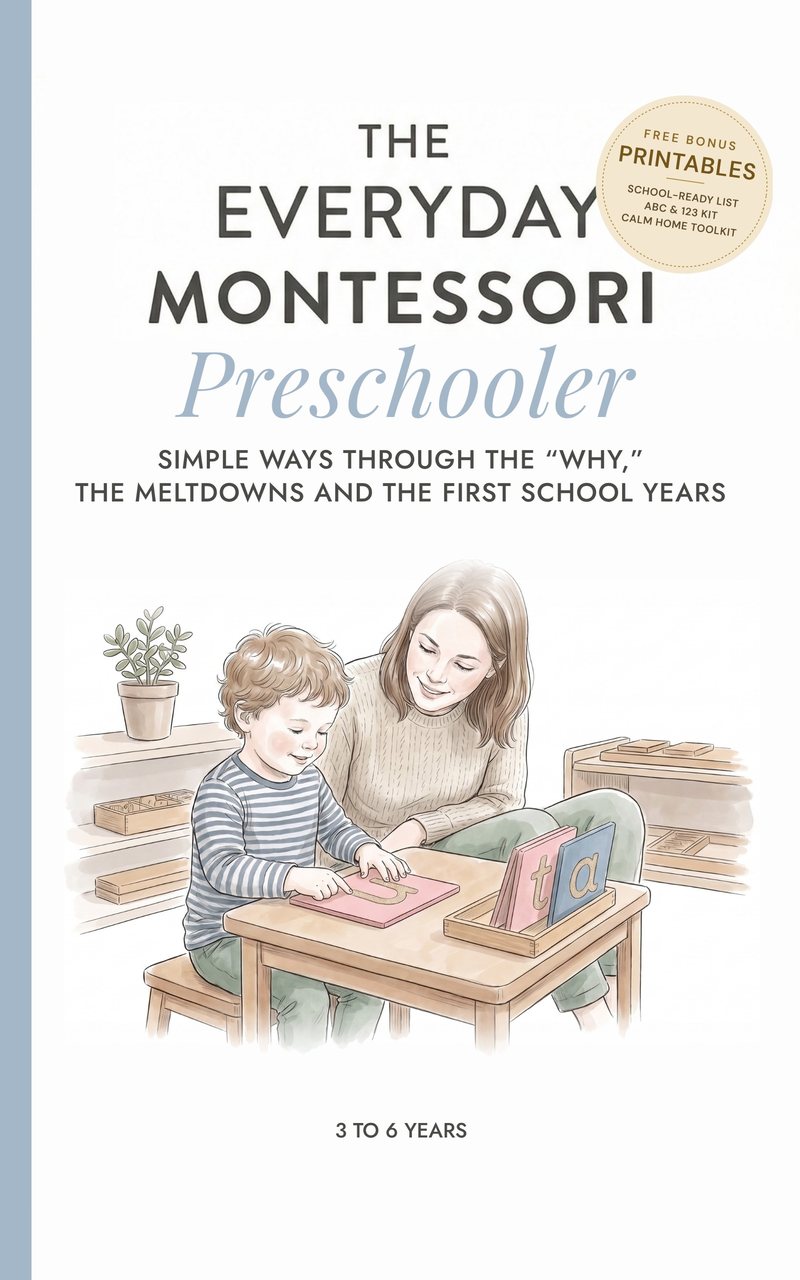
The Everyday
Montessori Preschooler
Your child isn’t behind. They’re building. Clear, kind ways through the “why,” the meltdowns, the after-school crash and the first school years.
- Not listening, meltdowns and hitting, with what to say and what to do
- A simple plan for the first hour after school
- Letters, sounds and numbers in five-minute games, no worksheets
- Choosing a school, getting ready for kindergarten and the first goodbyes
Coming December 8, 2026.
Free sample
Good at school,
falling apart at home.
The introduction and the after-school module. Read it on this page, or download the PDF to keep on your phone. No email needed.
In this sample
- What your 3 to 6 year old is actually building
- Three things to try today, no equipment needed
- What empties the tank, and the first hour after school
- A sample after-school hour, even with a baby on your hip
13 pages, A5 format, cover included.
Inside the book
One hard moment at a time,
so you start where you are.
Go straight to the module you need today. No need to read from the beginning.
Your Child Isn’t Behind. They’re Building.
What your child is actually doing, what Montessori gives you at this age, three things to try today. Plus 7 Montessori myths that keep preschool parents stuck.
3 to 6 years
What Your Child Is Building
Language, self-control and friendships, the age of “why,” a day with a 3½-year-old and activities for 3 to 6.
3 to 6 years
Not Listening, Meltdowns and Hitting
Listening without saying it ten times, meltdowns before, during and after, hitting, the calm corner, and when you lose it.
Good at School, Falling Apart at Home
What empties the tank, the first hour after school, a sample after-school hour, and days with a baby or several children.
3 to 6 years
Capable Hands
How much they can do alone, teaching a task so it sticks, mornings without the battle, chores and money.
3 to 6 years
Letters, Sounds and Numbers
The path to reading, writing and numbers the Montessori way, with fifteen games that take five minutes each.
3 to 6 years
Choosing and Starting School
Types of programs, what a real Montessori classroom looks like, the third year, waiting a year, and saying goodbye at drop-off.
Reference
Friends, Siblings and Playdates
Friendship age by age, being left out, sharing and turns, the peace table, playdates and siblings.
Reference
Montessori at Home, for Real
Room by room, a shelf built on your child, what you can skip buying, small spaces and a toddler in the house.
Reference
The Real Questions, Straight Answers
Sleep, screens, death and bodies, development and assessments, food and family life.
From the sample
Your child isn’t behind
“Between 3 and 6, the work your child is doing rarely looks like progress. It looks like questions, meltdowns and a lot of mess. It’s progress anyway.“
Three things to try today
“At pickup, have a snack in your hand. Say ‘I’m glad to see you,’ and leave the ‘How was your day?’ for later.“
The first hour after school
“It also asks less of you, because you stop fighting the crash and start getting ahead of it.“
How the book works
Short, practical,
built for interrupted reading.
Each module follows the same pattern, so you always know where to look.
In every module
What your child is working on, with CDC milestones
Normal, Watch, Ask boxes, so you know when to wait and when to ask a professional
What to say and what to do, for the moments that go wrong
Activities that need no special materials
Also in the book
Notes for the teacher and for grandparents
Checklists, a two-week log and an observation journal to copy
Straight answers on sleep, screens, death and bodies
Free printables, a ready-for-school list, a letters and numbers starter kit and a calm home toolkit (see them here)
Free sample · Introduction and module 3
Read it here,
no email needed.
What your preschooler is building, and a calm plan for the crash after school, in about 12 minutes of reading.
These pages are taken from The Everyday Montessori Preschooler, a practical Montessori guide for parents of children from 3 to 6 years. Read them here, free, no email needed.
Prefer to keep it? Get this sample as a PDF.
Introduction
Your Child Isn’t Behind.
They’re Building.
Between 3 and 6, the work your child is doing rarely looks like progress. It looks like questions, meltdowns and a lot of mess. It’s progress anyway.
“Everyone else’s kid seems to be reading, sharing and sleeping through the night. Mine is doing none of those.”
You hear it at pickup, you see it online, and it lands at 10 p.m. when the house is finally quiet. The question underneath is almost always the same. Is this normal, or should I be worried? This book answers that question every time it comes up. Not with “every child is different,” but with what’s normal, what to keep an eye on, and when to ask someone.
At three, your child is still a toddler in many ways. By six, most children can hold a real conversation, follow the rules of a game, look after much of their own body and start to read. Few stretches of life hold this much change.
That change doesn’t arrive in a straight line. A four-year-old can explain how volcanoes work and then fall apart because the banana broke. A five-year-old can hold it together for six hours at school and come undone in the car. The unevenness isn’t a sign that something is wrong. It’s what building looks like from the outside.
Maria Montessori opened her first Children’s House, the Casa dei Bambini, in Rome in 1907, for children of exactly this age. What she noticed there still holds. Children between 3 and 6 learn through their hands and their senses, through real work and through repetition. And they want to do things for themselves far more than most adults expect.
What Your Child Is Actually Doing
Most of the behavior that wears parents out at this age has something sound underneath it. The behavior looks like the problem. Often it’s the message.
What Montessori Gives You at This Age
Montessori isn’t a shelf, a set of wooden toys or a look. It’s a way of watching your child and deciding what to do next based on what you see. Between 3 and 6, it rests on four ideas.
Four ideas to hold on to
Children this age want to contribute. They want to pour, cut, clean and cook. Small, real tools and a few minutes of showing them how turn that drive into skill, and skill into calm.
Before you fix, push or worry, look. What is your child working on? What’s hard for them right now? Watching is how you know whether to step in, step back or ask for help.
Real choices where there’s a real choice, and clear limits where there isn’t. Kind, firm, and the same tomorrow as today.
Letters you can trace, quantities you can hold, sounds you can play with. Abstract ideas come later, and more easily, once the hands have done the work.
Three Things to Try Today
Each module ends with practical steps, but you can start before you turn the page. None of these needs equipment.
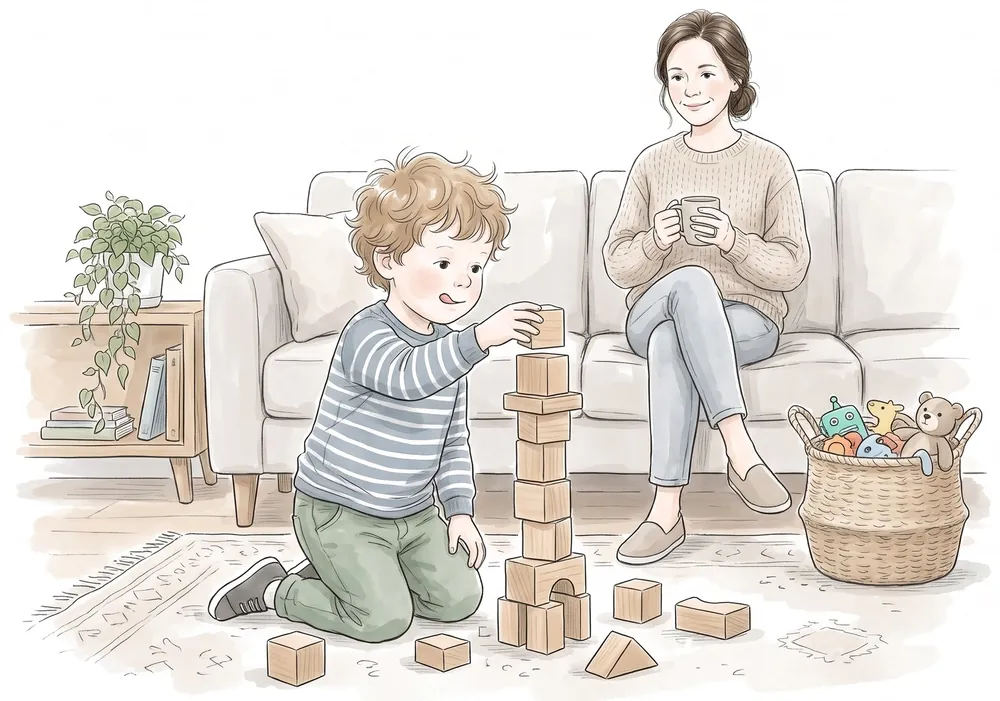
Next time your child asks why, try “What do you think?” Then listen to the whole answer, however strange.
Why it helps. You learn how your child is thinking, and they learn their ideas are worth hearing.
A small pitcher so they pour their own water at dinner. A damp cloth to wipe the table after. A butter knife to slice their own banana. Show them once, slowly, then let them do it.
Why it helps. Contributing builds the kind of self-respect that makes cooperation easier.
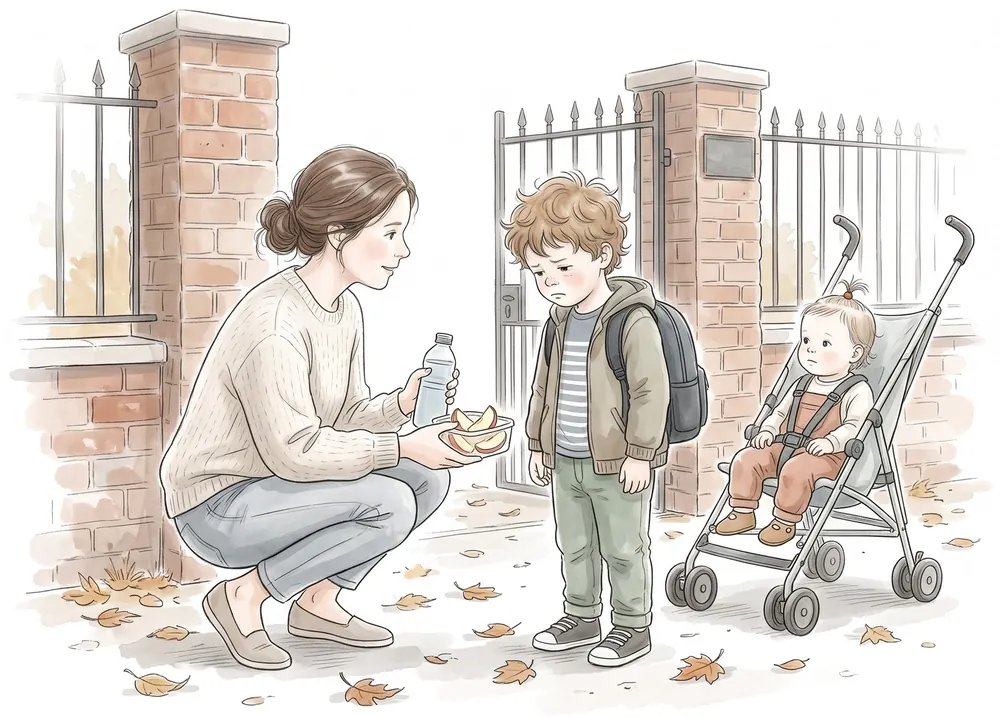
At pickup, have a snack in your hand. Say “I’m glad to see you,” and leave the “How was your day?” for later.
Why it helps. A tired, hungry child can’t answer questions, and this one change calms the end of the day for many families. Module 3 explains why.
School days
Module three
Good at School,
Falling Apart at Home
The teacher says your child is a joy. Then they see you at pickup and everything comes apart. It’s one of the most common, and most exhausting, patterns of these years.
“I miss the child I had before school started. At home he’s someone I barely recognize.”
Many parents describe exactly this. A child who was easy before preschool or kindergarten now screams, hits or sobs from the moment they’re picked up. You’ve tried snacks and quiet time, and you’ve started to dread 3 o’clock. This module explains what’s happening and gives you a plan for the first hour after school, plus clear signs for when it’s more than tiredness.
All day at school, your child has been following rules, waiting their turn, sitting still, holding in feelings, eating fast in a noisy room and keeping it together among twenty other children. When they see you, the person they feel safest with, it all comes out.
Parents and teachers often call this “restraint collapse.” The name isn’t a diagnosis. It describes something real. Self-control is like a tank that empties over the day. Young children start with a small tank, and a school day can drain it completely. The collapse happens with you because you’re safe. That’s a sign of trust, even when it doesn’t feel like one.
It’s usually strongest in the first weeks of a new school or a new year, after school breaks, and during any other change at home. For most children it eases as they get used to the rhythm. While it lasts, a few changes to the first hour can make a big difference.
What Empties the Tank
School lunches are often rushed, noisy or barely touched. Many children arrive at pickup running on almost nothing.
Early wake-ups, no nap or a short one, a long day. Tired children have very little patience left.
A classroom is loud and busy for hours. Some children soak it up. Others need hours to recover from it.
Not crying when a friend was mean. Waiting to use the bathroom. Following rules all day. The feelings wait for home.
The First Hour After School
This plan asks very little of your child for the first hour, so they have room to refill. It also asks less of you, because you stop fighting the crash and start getting ahead of it.
Bring something filling, with some protein, and water. Cheese and crackers, a banana, yogurt, a muffin. Nut butter only if the school allows it, and no whole nuts before age 4. Let them eat in the stroller, or in the car before you drive off. Food offered isn’t always food eaten, so keep offering without pushing.
“I’m happy to see you.” That’s enough. Save “How was your day?” for bath time or bedtime, when they’ve had time to land.
Some children need to run, climb and shout. Stop at the park on the way home. Others need quiet. A dim room, the couch, an audiobook. Let your child pick from a small picture menu, like the one in your free printables.
For the first thirty to sixty minutes, no chores, no practice, no errands if you can avoid them. The demands can come later, once the tank has some fuel in it.
At bedtime, try “Tell me one good thing and one hard thing about today.” Many children open up in the dark, side by side, when they’re not on the spot.
Why it helps. Your child learns that their feelings about school have a place to go, at a time they can manage them.
A Sample After-School Hour
Here’s what the first hour can look like on an ordinary school day. Adjust the timing to your family, your commute and your child.
When There’s a Baby or Several Children
Most advice about the first hour assumes one adult and one child. Real life often looks like a baby on your hip, two children melting down at once and dinner to make. A few changes help.
- Prepare everything earlier. Snack bags packed in the morning, dinner made the night before or in a slow cooker, bath things laid out. The after-school hour is no time for decisions.
- One landing spot per child. Twins and siblings often set each other off. Give each one their own place to land, even if it’s just a different corner of the room.
- The baby goes in a carrier. Your hands and attention stay free for the older child who’s struggling.
- Lower the bar for dinner. Eggs, toast and fruit is a perfectly good dinner on a school night.
- Protect the most important ten minutes. If you can only give one child your full attention, do it on rotation. Monday one, Tuesday the other.
Activities to Help Them Land
Print the picture cards from your free printables, or draw your own. Snack. Quiet books. Outside. Blocks. Bath. Cuddle. Stick them on the wall by the door. When your child gets home, they point to what they need.
A tired child can’t always say what they need. Pointing is easier than words, and choosing gives back a little control after a day of following instructions.
Fill one basket with quiet things your child only gets after school. A sticker book, playdough, a puzzle, a few special picture books, a box of small figures. Change one item each week.
The novelty draws them in, and quiet hands help calm a busy body. It also gives you ten minutes to unpack and start dinner.
At bedtime, lights low, ask for one good thing and one hard thing from the day. Then share yours. Keep your answers simple and honest. “My good thing was lunch with a friend. My hard thing was a long meeting.”
When you share too, it’s a conversation instead of an interview. Over weeks, you’ll learn more about your child’s day than any pickup question could.
The whole book, one hard moment at a time
This sample is a small part of the book. Here is what the full guide covers.
- 7 Montessori myths that keep preschool parents stuck
- What your child is building between 3 and 6, with the CDC milestones and what to watch
- Not listening, meltdowns and hitting, with what to say and what to do
- Real jobs by age, letters, sounds and numbers the Montessori way, in five-minute games
- Choosing a school, getting ready for kindergarten and the first goodbyes
- Friends, siblings and playdates, Montessori at home for real, and straight answers on sleep, screens, death and bodies
- Free printables, a ready for school list, a letters and numbers starter kit and a calm home toolkit
The free printables for the book are on the preschooler printables page.
Book 3 of Montessori for Real Life
Keep going,
one hard moment at a time.
Coming December 8, 2026, in Kindle and paperback (5.83 × 8.27 in). For younger children, see The Everyday Montessori Baby (0 to 18 months) and The Everyday Montessori Toddler (18 months to 3 years).
Already have the book? Your printables are on this page.