
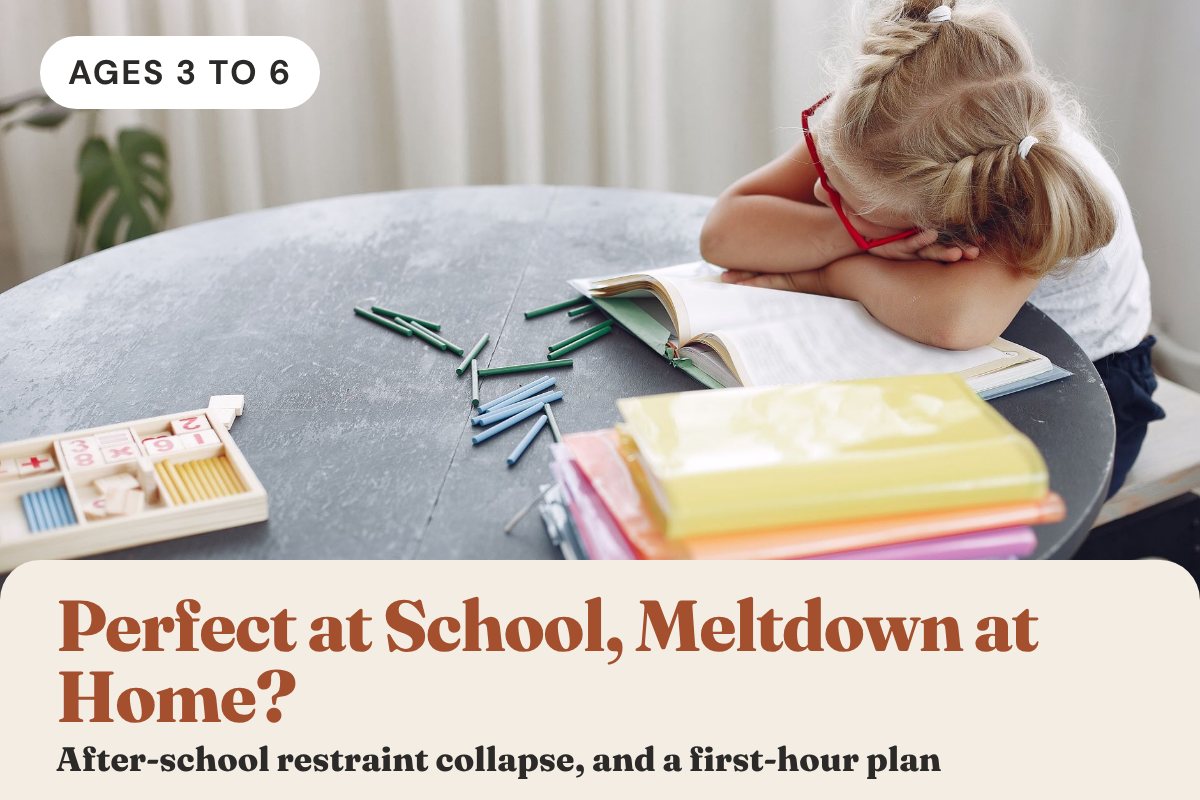
After-school restraint collapse is when a child who held it together all day at school falls apart at home. Tears, rudeness, meltdowns over nothing. It usually means they’re empty, and that home feels safe. The fix is a calm first hour. Snack before questions, few words, move or rest, no demands, and talk later.
It fits into a simple Montessori day rhythm at home.
The First-Hour Plan
- Snack before questions. Food in hand at pickup or right at the door.
- Few words. A smile and “I’m glad to see you” is enough for now.
- Move or rest. Run at the park or lie on the couch, whichever your child needs.
- No demands for an hour. Homework, chores and tidying wait.
- Talk at bedtime. The school day often comes out in the dark, at the end of the day.
What After-School Restraint Collapse Is
All day at school, young children follow rules, wait their turn, sit still, share, listen and hold back big feelings. That takes a lot of effort for a 4- or 5-year-old. By pickup, their tank is empty.
At home, with the person they trust most, they finally let go. That’s why the teacher describes a calm, helpful child while you meet a tornado at the door. “Restraint collapse” is a popular, non-clinical name for this. It isn’t a diagnosis, and it’s very common in the first months of preschool and kindergarten.
What Empties the Tank
- Hunger. Lunch may be early, short or half eaten.
- Tiredness. Preschoolers need 10 to 13 hours of sleep a day, naps included. Many lose their nap when school starts.
- Noise and people. A full classroom is loud and busy, even when it’s fun.
- Holding it in. Every frustration swallowed at school adds up.
- Change. A new school, a new teacher, a new sibling or a move makes it worse for a while.
The First-Hour Plan
- Bring food. A real snack with protein or fat, like cheese and crackers, a banana with peanut butter or yogurt. Hand it over before you ask anything.
- Greet, don’t quiz. Skip “How was your day?” for now. Say, “I’m happy to see you.” Silence in the car is fine.
- Offer movement or rest. Some children need to run, climb or swing. Others need a dark couch and a book. Watch which one your child picks.
- Keep the first hour demand-free. No chores, no homework, no “put your shoes away right now.” Move the tasks later or do them together.
- Connect later. At dinner or bedtime, share something about your day first. Children often answer stories with stories.
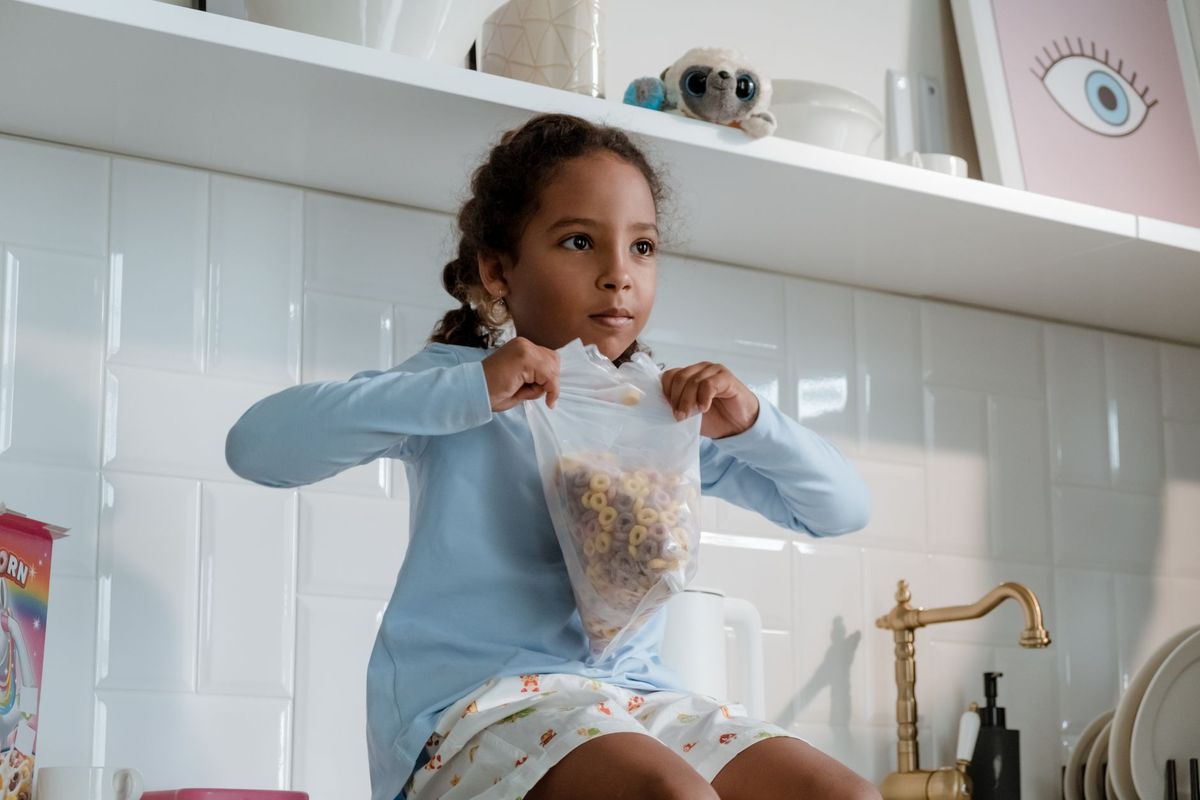
If a meltdown happens anyway, stay close and calm, use few words and wait it out. Limits still apply. “You can be upset. I won’t let you hit.” For the words that help, see how to get kids to listen.
The Hard Questions
“I Work, I Can’t Do a Quiet First Hour.”
Short answer. Shrink it. Even 15 calm minutes in the car or on the walk home helps.
Try this. Pack the snack in the morning, keep the radio off or play calm music, and save questions for dinner. At home, start with one easy, familiar activity before anything else.
If you’ve already tried that. Look at sleep. An earlier bedtime by 30 minutes often does more than any after-school routine.
“I Have a Baby or Twins at Home Too.”
Short answer. Plan the first hour for the hardest child, and make it simple for you.
Try this. Snack in the stroller, baby in a carrier, then a predictable “quiet basket” for the older child, with books, playdough or a puzzle used only at this time.
With a baby around. Feed the baby before pickup when you can, so you have hands free for the older child during the first 20 minutes.
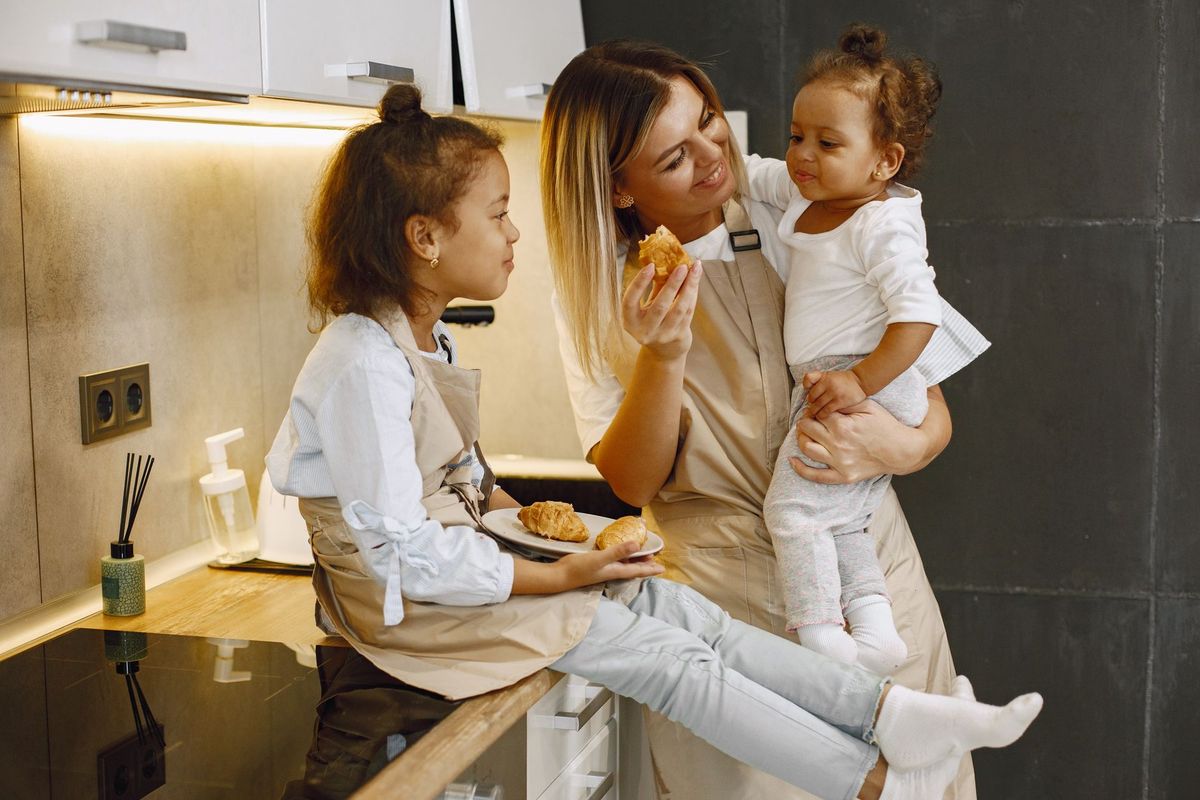
Weekends and Screens
Many children hold up through the week and crash on Friday. Keep Saturday mornings slow when you can.
A short show can be a calm landing for some children. If it ends in a bigger meltdown when it’s turned off, swap it for an audiobook, music or a bath.
How Long Does It Last?
It usually eases after the first weeks or months of a new school year, as your child gets used to the rhythm. It often comes back after holidays, illness or big changes. Many families see it on and off throughout preschool and kindergarten, milder over time.
Questions to Ask the Teacher
- How does my child seem at lunch and in the afternoon?
- Do they eat most of their lunch?
- Do they have a rest time or a quiet corner?
- Are there moments in the day that seem hard for them?
- Is there anything you’d like us to practice at home?
Normal, Watch, Ask
Normal
- Meltdowns or rudeness after school, calm by evening
- Worse on Fridays and after holidays
- “Good at school, hard at home”
Watch
- Still daily and intense after about 3 months
- Refusing to go to school most mornings
- Sleep or appetite changes
Ask
- Hurting themselves or others during meltdowns. Talk to your pediatrician.
- Your child seems sad, anxious or withdrawn most days
- The teacher sees struggles at school too
Questions Parents Ask
What Is After-School Restraint Collapse?
It’s when a child who behaves well at school melts down at home, because holding it together all day used up their energy and self-control.
How Long Does After-School Restraint Collapse Last?
It often eases within a few weeks or months of a new school year, and may return after breaks or changes.
How Do I Help My Child After School?
Offer food first, few words, movement or rest, and no demands for about an hour. Save the conversation for later.
Why Is My Child Good at School but Bad at Home?
Because home is where they feel safe enough to let go. It’s usually a sign of a strong bond, not of bad parenting.
Go Deeper
- A Montessori day at home
- Why are 3 year olds so difficult?
- How to stop yelling and repair
- What kids need before kindergarten
The Everyday Montessori Preschooler
Book 3 of the Montessori for Real Life series, for ages 3 to 6. Good at school, falling apart at home, with a full first-hour plan and an after-school menu. Coming December 8, 2026.
Launch price $6.99 $4.99 Kindle · $14.99 $12.99 paperback
Sources
- American Academy of Sleep Medicine, Recharge With Sleep, Pediatric Sleep Recommendations.
- Centers for Disease Control and Prevention, Positive Parenting Tips, Preschoolers (3 to 5 years).
- Center on the Developing Child, Harvard University, Executive Function and Self-Regulation.
- Photos from Pexels (free licence).