
This guide contains affiliate links. If you buy through them, Montessori Theory may earn a small commission at no extra cost to you. Amazon links open a search so you can compare current options and prices. IKEA prices were checked on ikea.com/us in October 2026.
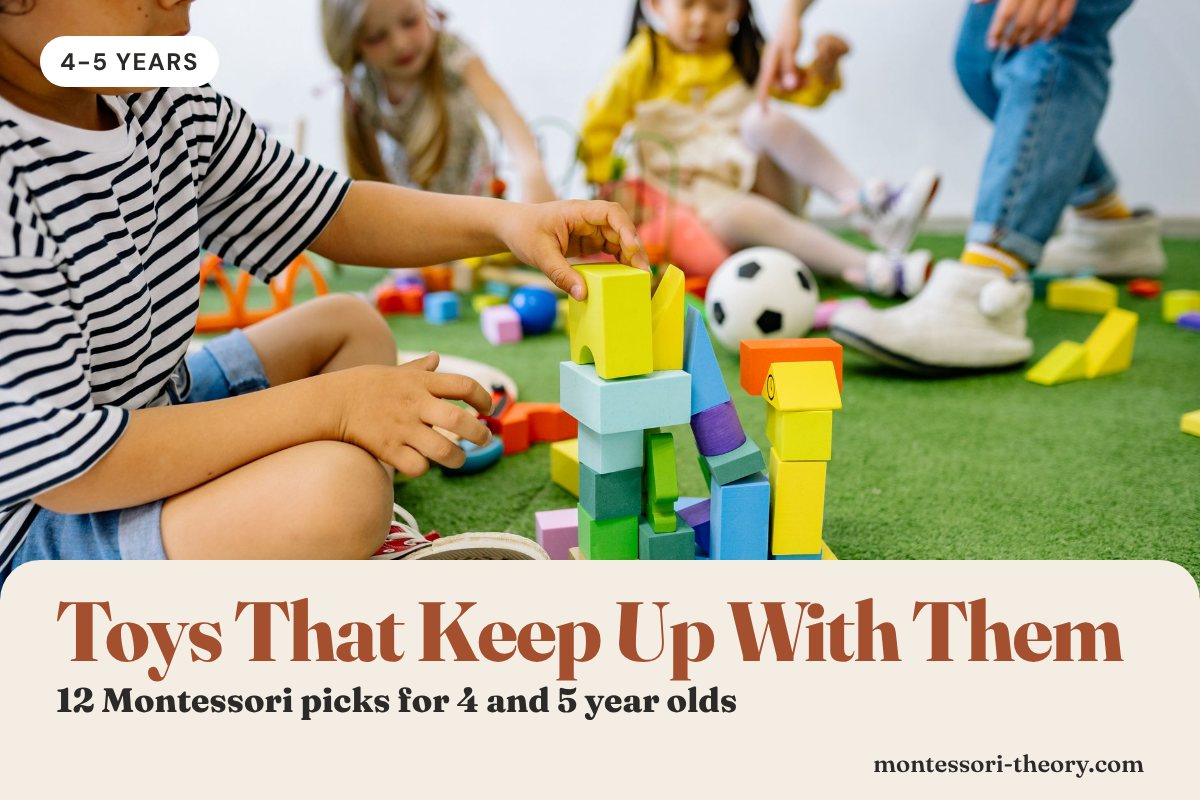
Four and five year olds outgrow toys fast. What holds them now is real work, a real challenge and something to figure out. The best Montessori toys at this age grow with the child, from a first attempt to real mastery.
Here are 12 picks, what each one practices, a cheaper swap and gift ideas by budget. For younger children, see Montessori toys for 3 year olds or our Montessori toys guide.
Quick answer
- At 4 and 5, children want real tools, real results and harder problems to solve.
- The most-used picks are practical life tools, open-ended building sets, letter and number materials, a puzzle map, art supplies and a balance board.
- Games with rules and turns fit this age well.
- Follow your child’s interest. Letters and numbers are an invitation, not a lesson plan.
What 4 and 5 Year Olds Are Working On
The CDC lists liking to be a helper, pouring water with supervision, drawing a person with three or more body parts and holding a pencil between fingers and thumb among the skills most children show by 4. By 5, most count to 10, write some letters of their name, do simple chores like clearing the table and take turns in games with other children.
| Skill | What you see | Toys that fit |
|---|---|---|
| Practical life | Wanting to cut, cook, fix and help for real | Child-safe kitchen tools, sewing kit, woodworking set |
| Building and problem-solving | Long building projects, patterns, “look what I made” | Unit blocks, rainbow stacker, pattern blocks |
| Letters and sounds | Asking how to spell names, noticing first sounds | Sandpaper letters, moveable alphabet |
| Numbers | Counting everything, comparing who has more | Cards and counters, bead materials |
| The wider world | Questions about countries, animals, bugs and plants | Puzzle map, nature exploration kit |
| Art and movement | Detailed drawings, hopping, balancing | Easel and paint, balance board |
Not interested in a toy? It’s not a developmental test. A child who ignores the sandpaper letters may be deep into maps, building or drawing. Interest at this age comes in waves. Put the material away for a few weeks and try again.
If you have concerns about how your child is developing, talk with your pediatrician and use the CDC milestone checklists. Toy choices are not a measure of development.
12 Montessori Toys for 4 and 5 Year Olds
Real Work
| Toy | What it practices | Cheaper swap | Where |
|---|---|---|---|
| 1. Child-safe kitchen tool set (crinkle cutter, peeler, small cutting board) | Cutting, peeling, following steps, helping with real meals | A butter knife and a banana, then a crinkle cutter alone | Amazon |
| 2. Beginner sewing kit (blunt plastic needle, burlap, thick yarn) | Fine motor control, patience, finishing a project | Lacing cards made from a cereal box and a shoelace | Amazon |
| 3. Woodworking set with real tools | Hand strength, aim, planning, using tools safely | Hammering golf tees into a pumpkin or thick foam | Amazon |
Real tools need real supervision. Show one tool at a time, slowly, then let your child try while you stay close. Safety glasses for woodworking are worth the few dollars. Our practical life guide has more jobs for this age, from setting the table to watering plants.
Building and Problem-Solving

| Toy | What it practices | Cheaper swap | Where |
|---|---|---|---|
| 4. Wooden unit blocks or a rainbow stacker | Balance, symmetry, planning a structure, cooperative play | Secondhand unit blocks, or cardboard boxes and tape | Amazon |
| 5. Pattern blocks or tangrams with pattern cards | Shapes, copying a pattern, spatial reasoning | Shapes cut from colored cardstock | Amazon |
Rainbow stackers such as the Grimm’s style are popular gifts. They are open-ended, so the same set becomes a tunnel, a fence and a balance challenge. A plain set of unit blocks does much the same for less. Magnetic tiles are fine too. Check them now and then for cracks, since loose magnets are a swallowing hazard.
Letters and Numbers
| Toy | What it practices | Cheaper swap | Where |
|---|---|---|---|
| 6. Sandpaper letters (lowercase) | Letter sounds, tracing the shape with a finger before using a pencil | Letters cut from fine sandpaper and glued on cardstock. See our sandpaper letters guide | Amazon |
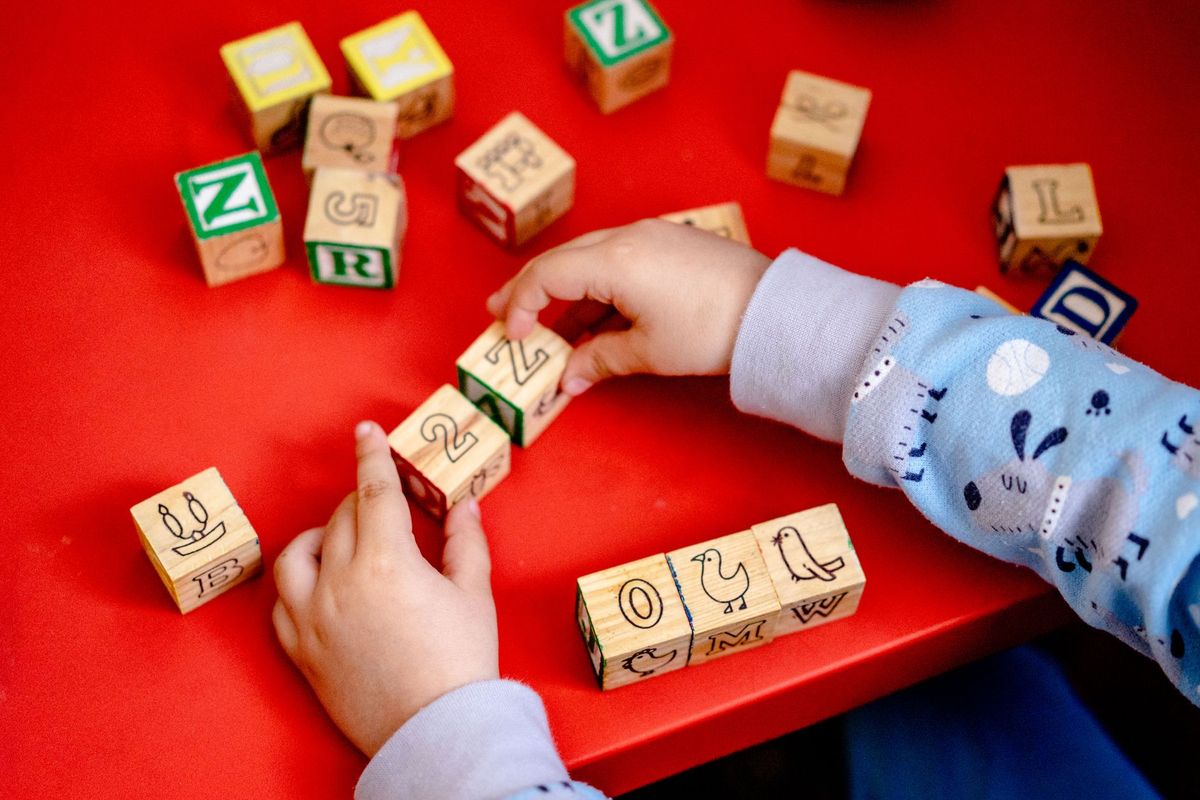
| 7. Moveable alphabet | Building words from sounds before your child can write them by hand | Magnetic letters on a baking sheet. See our moveable alphabet guide | Amazon |
| 8. Cards and counters or golden beads | Matching numerals to quantities, odd and even, place value later | Number cards and dried beans. See cards and counters | Amazon |
In Montessori, children learn the sound a letter makes (“mmm”) before its name (“em”), and many build words with the moveable alphabet before they read. Offer the materials and see what your child does with them. If interest is low, put them away for a few weeks. More ideas in our Montessori math materials guide.
The Wider World
| Toy | What it practices | Cheaper swap | Where |
|---|---|---|---|
| 9. Puzzle map of the continents | Continents and oceans, shapes, a first sense of the world | A printed world map colored in the Montessori continent colors. See our continent map guide | Amazon |
| 10. Nature exploration kit (magnifier, bug box, field guide) | Observing closely, sorting, naming plants and animals | IKEA MAJBAGGE 3-piece nature exploration set ($4.99) and a library field guide | IKEA Amazon |
See all the Montessori geography materials if your child is hooked on maps.
Art and Movement

| Toy | What it practices | Cheaper swap | Where |
|---|---|---|---|
| 11. Easel with real paint | Wrist and arm control, color mixing, cleaning up after | IKEA MÅLA easel ($29.99) and MÅLA paint ($9.99), or paper taped to a wall | IKEA Amazon |
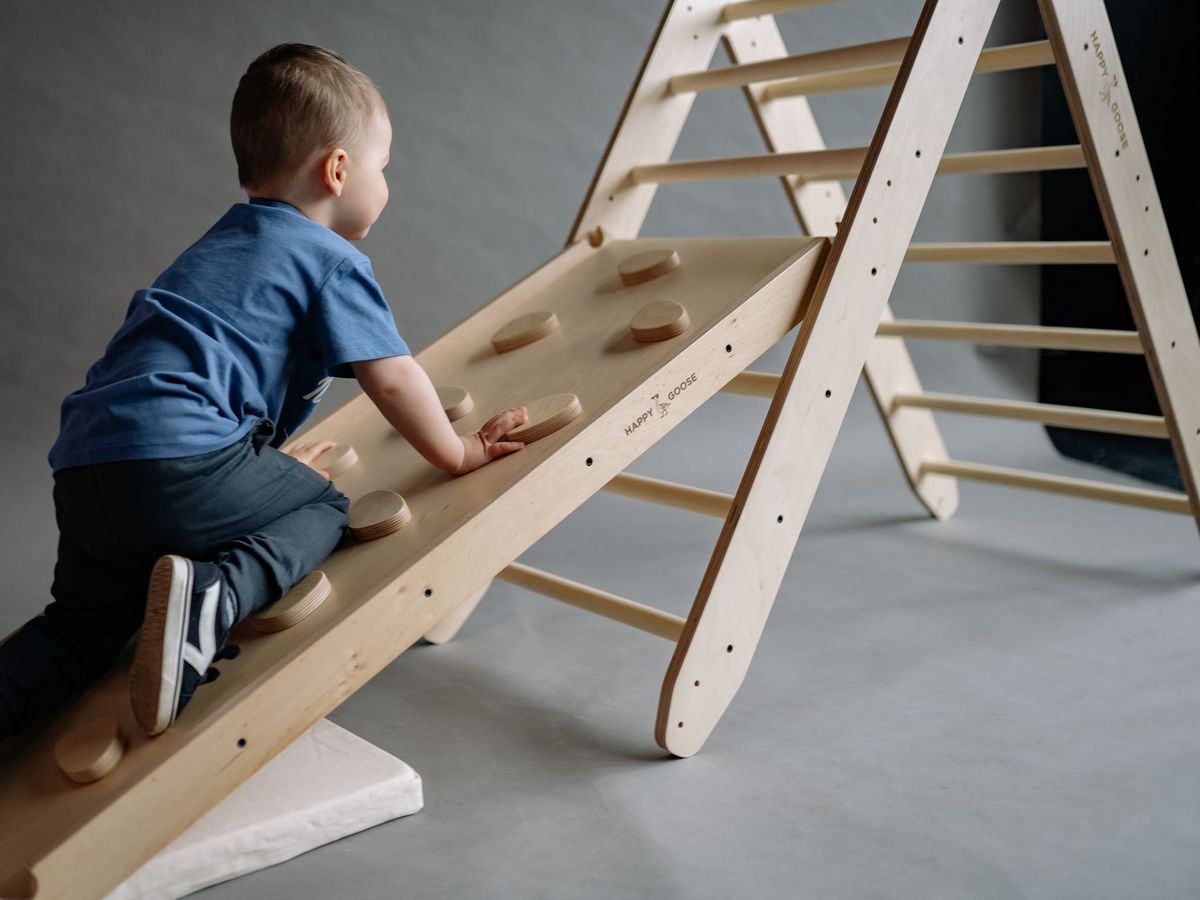
| 12. Balance board | Balance, core strength, a bridge, a rocker or a slide in pretend play | A plank on the floor to walk along, then a low balance beam | Amazon |
Set up the easel with an apron (IKEA MÅLA long-sleeve apron, $4.99), a damp cloth and two colors at first. Cleaning the brushes is part of the activity. A climbing triangle bought for a toddler usually still gets used at this age, often as part of an obstacle course.
Games That Teach Taking Turns
Following rules and taking turns are new skills at this age. Simple games give children a chance to practice them, along with losing.
- Cooperative board games. Everyone wins or loses together, a gentle start for children who find losing hard (Amazon).
- Memory and matching games. Start with 6 pairs and add more as your child improves.
- Tic-tac-toe. IKEA GREJSIMOJS board game ($19.99) or chalk on the sidewalk.
Gift Ideas by Budget
| Budget | Ideas |
|---|---|
| Under $15 | Nature exploration kit, beginner sewing kit, crinkle cutter and peeler, pattern blocks |
| $15 to $40 | Sandpaper letters, moveable alphabet, easel, cooperative board game, kids’ kitchen tool set |
| Bigger gifts | Unit block set or rainbow stacker, puzzle map, woodworking set, balance board |
| For a child who has everything | An experience, like a class, a museum membership or a cooking afternoon together, with one real tool to keep |
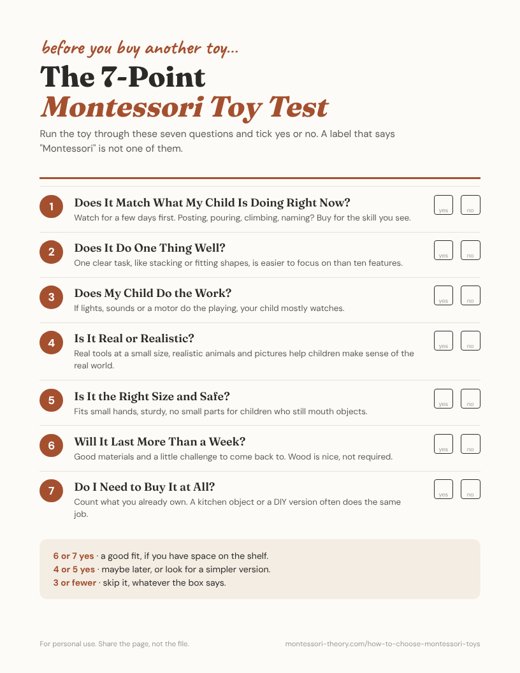
Before you buy, run each idea through our free 7-point toy test. For gifts across all ages, see our Montessori gift guide.
4 Year Olds vs 5 Year Olds
- Around 4. Cutting soft foods, simple sewing, building with blocks, tracing sandpaper letters, sorting nature finds, games with a few rules.
- Around 5. Following a recipe with an adult, woodworking with real nails, building words with the moveable alphabet, counting and comparing larger quantities, games with turns and scores.
Children move at very different speeds at this age. A child who loves maps may ignore letters for months, and that’s fine. For how Montessori approaches this year, see Montessori kindergarten at home.
Common Mistakes
- Turning materials into lessons. Pushing letters or worksheets on a child who isn’t interested usually backfires. Offer, show once, and step back.
- Buying toys that are too easy. A 4-year-old finishes toddler puzzles in seconds. Look for something with a next level.
- Keeping real tools out of reach forever. Children this age can do much more than many adults expect, with supervision.
- Choosing by “boy” or “girl” labels. Tools, maps, sewing and blocks suit every child.
- Too many toys out. Eight to ten activities on a shelf, rotated, beats a full playroom. See our toy rotation guide.
Questions Parents Ask
What Are the Best Montessori Toys for a 4 Year Old?
Real kitchen and woodworking tools, open-ended blocks, sandpaper letters or a moveable alphabet, a puzzle map, art supplies and a balance board. Pick what matches your child’s interests now.
Are Montessori Toys Good for 5 Year Olds?
Yes. At 5, Montessori materials shift toward letters, numbers, geography and longer projects. Real tools and games with rules also fit well.
What Do You Buy a 4 Year Old Who Has Everything?
A real tool and the time to use it together, such as a crinkle cutter and a cooking afternoon, a woodworking set and a weekend project, or a class or membership instead of another object.
Should My 4 Year Old Be Reading?
Some children start reading around 4 or 5, many later. In Montessori, children often build words with the moveable alphabet before reading. Follow your child’s interest, and talk with your pediatrician or teacher if you have concerns about language.
Are Magnetic Tiles Montessori?
They are not a classic Montessori material, but they are open-ended and let the child do the building, so many Montessori families use them. Check them for cracks, since loose magnets are a swallowing hazard.
The 7-Point Montessori Toy Test
Shopping for a birthday or the holidays? One page with the seven questions and a simple score. Keep it on your phone for store visits.
Sources
- Centers for Disease Control and Prevention, Milestones by 4 years and by 5 years.
- Montessori, M. The Discovery of the Child (1948), on sandpaper letters and writing before reading.
- Lillard, A. S. Montessori: The Science Behind the Genius (3rd ed., 2017).
- U.S. Consumer Product Safety Commission, magnet safety warnings.
- Photos from Pexels (free licence).