This guide contains affiliate links. If you buy through them, Montessori Theory may earn a small commission at no extra cost to you. Amazon links open a search so you can compare current options and prices. IKEA prices were checked on ikea.com/us in October 2026.
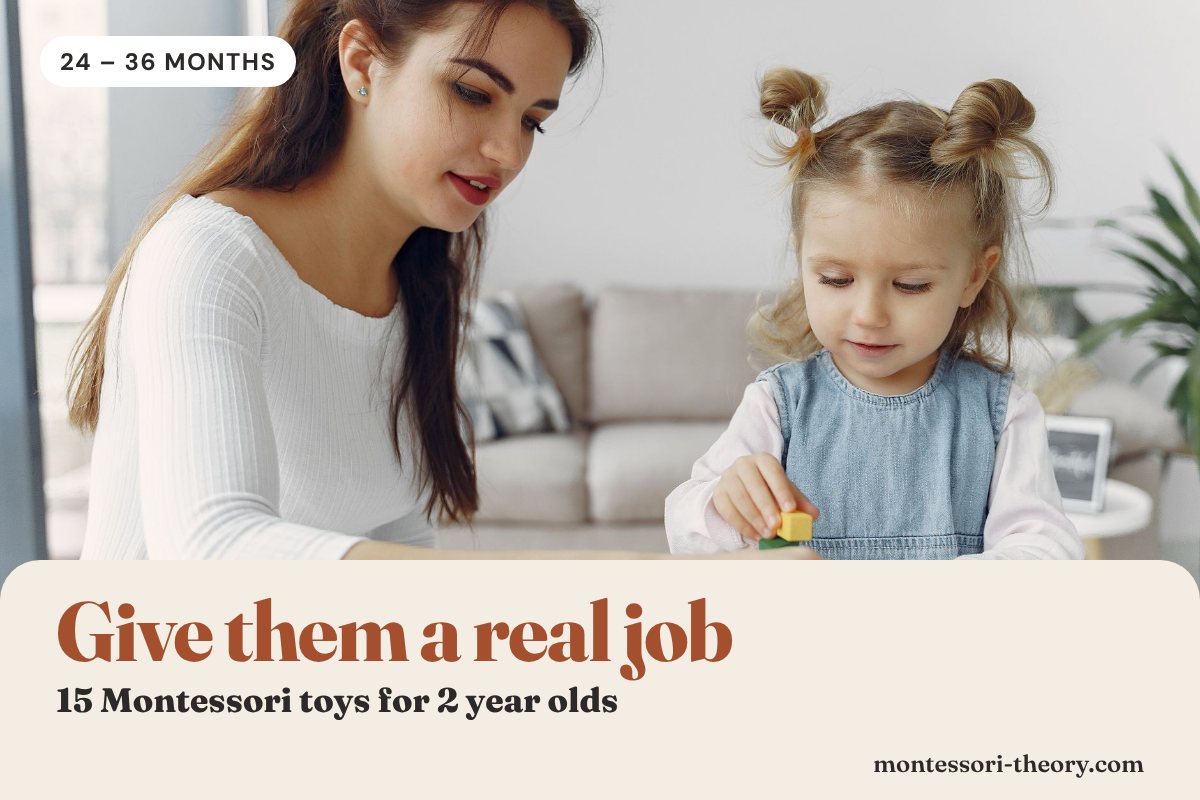
Two-year-olds want to do things for real. They pour, sort, carry, climb, fit pieces together and repeat the same job twenty times. The best toys at this age give that energy a clear task. Here are 15 picks, what each one practices and a cheaper swap for each. For other ages, see our Montessori toys guide.
Quick answer
- Choose toys for what your 2-year-old is doing now, like pouring, sorting, building or climbing.
- Puzzles with 4 to 12 pieces, sorting and stacking toys, real practical life tools and blocks get the most use.
- Keep 6 to 8 activities out and rotate the rest.
- Nearly every pick has a cheap or DIY version. You don’t need all 15.
What a 2-Year-Old Is Working On
| Skill | What you see | Toys that fit |
|---|---|---|
| Fine motor control | Turning knobs, threading, fitting shapes | Puzzles, shape sorters, lacing beads |
| Practical life | “Me do it,” wanting to help with everything | Pitcher and cups, child-sized broom, step stool |
| Language | New words every day, naming everything | Realistic figures, picture cards, books |
| Order and sorting | Lining things up, matching | Color sorting, stacking and nesting |
| Big movement | Climbing furniture, carrying heavy things | Climbing triangle, balance board, wagon |
Not interested in a toy? It’s not a developmental test. A 2-year-old who ignores a puzzle may find it too easy, too hard, or simply less interesting than helping you in the kitchen. Put it away for a few weeks and try again.
If you have concerns about how your child is developing, talk with your pediatrician and use the CDC milestone checklists. Toy choices are not a measure of development.
15 Montessori Toys for 2 Year Olds
Hands and Problem-Solving
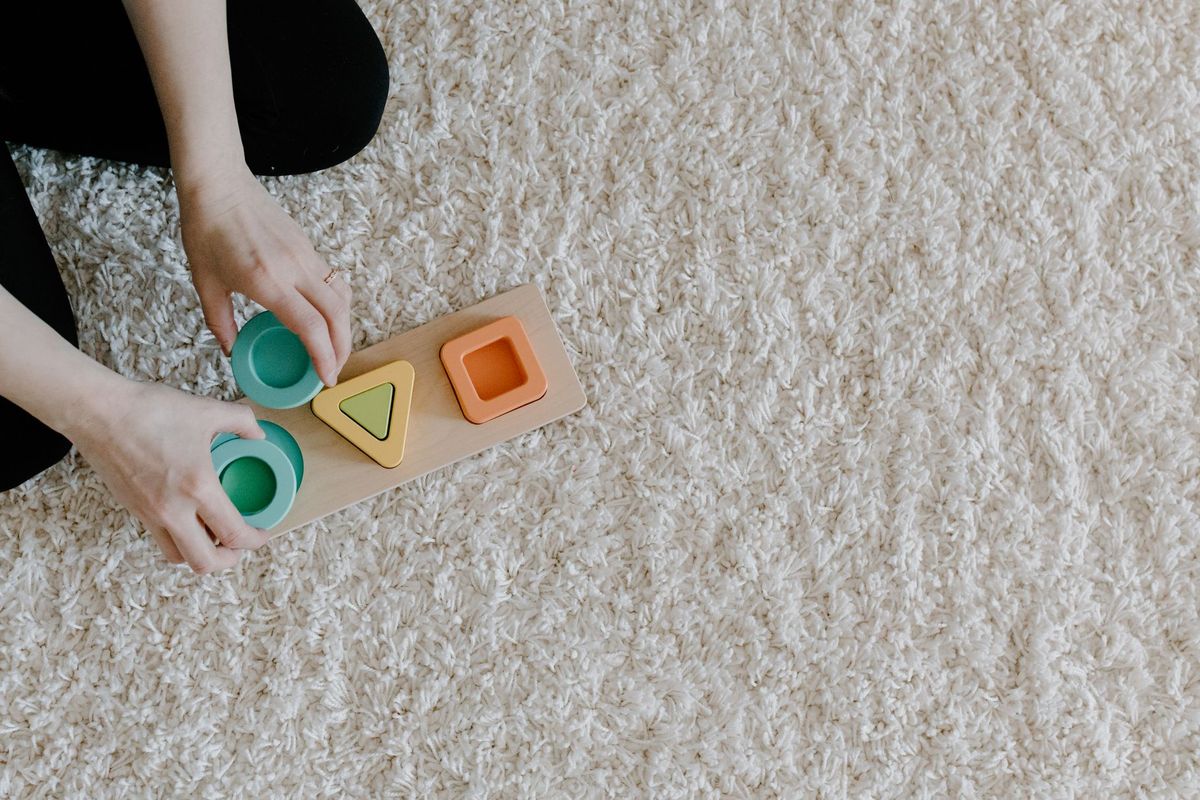
| Toy | What it practices | Cheaper swap | Where |
|---|---|---|---|
| 1. Knobbed shape or animal puzzle (4 to 8 pieces) | Matching shapes, precise grip | A secondhand puzzle in good condition | Amazon |
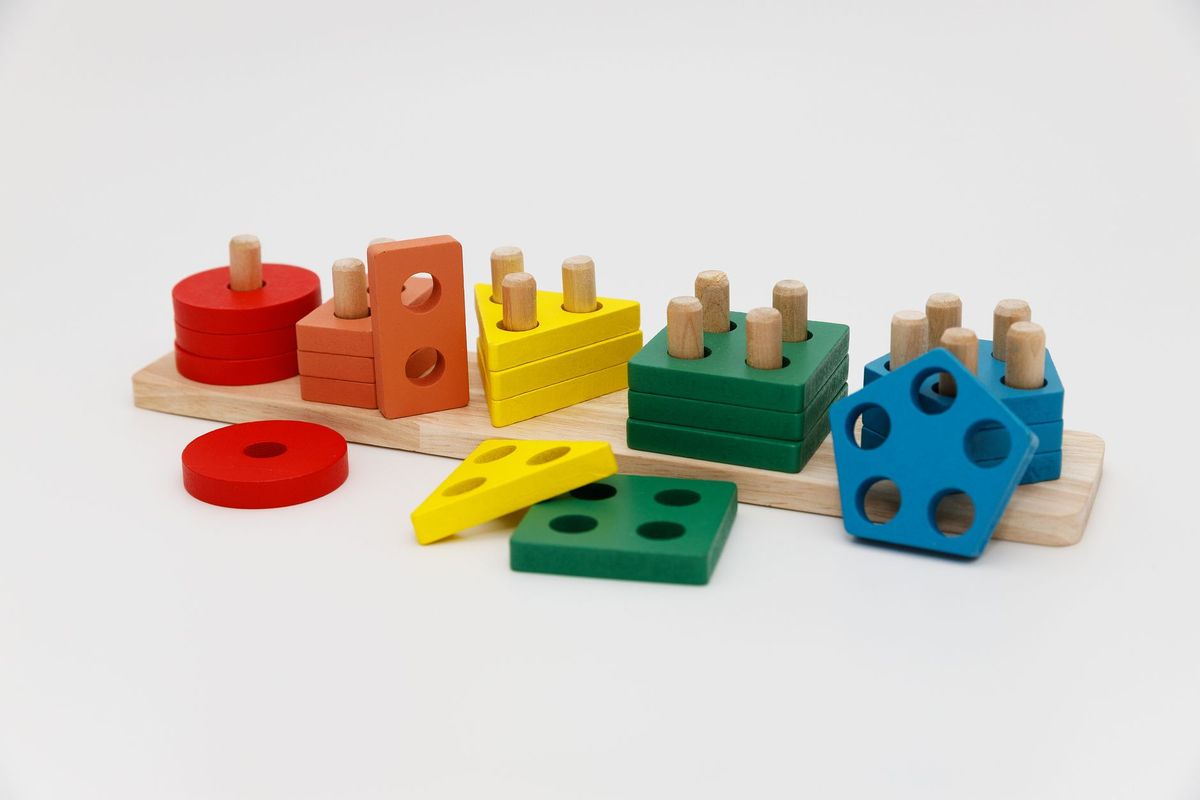
| 2. Stacking and sorting toy on pegs | Color and shape sorting, wrist control | Nesting cups (IKEA UPPSTÅ cups, $2.99) | Amazon IKEA |
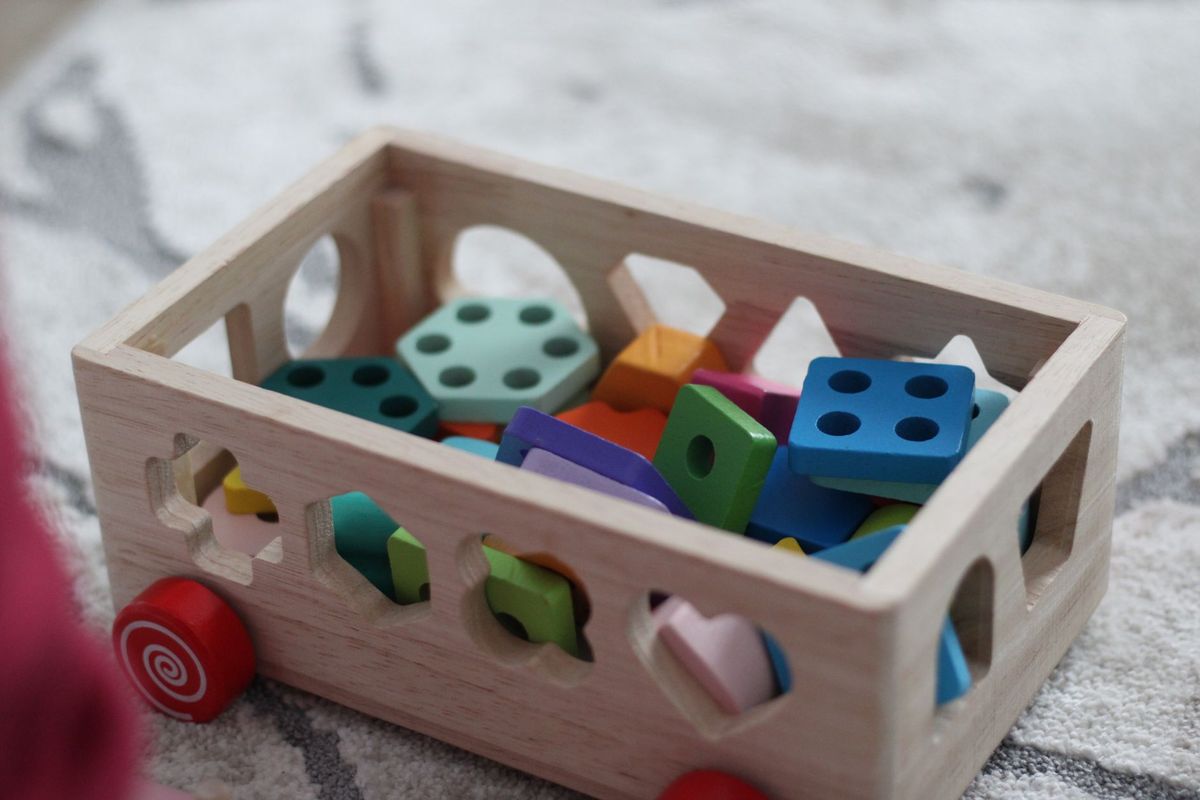
| 3. Shape sorter | Problem-solving, turning a shape to fit | A shoebox with 2 or 3 cut-out holes | Amazon |
| 4. Large lacing beads | Two-handed coordination, focus | Thick shoelace and large pasta tubes | Amazon |
| 5. Lock box or latch board | Opening and closing real mechanisms | Your own cabinet latches, with you nearby | Amazon |
Practical Life (Real Jobs)
| Toy | What it practices | Cheaper swap | Where |
|---|---|---|---|
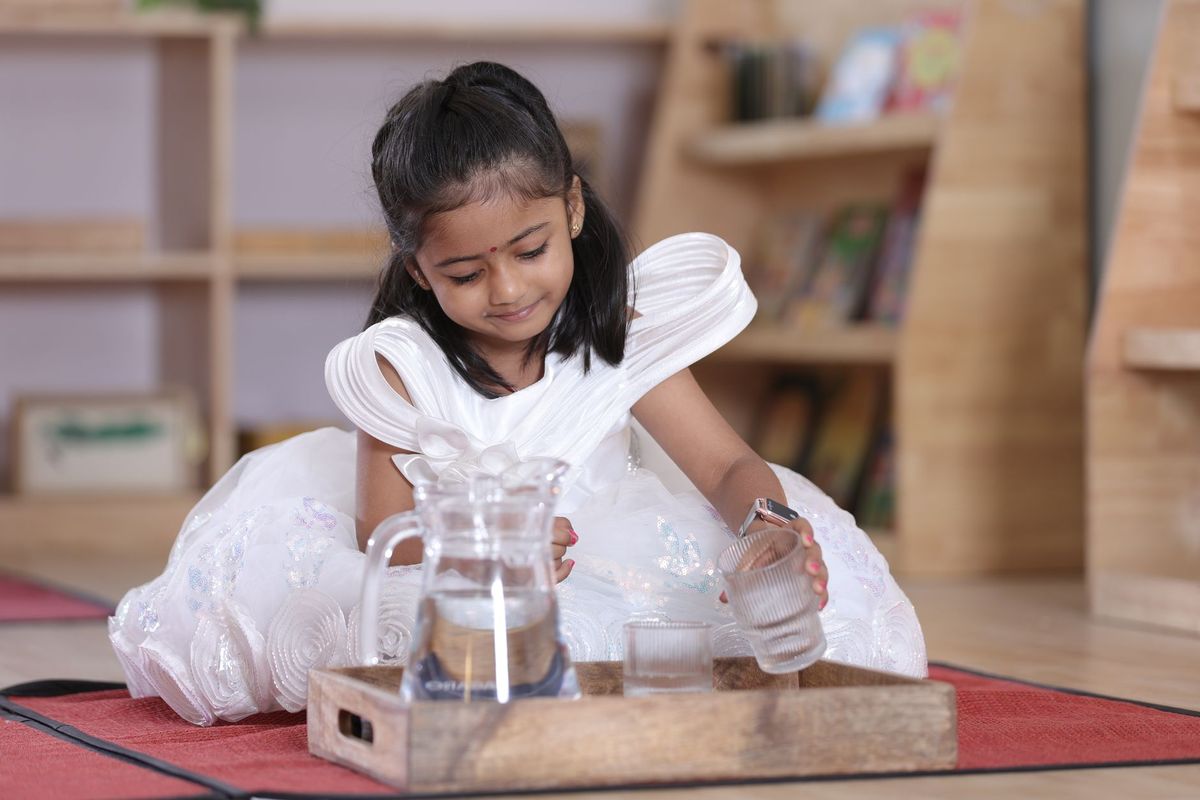
| 6. Small pitcher, two cups and a tray | Pouring, control, cleaning up spills | A small measuring cup and a baking tray | Amazon |
| 7. Child-sized cleaning set | Sweeping, mopping, taking part in the home | A hand brush and dustpan | Amazon |
| 8. Step stool or learning tower | Helping at the counter and sink | IKEA BEKVÄM step stool, $34.99 | IKEA |
| 9. Dressing frame or a real zipper jacket | Buttons, zips and snaps | Practice on an adult’s cardigan | Amazon |
Language and Pretend Play
| Toy | What it practices | Cheaper swap | Where |
|---|---|---|---|
| 10. Realistic animal figures | Naming, sorting by farm or zoo | A few figures from a thrift store | Amazon |
| 11. Object-to-picture matching cards | Vocabulary, matching real to image | Photos of real objects printed at home | Amazon |
| 12. Play kitchen tools (not a whole kitchen) | Pretend play that copies real life | Real wooden spoons, a small pot | IKEA DUKTIG |
Building and Big Movement
| Toy | What it practices | Cheaper swap | Where |
|---|---|---|---|
| 13. Wooden blocks | Balance, planning, open-ended building | Cardboard boxes and kitchen containers | Amazon |
| 14. Climbing triangle (supervised, on a rug) | Climbing, balance, judging risk | Couch cushions on the floor | Amazon |
| 15. Wagon or push cart | Carrying, pushing, heavy work | A laundry basket with a rope | Amazon |
24 to 30 Months vs 30 to 36 Months
- From 24 months. Puzzles with 4 to 6 pieces, single-shape sorters, pouring water from a small pitcher, big lacing beads.
- From 30 months. Puzzles with 8 to 12 pieces, sorting by two qualities (color and size), simple matching games, more complex dressing tasks.
Ages are rough guides. Watch what your child chooses and repeats. That tells you more than the label.
Common Mistakes
- Too many toys out. Two-year-olds dump bins to find one thing. Six to eight choices on a low shelf works better. See our Montessori shelf guide.
- Toys that are too easy. If a puzzle is finished in ten seconds every time, it’s ready to rotate out.
- Toys that are too hard. Frustration ends play fast. Put it away for a month and try again.
- Buying before watching. Use our 7-point toy test before you buy.
Questions Parents Ask
What Toys Should a 2 Year Old Have?
A few puzzles, something to sort and stack, blocks, realistic figures and books, plus real tools for helping at home. Fewer, well-chosen toys get more use.
How Many Toys Does a 2 Year Old Need?
There’s no number, but 6 to 8 activities out at a time, rotated weekly or when interest drops, is a common Montessori approach. See our toy rotation guide.
Are Montessori Toys Good for 2 Year Olds?
Yes, when they match what your child is practicing. Simple, realistic toys that give your child a clear job are a good fit at this age.
Free toddler printables
Our book The Everyday Montessori Toddler (18 months to 3 years) comes with free printables, including 24 activity cards. Download them here.
Sources
- Montessori, M. The Absorbent Mind (1949), on the child’s work and movement.
- U.S. Consumer Product Safety Commission, small parts rule for children under 3 (16 CFR Part 1501).
- Photos from Pexels (free licence).