
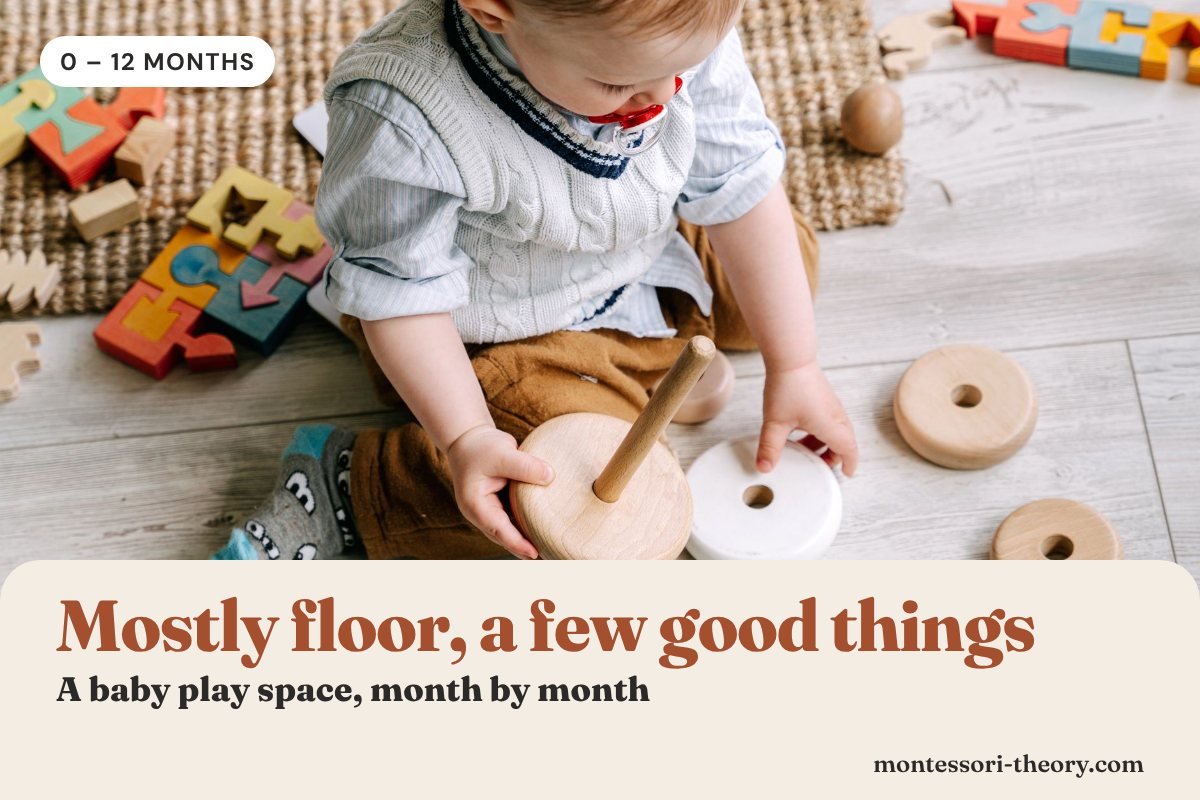
Updated October 2026. rewritten month by month with 11 real, licensed photos; third-party Instagram images removed; nursery theme ideas merged with safety notes.
A Montessori play space for a baby is mostly floor, with a firm mat, one or two things to look at or hold, and room to move. It changes every few months as your baby learns to roll, sit, crawl and pull up. Below are 11 setups, stage by stage, and what to copy from each. For everything about this age, see Montessori for babies.
Quick Answer
- Floor, not containers. a firm mat on the floor beats a bouncer, swing or play yard for awake play.
- One thing at a time. one mobile, one or two toys within reach. Babies take in one thing at a time.
- A low mirror (shatterproof, fixed to the wall) beside the mat from the first weeks.
- Change the space as your baby moves. a low shelf when they sit, open floor when they crawl, something sturdy to pull up on.
- Safety first. tummy time only when awake and watched; nothing small enough to swallow; furniture anchored before cruising.
0 to 3 Months: The Movement Mat
1. Tummy Time on a Blanket

A firm blanket or mat on the floor is the whole setup. Short, frequent tummy time while your baby is awake and you are watching builds the neck and back strength for rolling and crawling. Start with a few minutes several times a day. See our tummy time guide.
2. Something to Look at, Out of Reach
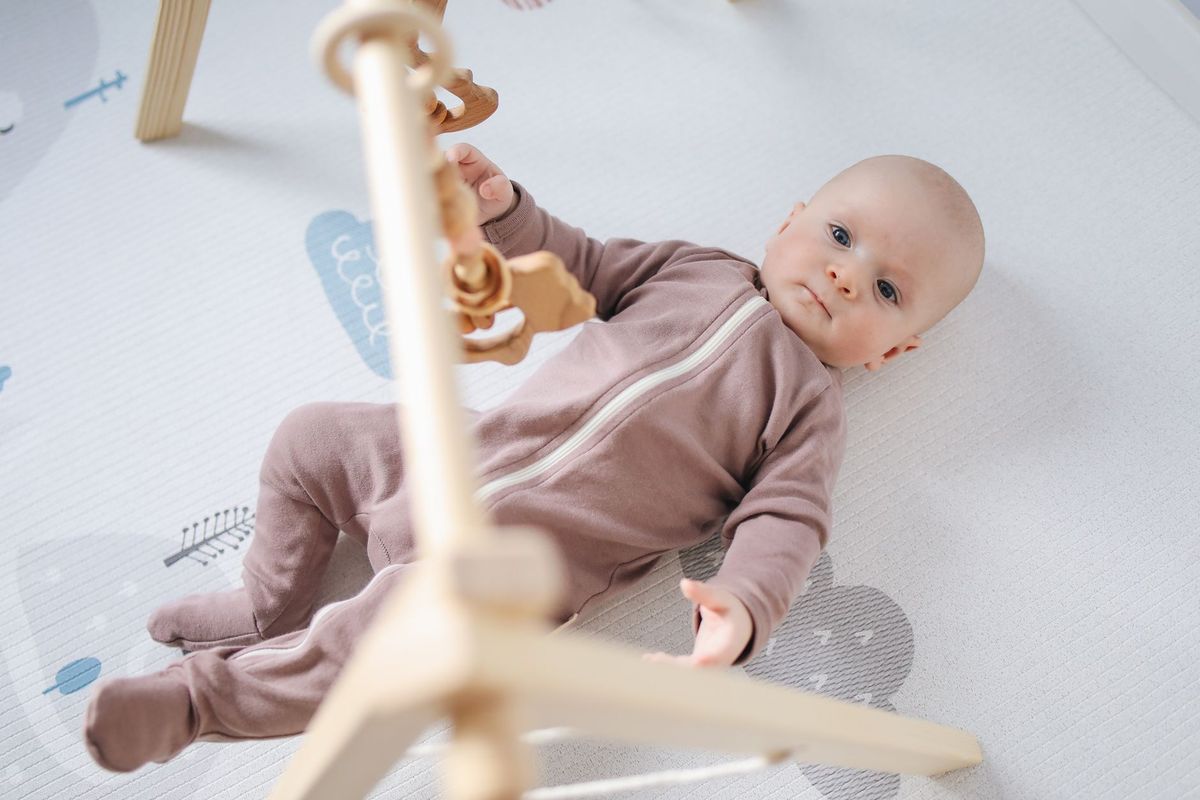
Lying on their back, babies study what hangs above them. In Montessori, the first mobiles are visual and slow-moving, black and white shapes first and then a few colors. Hang one at a time over the mat, never over the sleep space, and take visual mobiles down once your baby starts grabbing them. Templates are in our DIY Munari mobile.
3. A Mirror at Floor Level
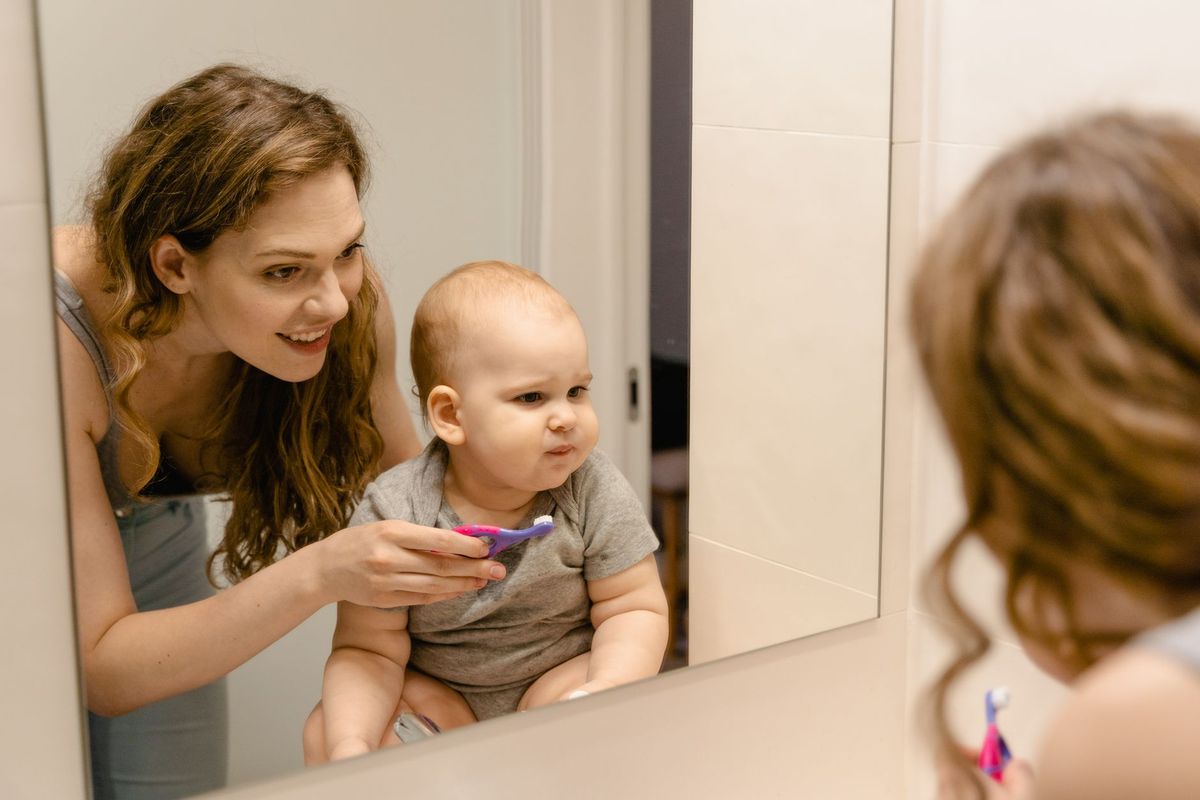
Babies love faces, including their own. A mirror beside the mat lets your baby watch their own movements, which helps them build a sense of their body. At home, use a shatterproof acrylic mirror fixed securely to the wall, placed horizontally along the mat.
3 to 6 Months: Reaching and Grasping
4. One Toy That Fits the Hand
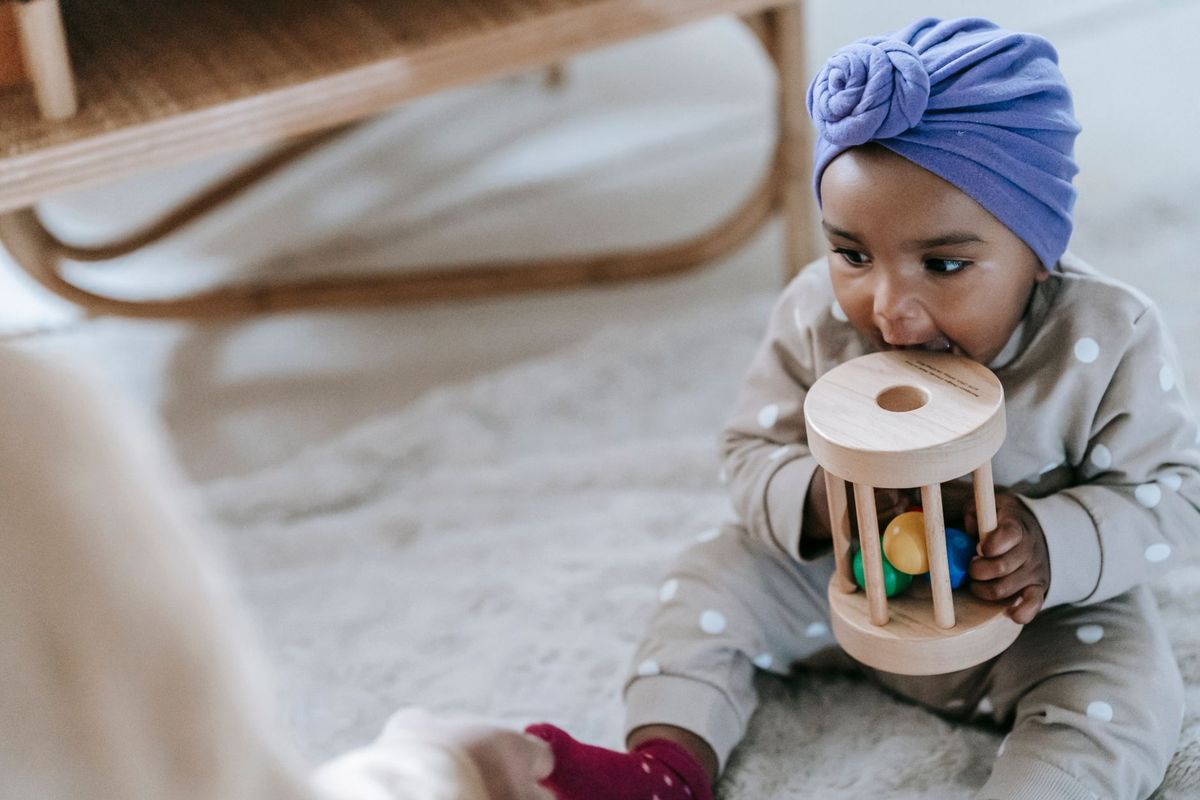
Around this age, babies start to reach on purpose. Simple wooden rattles, rings and cylinders are easy to grasp and pass from hand to hand. Put one or two within reach on the mat, not ten. More ideas in Montessori toys for babies.
5. High-Contrast Cards for Short Looks
Black and white cards stood beside the mat give a young baby something clear to focus on. A short look is a full session at this age; swap the card when your baby looks away. See black and white images for babies, or print the free cards on our baby printables page.
6 to 9 Months: Sitting and Starting to Crawl
6. A Sitting Baby and a Small Choice
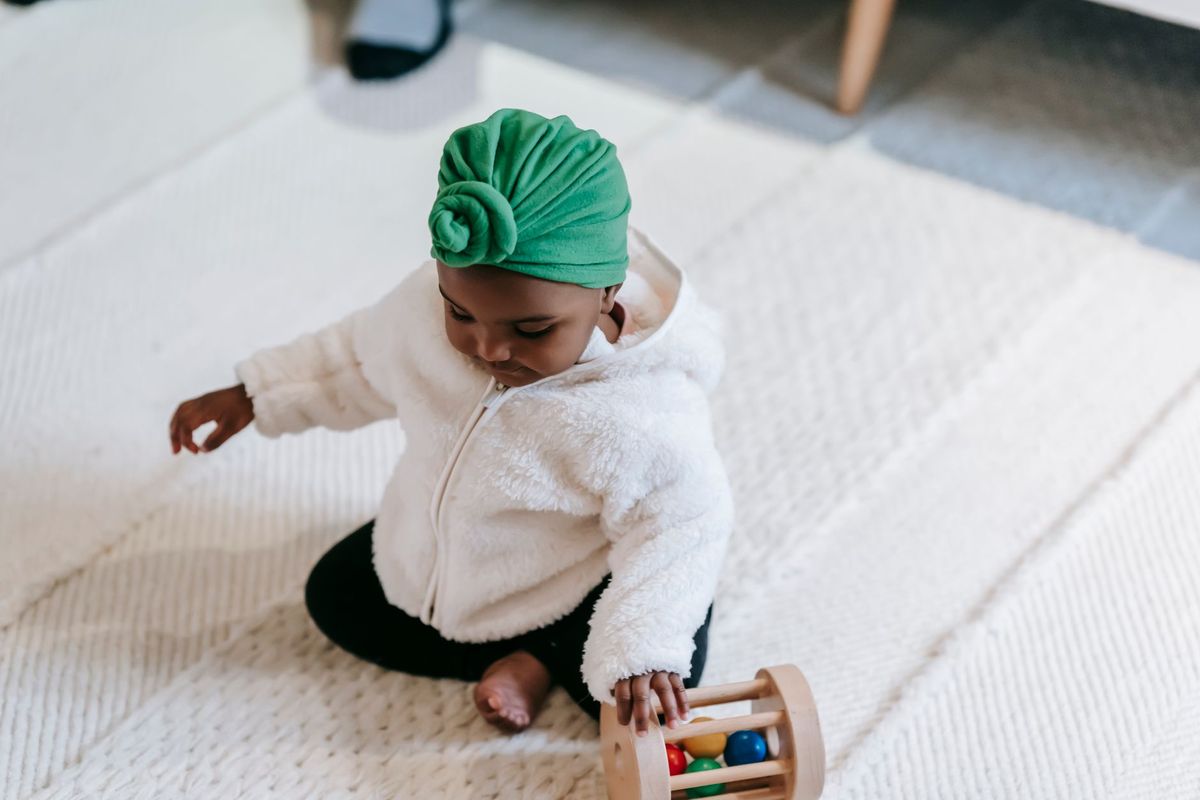
Once your baby sits, a rug and a low shelf with 3 or 4 objects become the play space. Your baby looks, chooses and reaches. Keep it to a few things so the choice is real.
7. A Clear Path to Crawl
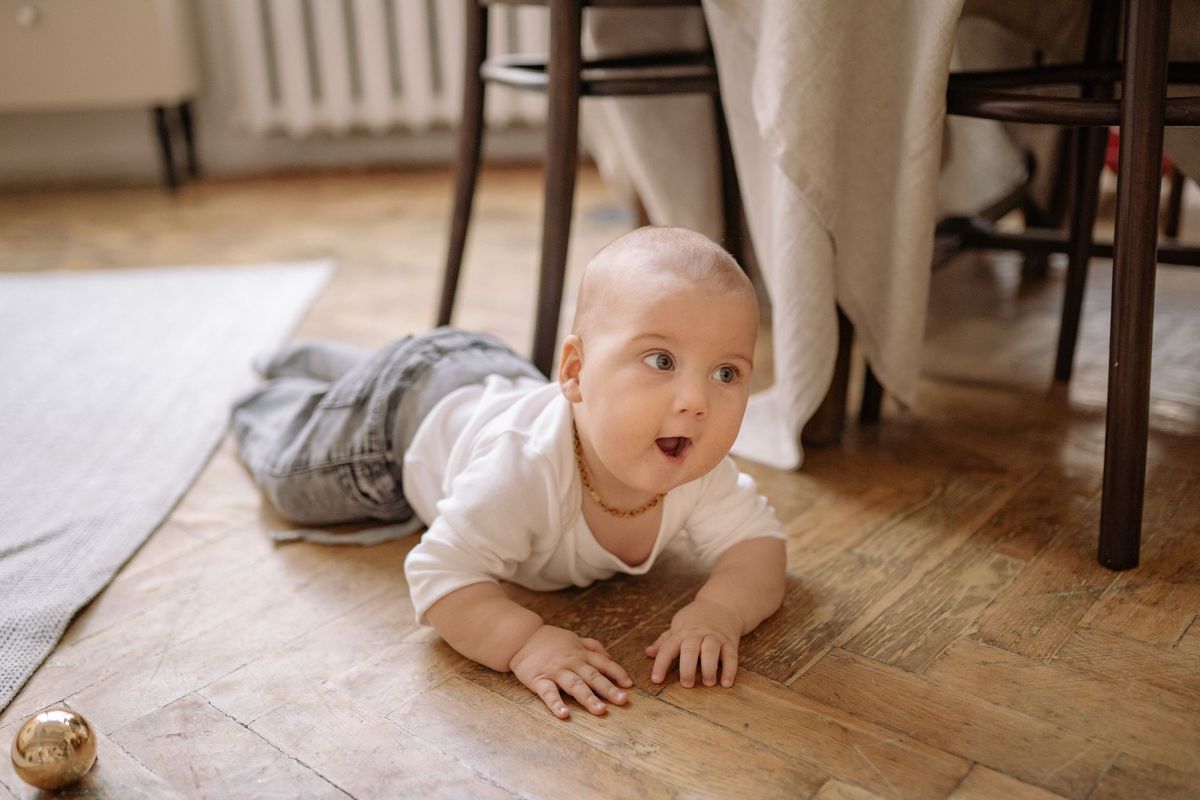
Crawling needs floor space and a reason to move. Put a favorite ball a little out of reach and let your baby go get it. A rug or bare floor both work; what matters is a path without obstacles.
8. The Whole Living Room as the Play Space
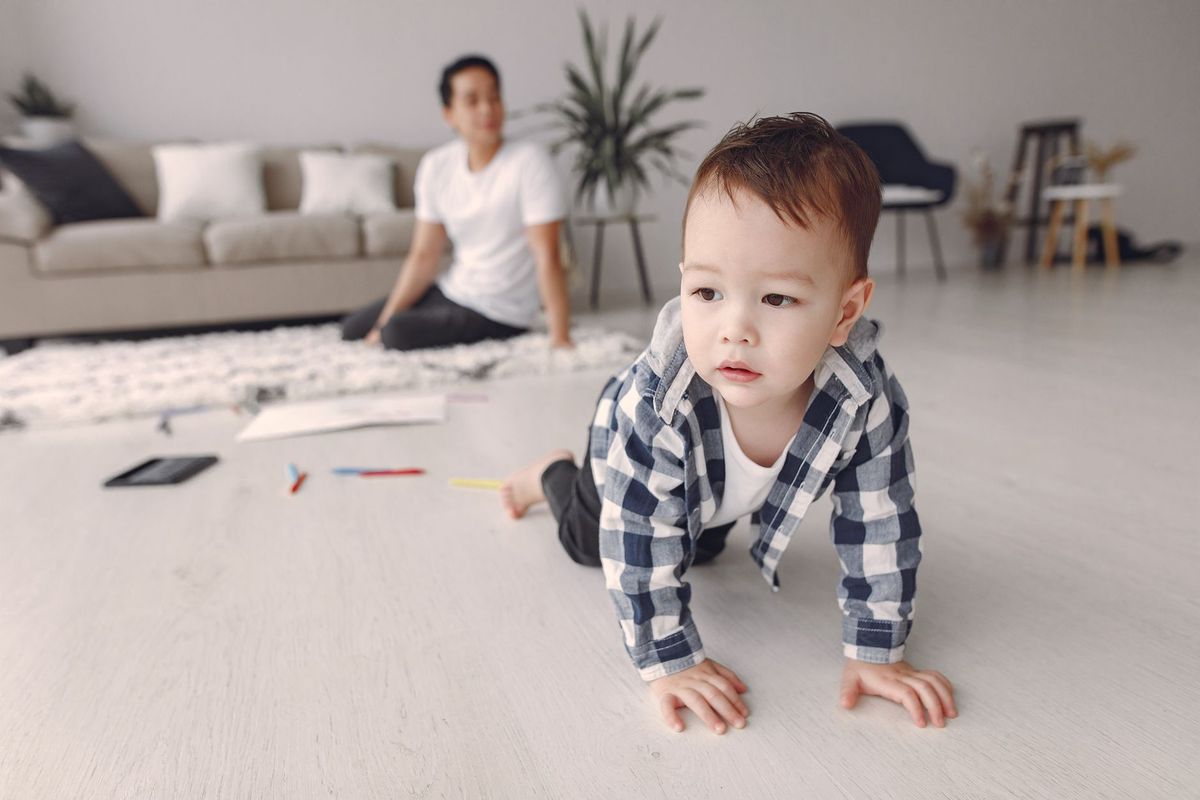
A mobile baby will cover the room. Instead of one perfect corner, make the shared room safe at floor level, with cords out of reach, outlets covered, small objects off the floor. Your baby plays near you, which is where most babies want to be.
9 to 12 Months: Pulling up, Stacking, Cruising
9. Blocks on a Rug
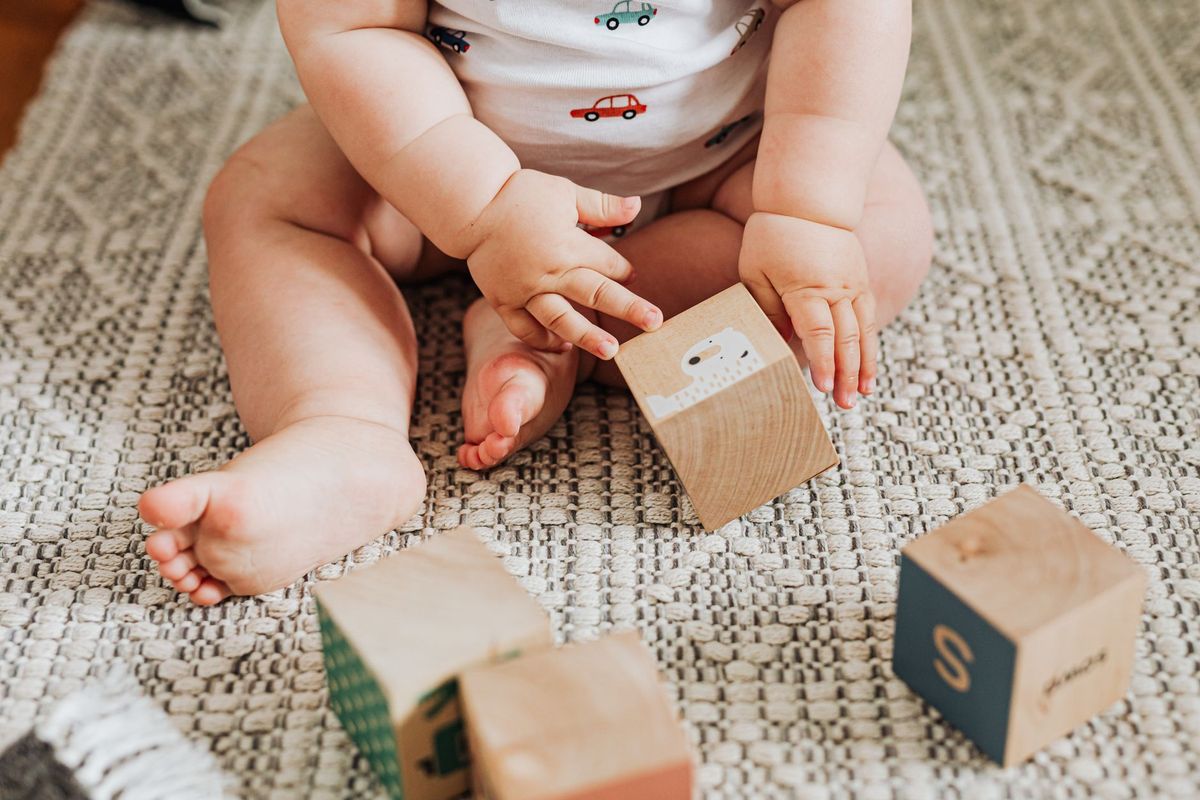
A few wooden blocks to hold, bang together and later stack. One small basket is enough, and the rug marks where they live.
10. Stacking Rings and Posting
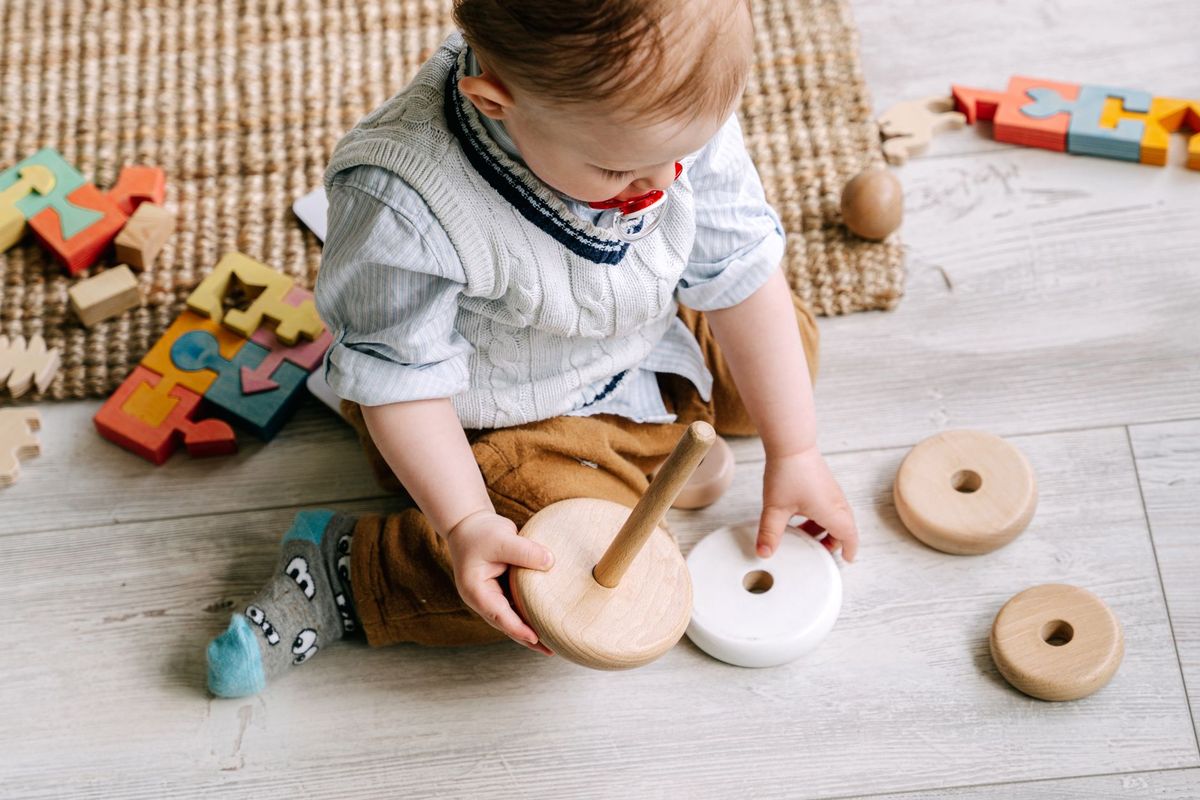
Babies near their first birthday enjoy putting things on and in, like rings on a post or a ball into a box. A Montessori stacker with a straight post and a few rings is easier than one with graded sizes at first.
11. Something Sturdy to Pull up On
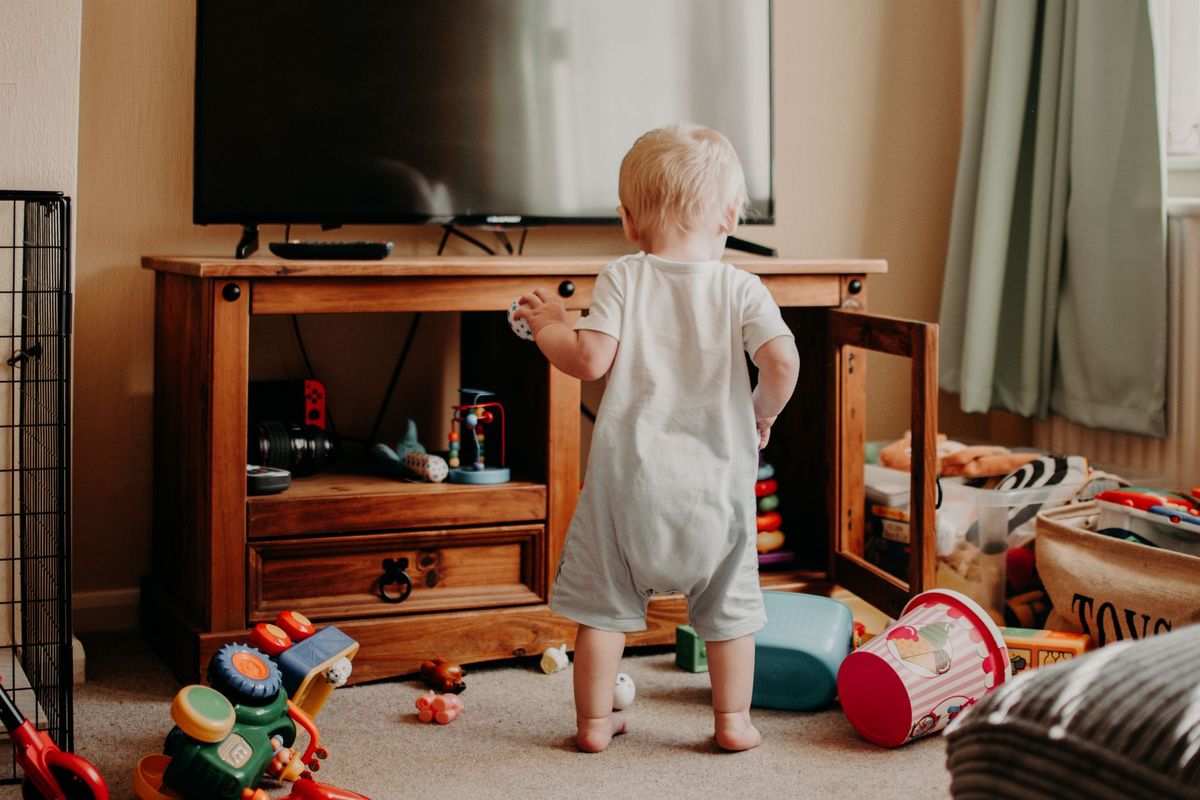
Babies pull up on whatever is at hand, so the low furniture in the room is part of the play space. Anchor every cabinet and shelf to the wall, and keep heavy or breakable things off the top. A sturdy pull-up bar or low stable shelf is a good Montessori addition if you want one.
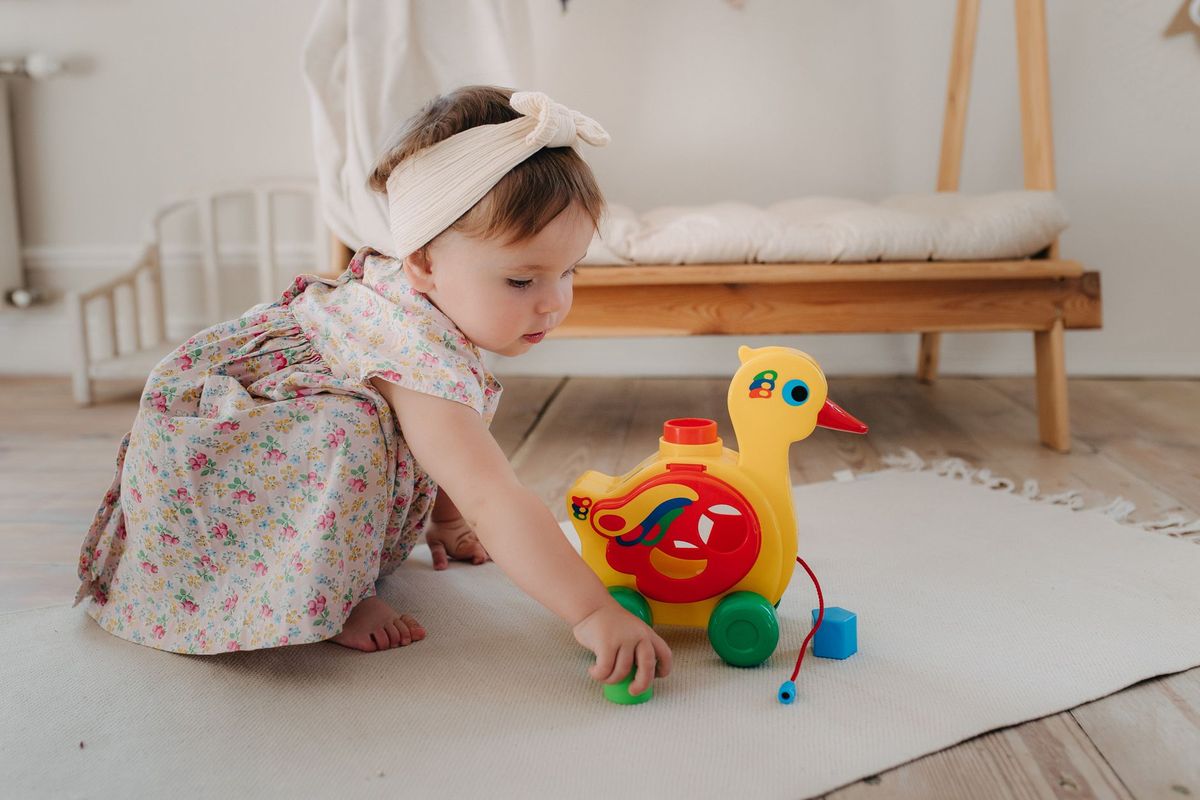
Once your baby walks along the furniture, a pull toy or a push wagon gives the new skill a purpose.
About Nursery Themes
Themes like forest, safari or ocean are about decor, and they’re fine on the walls. Keep the play and sleep areas simple and safe, with no canopies, fairy lights, faux fur rugs or soft decor in or near the sleep space, and art hung low and securely where your baby can see it.
Common Mistakes
- Too many toys out. Two or three within reach is plenty before 9 months.
- Hours in containers. Bouncers and swings are fine for short breaks, but floor time builds movement.
- Doing it for them. If your baby is working hard to reach a toy, wait a moment before handing it over.
- Small parts. Anything that fits through a toilet paper tube is a choking risk for babies.
Questions Parents Ask
What Is a Montessori Play Space for a Baby?
A safe area on the floor with a firm mat, a mirror, one mobile or a few simple toys, where your baby can move freely and choose what to look at or hold.
When Should I Add a Shelf?
Usually once your baby sits steadily, around 6 to 8 months. Before that, toys go on the mat within reach. See heights in our Montessori shelf guide.
How Is This Different From a Movement Area?
Same idea. Our movement area guide covers the full setup and materials in detail; this page shows how the space evolves month by month.
From Our Book
The Everyday Montessori Baby follows these stages from birth to 18 months, with a sample day and simple activities for each. Read the first chapter free.
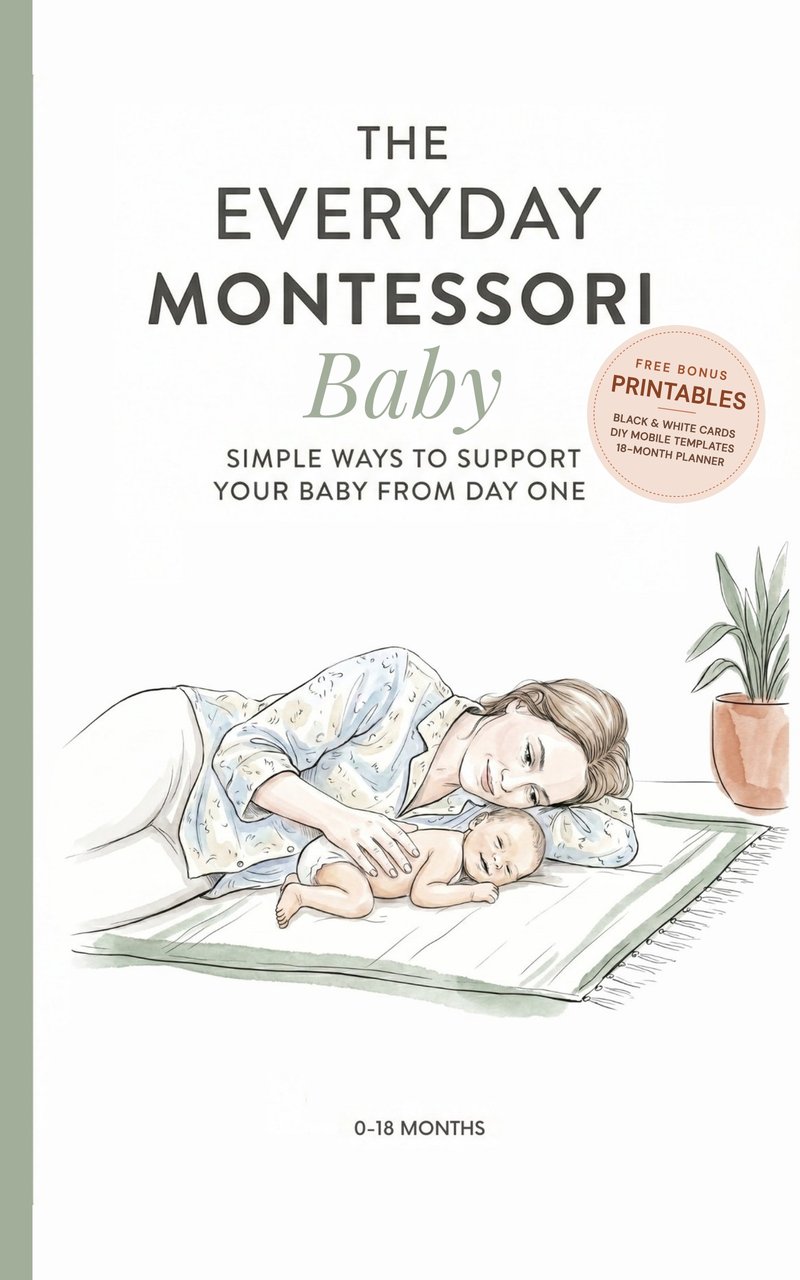
The Everyday Montessori Baby
Book 1 of the Montessori for Real Life series, for 0 to 18 months. What your baby is working on at each stage, a sample day, safe sleep and simple activities with what you already have.
Launch price $6.99 $4.99 Kindle · $14.99 $12.99 paperback
Sources
- American Academy of Pediatrics, A Parent’s Guide to Safe Sleep (tummy time while awake and supervised).
- U.S. Consumer Product Safety Commission: small parts and Anchor It.
- Montessori, M. The Absorbent Mind (1949): movement and the young child.
- Photos from Pexels (free licence).