

When naps disappear, the hardest part is rarely bedtime. It is the long afternoon when a child is too awake to sleep but still too young to move through six straight hours without a pause.
Quiet time can protect that pause, but it does not begin with a child playing alone for an hour behind a closed door. It begins with a very short, predictable period built from activities the child already knows how to use.
At a Glance
- Best starting length: Five to ten minutes, not one hour
- Best activities: Familiar, quiet, complete, and easy to restore independently
- Best location: A safe room or defined corner where the child already feels comfortable
- What to avoid: New crafts, complicated puzzles, bins with many loose pieces, and constant parent entertainment
- Realistic goal: Thirty to forty-five calm minutes after a gradual transition
First Make Sure the Nap Is Really Ending
A few difficult nap days do not always mean the child is finished sleeping. Travel, illness, a developmental leap, a later morning, or an exciting week can temporarily change sleep. If the child falls asleep easily in the car every afternoon, becomes distressed by dinner, or sleeps much longer on weekends, the body may still need a nap even if the current schedule no longer works.
Safety note: Sleep needs vary. If a child is consistently exhausted, unusually irritable, or sleeping poorly at night, discuss the pattern with the child’s healthcare professional rather than forcing a no-nap schedule.
Quiet Time Is Not Isolation
The purpose is nervous-system recovery, not adult convenience disguised as punishment. A child should know where the parent is, how long the period will last, and what they may choose. The door does not need to be locked. The child does not need to remain silent. The environment simply becomes slower, smaller, and more predictable.
Why Familiar Activities Matter
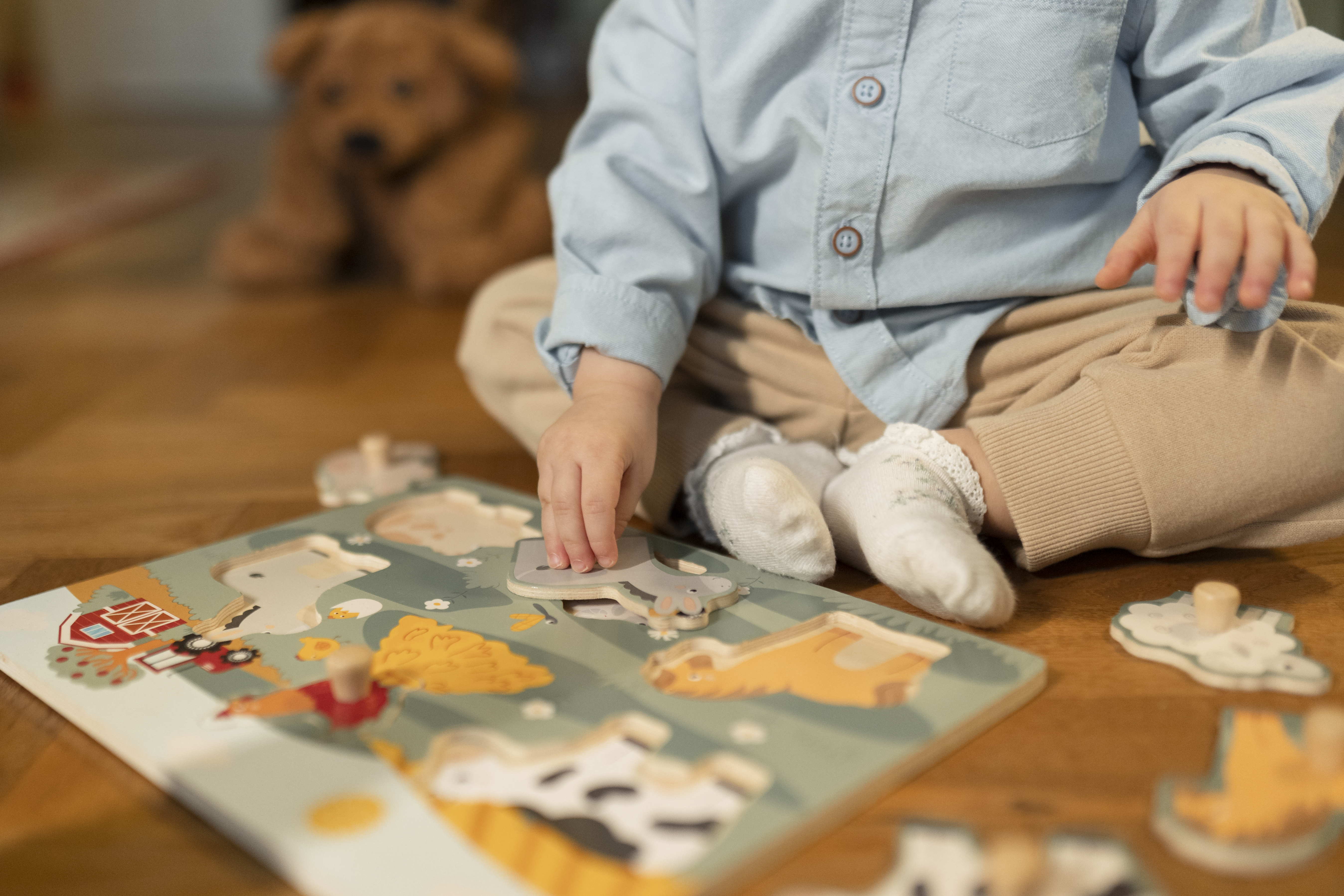
Quiet time is the worst moment to introduce an exciting new material. Newness invites questions, experimentation, and requests for help. Independence grows from repetition. A puzzle the child completed yesterday is often more useful than a beautiful new quiet-time box.
Good Quiet-Time Choices
- Two or three front-facing books the child already enjoys
- A simple puzzle the child can complete without help
- Large drawing materials with one notebook
- A matching or sorting activity with a small number of pieces
- A photo album, felt board, or reusable sticker scene
- A quiet audio story with simple controls
Activities That Usually Backfire
- A craft with glue, cutting, or several steps
- A box full of tiny mixed pieces
- A toy that requires an adult to reset it
- A brand-new material presented without a lesson
- Anything noisy enough to keep a younger sibling awake
- A collection so large that choosing becomes the main activity
A 14-Day Transition Plan
Do not increase the time because the calendar says so. Increase it when the child reaches the ending without becoming distressed. A child who succeeds for twelve minutes is building more independence than a child who is repeatedly returned to a room for forty-five minutes.
Prepare the Body Before Asking for Calm
Some children cannot move directly from lunch into quiet concentration. They need ten or fifteen minutes of purposeful movement first. Carry laundry, walk outside, push a basket, water plants, or help wipe the table. Heavy work and fresh air often make quiet time possible without turning it into a battle.
Why it works: A short movement period helps the child finish the active part of the day before the environment becomes quieter. Calm is easier after the body has had real work.
Use a Clear Beginning and Ending
- Use the bathroom and offer water. Remove the most predictable reasons for leaving immediately.
- Choose one or two activities. The child may choose from a limited shelf, not the entire house.
- Start a visual timer. Explain that quiet time ends when the timer is finished.
- Use the same closing ritual. Put away the activity, open the curtain, and reconnect with a snack or short cuddle.
What to Do When the Child Leaves
Expect leaving. It is part of learning the boundary. Avoid a long lecture or dramatic return. Walk back together and use the same short sentence. “Quiet time is still happening. You may choose a book or drawing.”
When the Child Needs Connection
Some children leave because they are checking whether the parent is still available. Begin with the parent reading or writing quietly in the same room. Independence built beside a calm adult is still independence.
When the Child Says They Are Bored
Boredom is not an emergency. Acknowledge it without opening the full toy cupboard. “You do not know what to choose yet. The books and drawing are available.” The child may spend a few minutes doing nothing before beginning.
When a Younger Sibling Is Sleeping
Keep a separate quiet-time basket that contains no rolling pieces, musical toys, or hard objects likely to be dropped. A rug or folded quilt also softens normal play sounds.
The Best Setup Is Small
A quiet-time shelf does not need twelve invitations. Three choices are often enough. One book option, one hand activity, and one creative option give variety without clutter. Rotate only when the current choices have clearly stopped serving the child.
Protect the Pause, Not a Perfect Hour
The first goal is not a long independent block. It is a dependable pause in the day that does not require sleep. Five successful minutes can become ten, then twenty, then a rhythm the child expects.
Keep the activities familiar, prepare the body with movement, and make the ending clear. Quiet time grows through trust and repetition, not by demanding stillness from a tired child.