
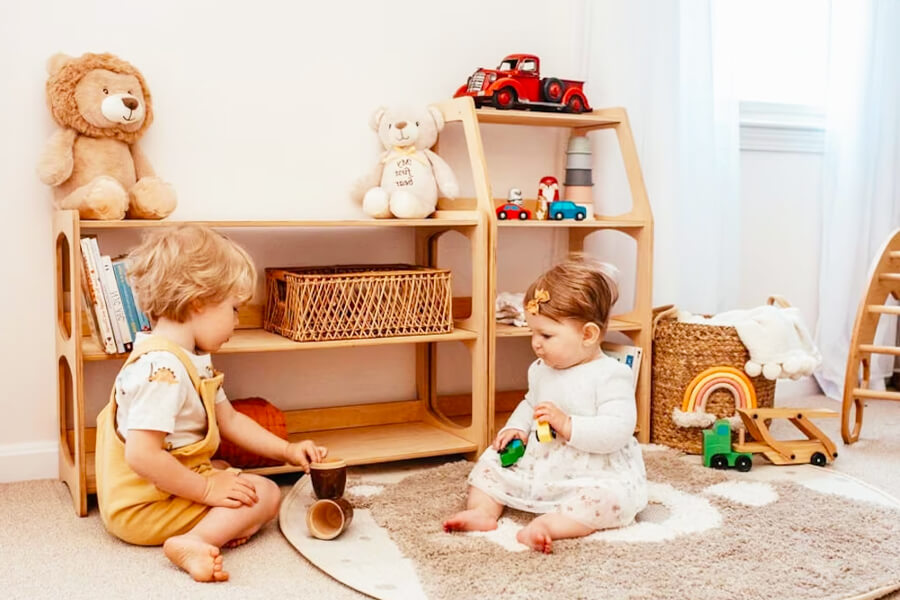
Most guides to Montessori at home start with a shopping list. Wooden shelf, low hooks, floor bed, natural materials. That list is not wrong. But it misses the point of why Montessori works, and it leads parents to spend money on an environment that sits unused because the harder shift has not been made.
The harder shift is in behaviour. How long you wait before stepping in. Whether you ask questions or give answers. Whether your child pours their own water or whether you pour it for them because it is faster. The most important Montessori changes at home cost nothing. They just require you to do less, more deliberately.
The Mindset Shift That Everything Else Depends On
Montessori’s foundational observation, made through years of watching hundreds of children in the Casa dei Bambini, was that children are capable of significantly more than adults typically allow them to do. Not capable: capable of far more than we give them credit for, at far younger ages than we generally expect.
A one-year-old can carry their own cup to the table. A two-year-old can fold a small cloth. A three-year-old can peel a banana and pour their own drink. A four-year-old can help prepare a simple meal. When adults step in and do these things for children: because it is quicker, because the result is neater, because it is easier, they deprive the child of the precise experience that builds concentration, fine motor control, and genuine confidence.
This is the mindset shift that Montessori at home requires: moving from “I’ll do it for you because it’s faster” to “I’ll show you how, and then I’ll wait.” The waiting is the hard part. Watching a two-year-old carefully pour water from a child-sized pitcher, taking twice as long as it would take you, getting some on the table, correcting their grip, trying again. This is not wasted time. This is exactly what Montessori learning looks like. Your job is to have set up the pitcher and the cloth for wiping the spillage, and then to stay out of the way.
Three phrases to retire from your daily interactions
- “Let me do that for you” → Try “Would you like to try? I’ll show you once.”
- “Well done!” / “Good job!” → Try “You did it.” or “You spent a long time on that.” Descriptive observations rather than evaluative praise: the research on intrinsic motivation consistently shows that evaluative praise shifts children toward performing for approval rather than working for mastery.
- “What is this?” (pointing at a picture) → Try “Tell me about this.” The first tests knowledge and implies a right answer; the second invites observation and language without the pressure of evaluation.
The Five Principles, Applied Honestly
The Montessori framework for any environment, home or classroom, rests on five interrelated principles. Here they are as they actually work in a home: not as ideals but as practical shifts.
1. Follow the child
In practice: pay attention to what your child returns to repeatedly, what they ask about, what catches and holds their concentration. That is the signal. A three-year-old who spends twenty minutes carefully arranging rocks by size is in a sensitive period for order and classification: offer more of that, not less. A child who keeps asking about where food comes from should be cooking alongside you, not watching you cook. Following the child means reading these signals and responding to them with your environment and your time, not redirecting them to what you had planned.
2. Prepare the environment
In practice: do the work in advance so your child does not need you for access. Low hooks for their coat. A step stool at the bathroom sink so they can wash their own hands without asking. A low shelf in the kitchen with their plate, cup, and utensils at their height. A drawer in the wardrobe with three or four appropriate outfit options. None of this requires Montessori materials. It requires reorganising what you already have to put it at your child’s level, physically and developmentally.
3. Help me to help myself
In practice: this is Maria Montessori’s most quoted phrase: “Help me to do it myself” , and it is the hardest principle to live by. When a child struggles with a zip, the Montessori response is not to zip it for them. It is to show them how: slowly, from behind their shoulder so they see it from the child’s perspective, then wait. The first time will be slow. The tenth time will be fast. The hundredth time they will not even think about it. Every time you do a thing for a child that they could do themselves, you are borrowing their next opportunity to build the skill.
4. Freedom within limits
In practice: the freedom is real, and the limits are real. In Montessori, children choose their activity from what has been prepared for them: they do not have access to everything at once, and they do not get to do things that are genuinely not safe. At home, this means making genuine choices available (“Would you like to help with the salad or set the table?”) rather than false choices (“Would you like to clean your room now or in five minutes?”). It also means maintaining real, consistent limits clearly and without apology, not negotiating the limits away under pressure, which removes the structure that makes the freedom meaningful.
5. Positive discipline
In practice: Montessori does not use reward systems, sticker charts, or punishment as disciplinary tools. This does not mean permissiveness. It means helping a child understand the natural consequences of their choices, redirecting energy rather than suppressing it, and maintaining limits with warmth rather than force. When a child throws food off their plate, the Montessori response is not time-out: it is helping them wipe up what landed on the floor (natural consequence, practical skill, dignity maintained). When a child hits a sibling, the response is acknowledging the emotion without accepting the behaviour, and offering another path for expressing it.
Room by Room: What Changes and What Stays the Same
You do not need to redesign your home. You need to look at each room from your child’s eye level: literally get down and see what they see, and ask: what can I access from here? What am I excluded from? What would I try to reach if I could?
The kitchen: the best Montessori room in your house
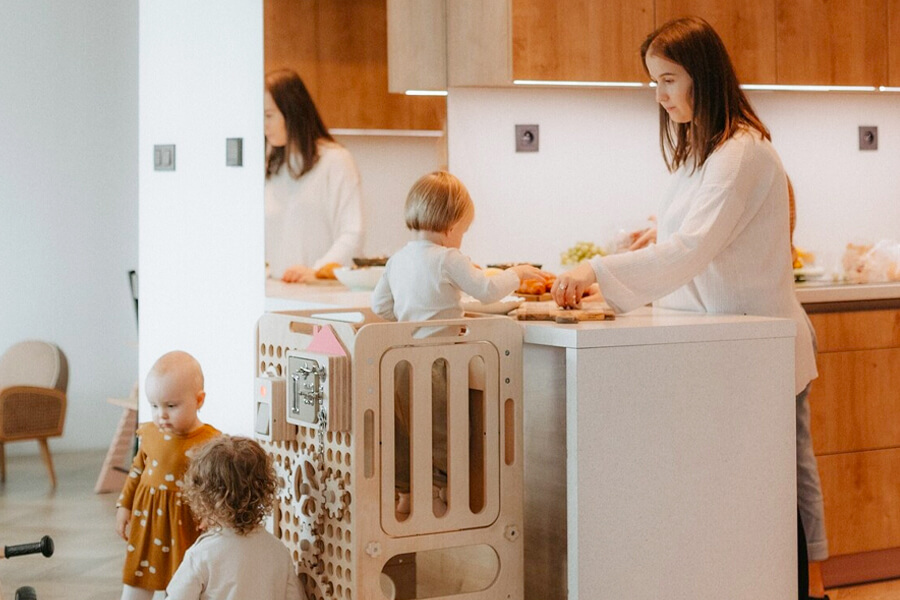
The kitchen is where the most valuable Montessori learning happens at home. Pouring, measuring, cutting (with a child-safe knife from around age 3), spreading, washing vegetables, stirring, setting the table, carrying dishes. All of these are practical life activities that build concentration, fine motor control, and real competence.
- One low shelf or drawer accessible to the child with their plate, bowl, cup, and utensils
- A child-sized pitcher and a small cloth for mopping spills independently
- A learning tower or step stool at counter height for meal preparation involvement
- Real tools at appropriate scale: a small chopping board, a vegetable peeler, a spreading knife
- A small table and chair at child height, so they eat at the right scale
Critically: use real dishes, not plastic. The weight of a real ceramic bowl, the consequence of dropping it, is part of the experience. Children handle real things with more care when they understand they are real.
The bedroom: independence from waking to bedtime
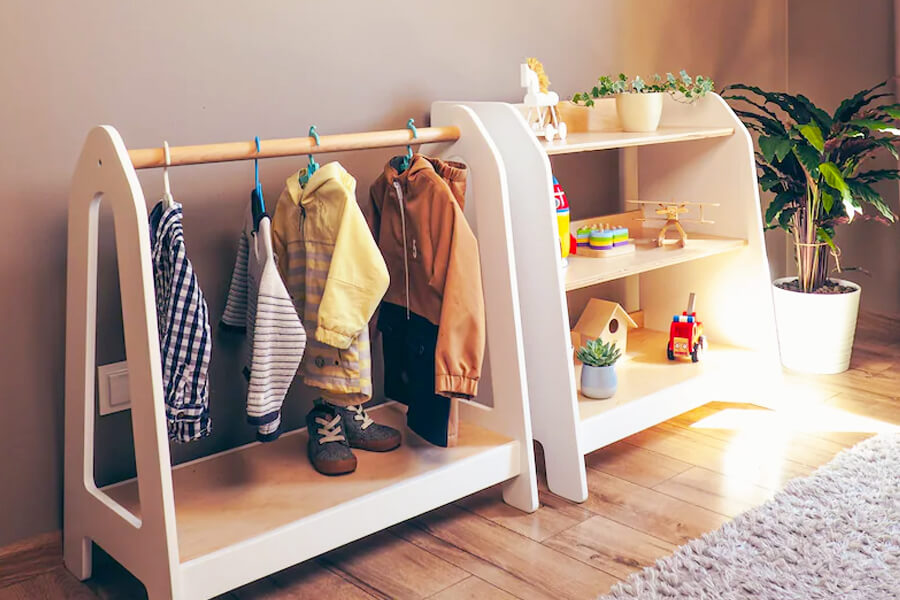
The bedroom should allow the child to begin their day without adult intervention wherever possible. From the age they can safely navigate it:
- Floor bed or low bed: allows independent exit in the morning
- Low wardrobe or accessible drawers: offer a limited selection of appropriate clothes (seasonal, weather-appropriate) so the child chooses and dresses independently
- Open shelving for books and activities: 6-8 items maximum, rotated every few weeks as interests shift: a full shelf overwhelms rather than invites
- A mirror at child height: for dressing checks and self-awareness
- A small laundry basket: so they can manage their own dirty clothes from the beginning
The bathroom: hygiene as a daily independence routine
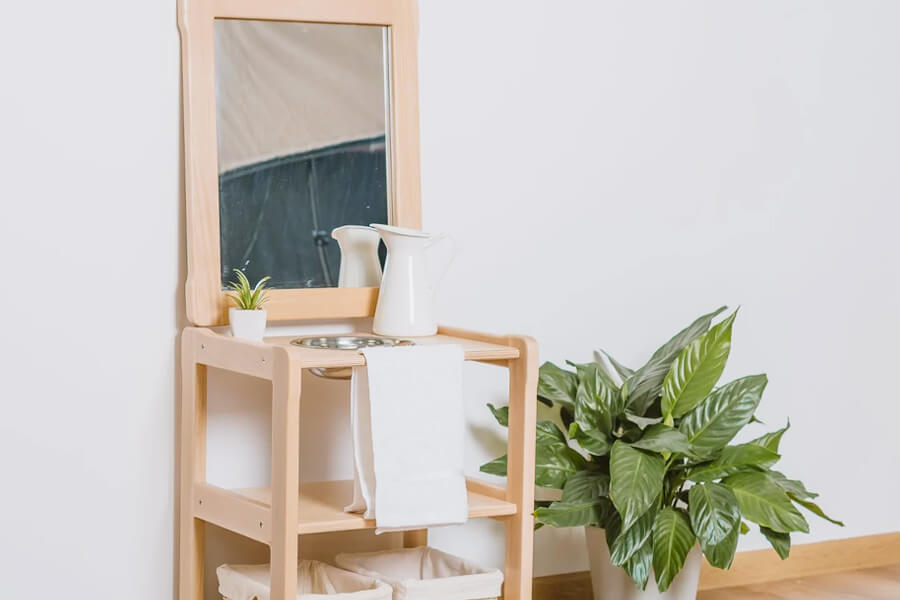
The bathroom is one of the simplest rooms to adapt and one of the most impactful for building daily self-care independence:
- A step stool at the sink so the child can wash their own hands and face without being lifted
- Toothbrush and toothpaste at child height, mounted or in a small accessible cup
- A low hook for their own towel
- A small cloth or sponge they can use to wipe the sink and counter after use
The bathroom is notably not a toy room in the Montessori approach. Keep the items in it functional and minimal. The bath itself is already sensory-rich enough.
The play area: less is significantly more
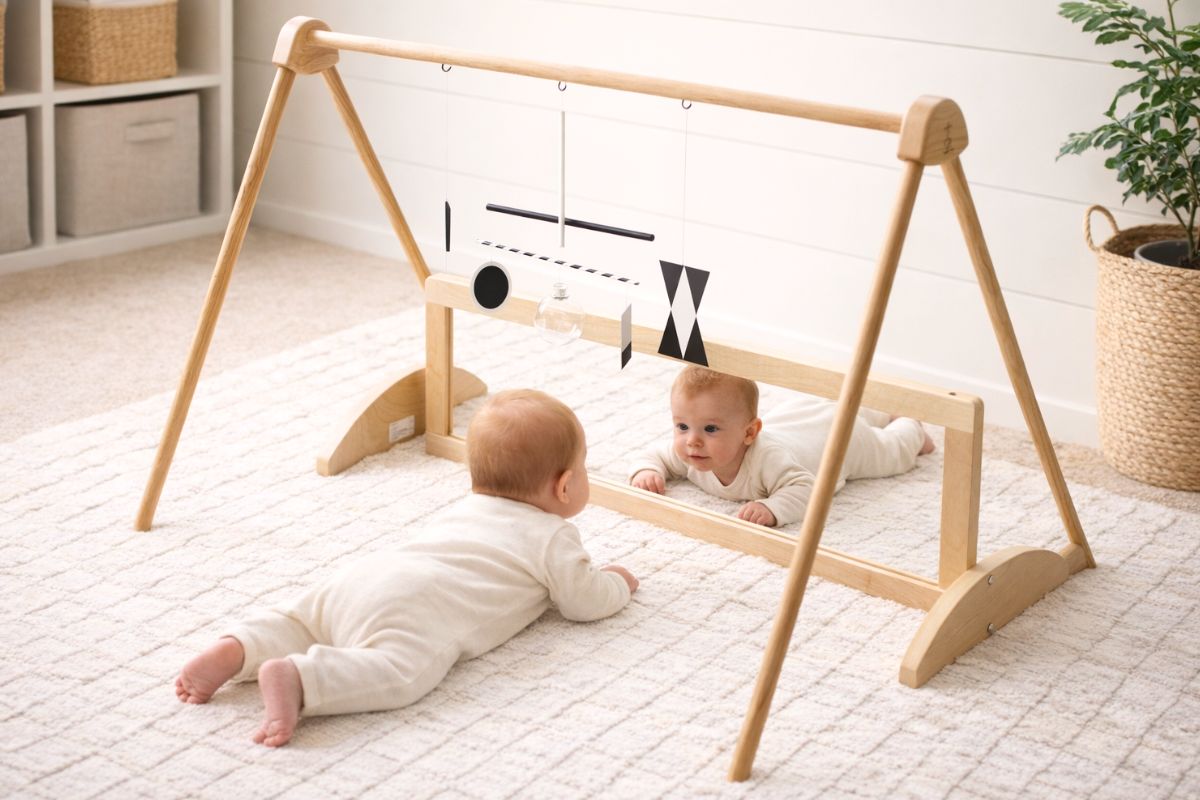
The most common Montessori home mistake is too many toys accessible at once. A child presented with 40 toys bounces between them without concentrating on any. A child presented with 6-8 items on a low shelf, each complete and inviting, concentrates deeply and returns to the same activities repeatedly, which is where actual learning happens.
- Rotate items every 2-4 weeks. Store the rest out of sight. When a stored item comes back out, it is met with the focus of something new.
- Each item on the shelf should be complete: all pieces present, in a tray or basket, ready to use without adult set-up
- Display items with the “unfinished” state inviting: a puzzle with pieces beside it in a tray, not assembled. A stacking activity with rings beside the post.
- Natural materials (wood, fabric, metal, glass) where possible. They have real sensory properties that plastic does not.
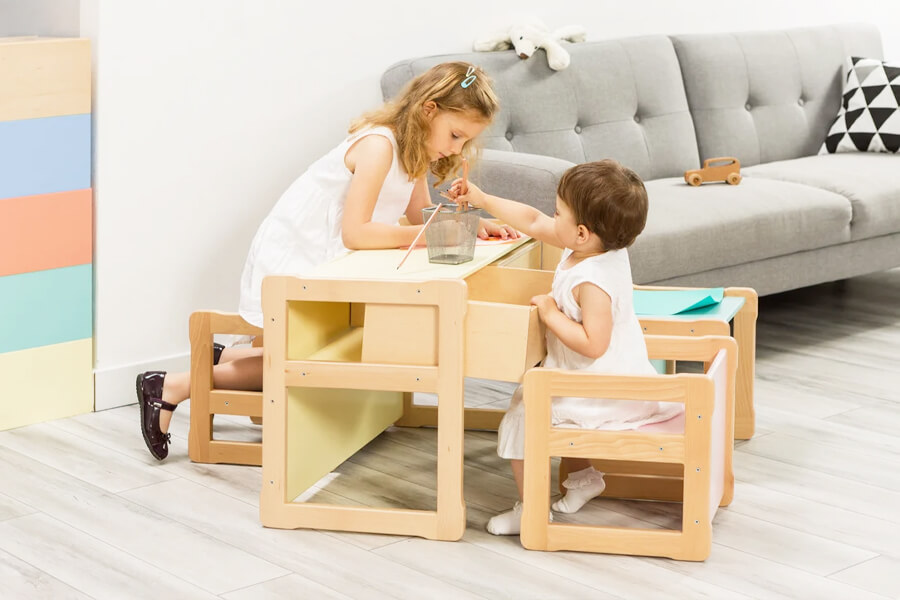
- Art materials at a dedicated low table with easy access to paper, pencils, and a cloth for clean-up
The Most Common Mistakes at Home
Understanding what not to do is as useful as understanding what to do. These are the patterns that most consistently undermine a Montessori home environment, regardless of how beautiful the shelf looks.
Interrupting concentration
A child who is deeply focused should not be interrupted for anything non-urgent. Not to show them something. Not to offer a snack. Not to check what they are doing. Deep concentration is the goal of Montessori learning: it is the state in which real development happens. Interrupting it is the most common way adults accidentally undermine the environment they have prepared.
Buying before understanding
Montessori materials are beautifully designed, and they are expensive. They are also presented in a specific sequence, for a specific developmental purpose, after a child has been introduced to them correctly. A Montessori material bought without understanding its purpose and sequence, placed on a shelf without a proper introduction, will likely be misused and eventually ignored. Start with what you already have. The practical life activities: cooking, cleaning, self-care, require household objects, not specialist materials.
Expecting a Montessori classroom in a family home
A Montessori classroom has a trained teacher, 20-30 children across a three-year age range, a complete set of sequenced materials, and a three-hour uninterrupted work period. None of these exist at home, and that is fine. Montessori at home is not a classroom in miniature. It is a set of principles applied to family life: real tasks, real tools, real materials, independence given where possible, and interruptions reduced where you can.
All-or-nothing thinking
Montessori is not a binary. You do not need to implement everything at once or implement nothing. A single low shelf in the bedroom. A step stool at the sink. Letting your child help with dinner once a week. Each of these is a genuine Montessori change, implemented at the pace your family allows. The goal is direction, not perfection.
Age Matters: What “Montessori at Home” Looks Like at Different Stages
The principles remain constant. What they look like in practice changes significantly as children develop. The most common mistake is applying the same approach across all ages, which either gives too little freedom to a capable older child or too much to an infant who needs structure and containment.
Questions Parents Ask Most Often
My child already goes to a Montessori school. Do I still need to change anything at home?+
Yes and no. You do not need to replicate Montessori materials at home: your child is already using them at school, and introducing the same materials in a different context without a proper presentation can confuse rather than reinforce. What home can offer that school cannot is real practical life: cooking actual meals, caring for real plants, cleaning real spaces, shopping for real food. These are experiences the classroom can simulate but never fully replicate. Ask your child’s teacher where they are in the sequence and what you can do at home to extend that: the answer will almost always be practical life and outdoor time, not additional materials.
My child ignores the shelf and just wants screens. What do I do?+
Screens are highly stimulating and trigger dopamine release in ways that natural materials and real tasks cannot compete with in the short term. If your child has unrestricted screen access, the prepared environment will initially lose the competition. The Montessori answer is not to fight it with more interesting materials but to reduce screen access, create genuine boundaries around device use, and allow the boredom that initially follows. Boredom is where curiosity begins. Most children who are initially resistant to a prepared environment engage with it within two to three weeks of reduced screen time, because their attention system recalibrates to slower, more complex stimulation.
How do I handle siblings at different stages?+
This is where Montessori at home most closely resembles the classroom, because the multi-age dynamic is one of the method’s genuine strengths. An older child who shows a younger sibling how to pour water is reinforcing their own skill through teaching. A younger child who watches an older sibling fold a cloth is preparing for that activity before they try it themselves. Where you need to be deliberate is in protecting the older child’s concentration: a three-year-old who is deeply focused should not have their work interfered with by a one-year-old. This may mean that the younger child is in a separate safe space during the older child’s work time, rather than having constant shared access to everything.
What is the single most important thing I can do today?+
Tonight, let your child set the table for dinner. Show them once where everything goes and how it is done. Then step back and let them do it, all of it, including the mistakes. Do not rearrange what they place, do not correct the alignment of the fork. Just let it happen. Tomorrow let them do it again. Within a week, they will not need showing. This single change: one real task, done independently, repeated daily, is the essence of Montessori at home. Everything else builds from there.
Where to Start When You Have No Idea Where to Start
Montessori at home is not a project you complete. It is a direction you move in, steadily, at the pace your family allows. Begin with the kitchen. Put a step stool at the counter and involve your child in making dinner tonight, even if it just means washing a vegetable or setting a timer. Then observe: what did they concentrate on? What did they ask to do again? That is your signal. Follow it. The beautiful shelf with seven perfectly placed wooden activities is a lovely goal. But the habit of stepping back and letting your child try is the practice that actually changes something. That one is free, and you can start today.