
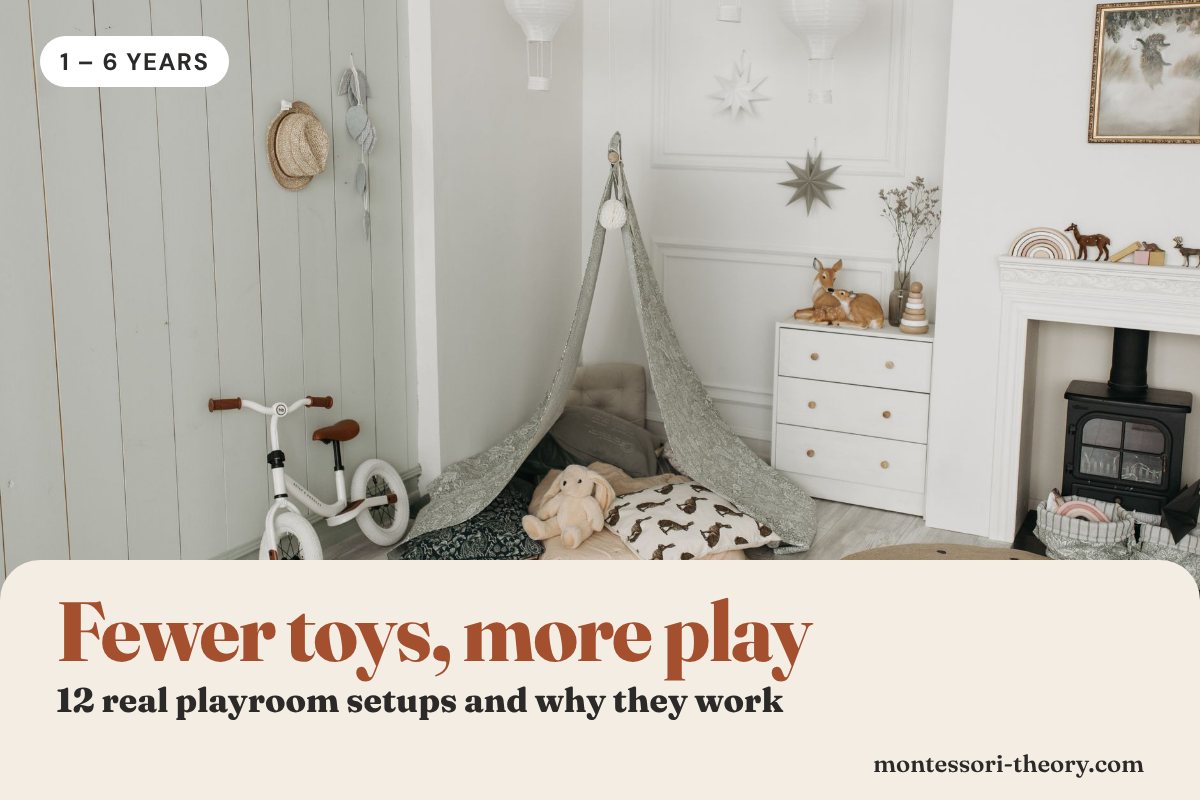
Updated October 2026. rewritten with 12 real, licensed photos and the Montessori logic behind each setup. Ideas from our older minimalist and toddler playroom galleries are merged here.
A Montessori playroom doesn’t need a whole room, a matching palette or wooden everything. It needs a few things your child can reach, see and put back. Here are 12 real setups and what makes each one work, so you can copy the idea rather than the look. For the bigger picture, start with our Montessori at home guide.
Quick Answer. The 5 Rules Behind Every Good Montessori Playroom
- Low and open. shelves at your child’s height, no lids, no toy box.
- Few choices. 6 to 8 activities out, the rest stored and rotated.
- A defined work spot. a rug or a small table where an activity is used and finished.
- Room to move. clear floor, and something to climb or push for toddlers.
- Safe. furniture anchored to the wall, small parts out of reach of children who still mouth.
12 Setups and Why They Work
1. A Work Rug That Marks “This Is My Activity”
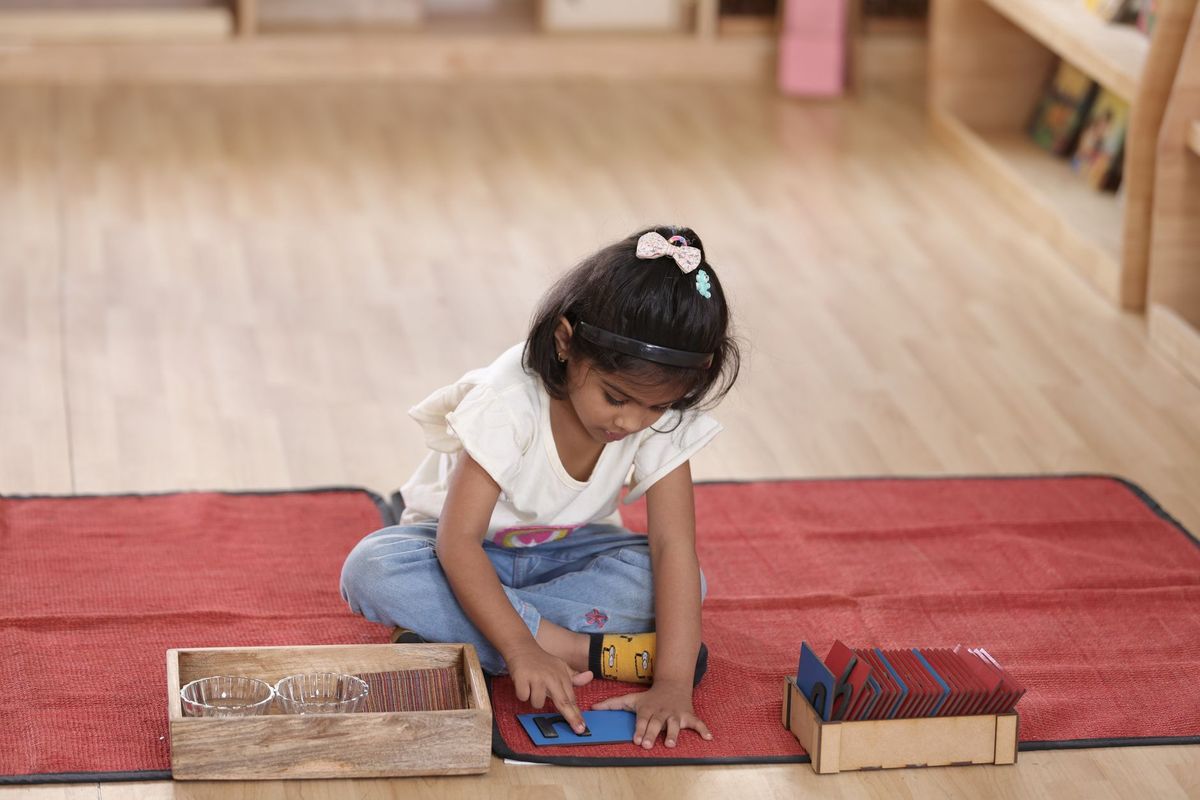
A small rug on the floor turns any corner into a workspace. Your child takes a tray from the shelf, unrolls the rug, works, and rolls it back. The edge of the rug tells them where the activity lives, which keeps pieces together. Copy it. a 2 x 3 ft rug or a bath mat, kept rolled in a basket.
2. Low Shelves With Space Between Things
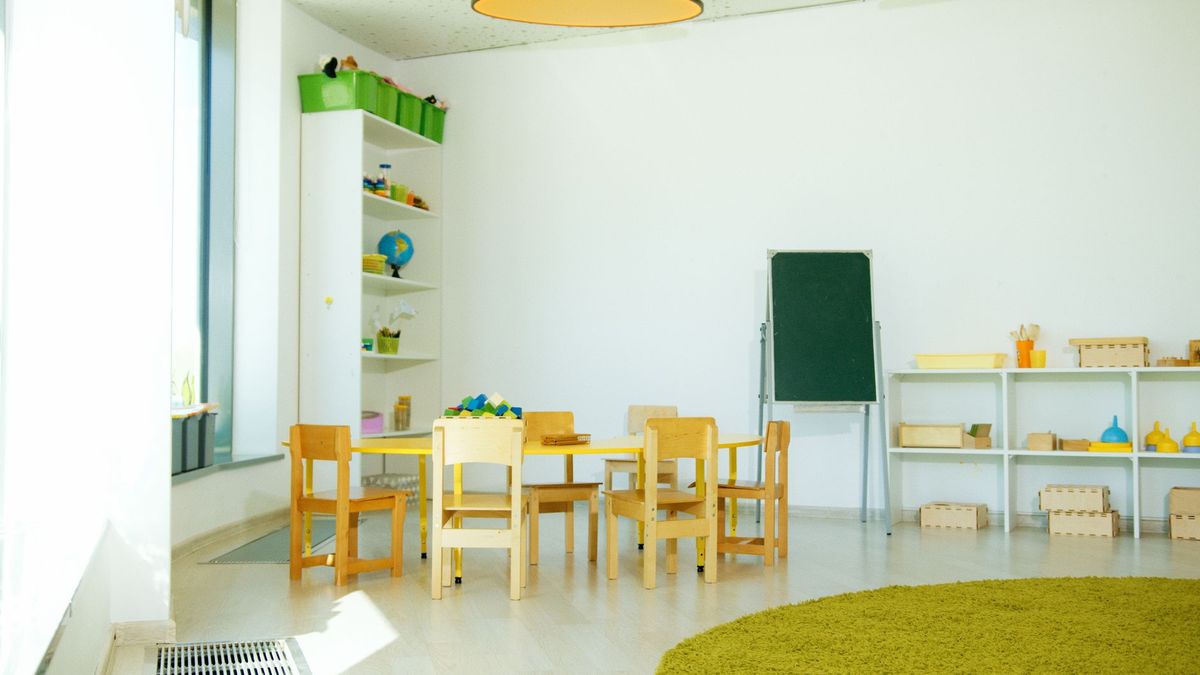
Notice how much shelf is empty. Each item has its own spot, so a child sees every choice at once and knows where it goes back. Child-sized tables and chairs sit right next to the shelves, so the child takes, works and returns. Copy it. see heights by age in our Montessori shelf guide.
3. A Reading Corner With Books Facing Out
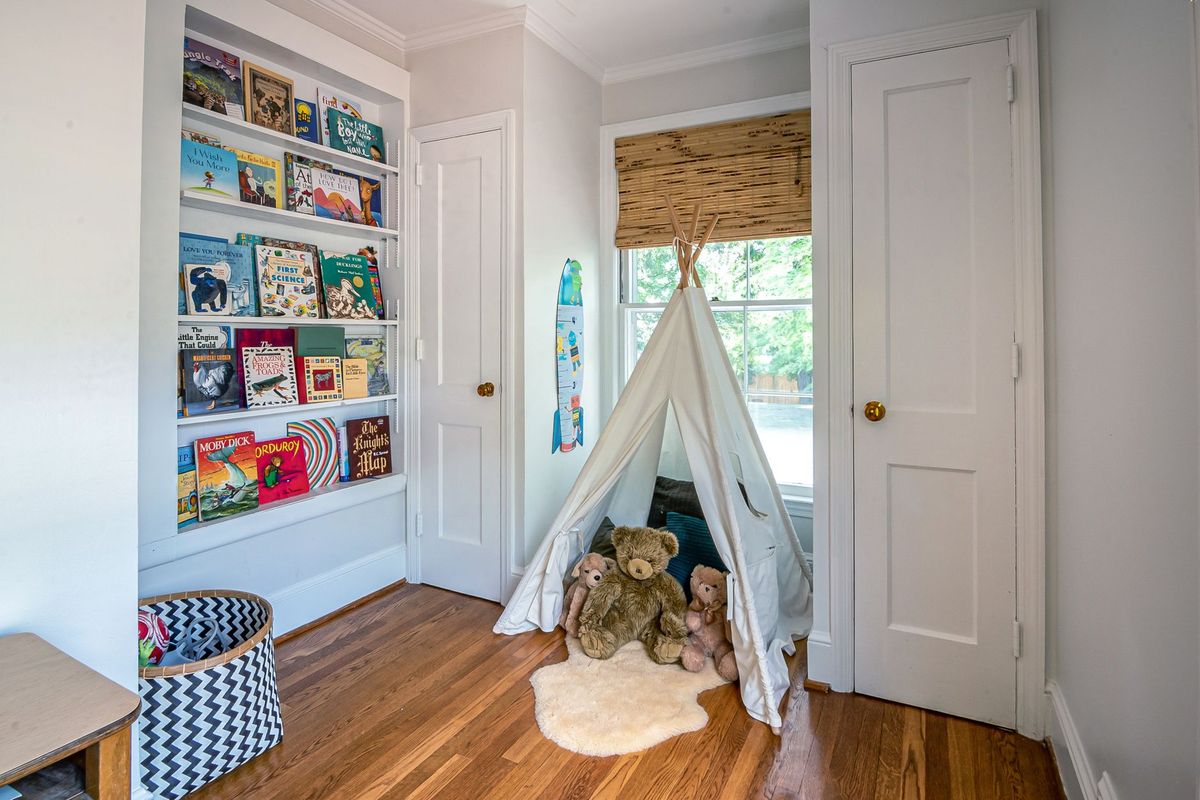
Front-facing ledges let a child who can’t read yet choose by the cover. A soft, enclosed spot next to them makes the corner inviting to sit in. Copy it. two picture ledges mounted at your child’s eye level and a floor cushion. More options in our front-facing bookshelf guide.
4. A Movement Corner for Climbing
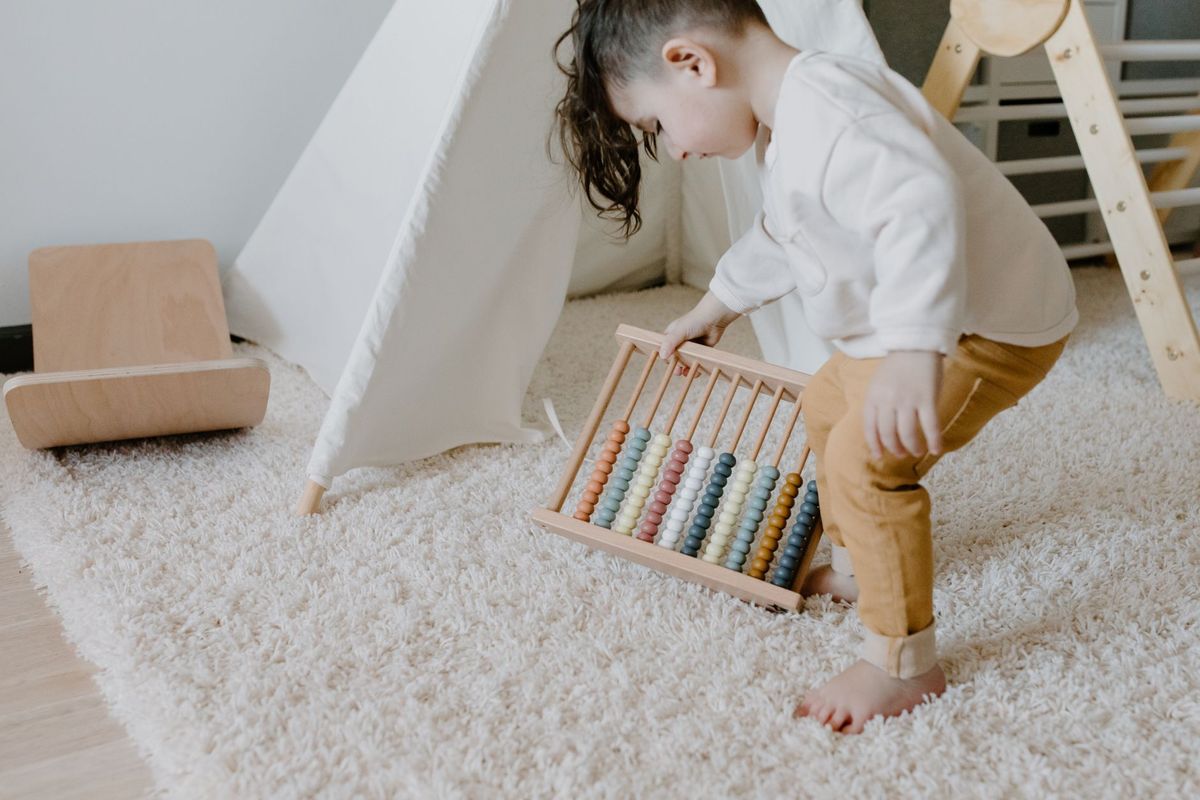
Toddlers need to climb, push and carry as much as they need puzzles. A climbing triangle on a soft rug gives that energy a safe place, next to quieter work like an abacus. Copy it. set climbing equipment on a rug, away from furniture edges, and supervise.
5. A Corner of the Living Room
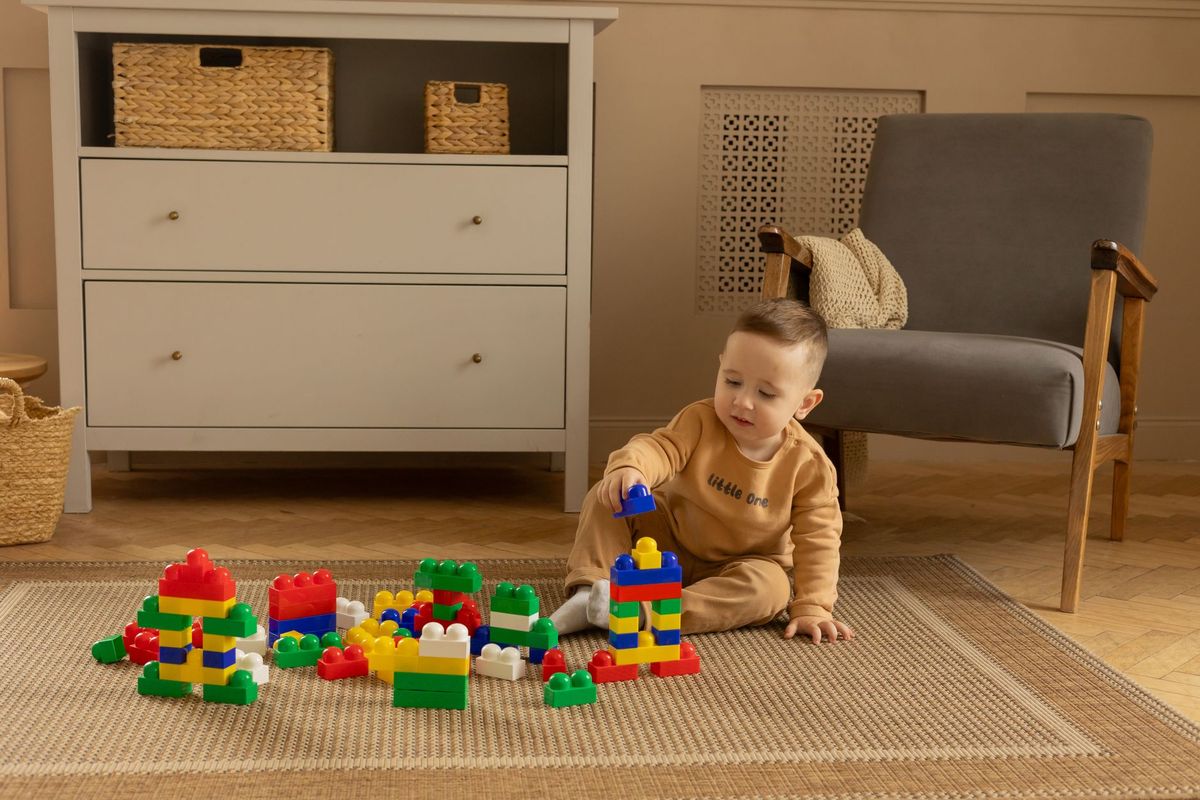
No playroom? One rug and one low piece of furniture in the room where the family already spends time works better than a separate room nobody uses. Your child plays where you are. Copy it. a basket of blocks on the bottom of a low dresser, and a rug that defines the corner.
6. A Closet Turned Into a Play Nook
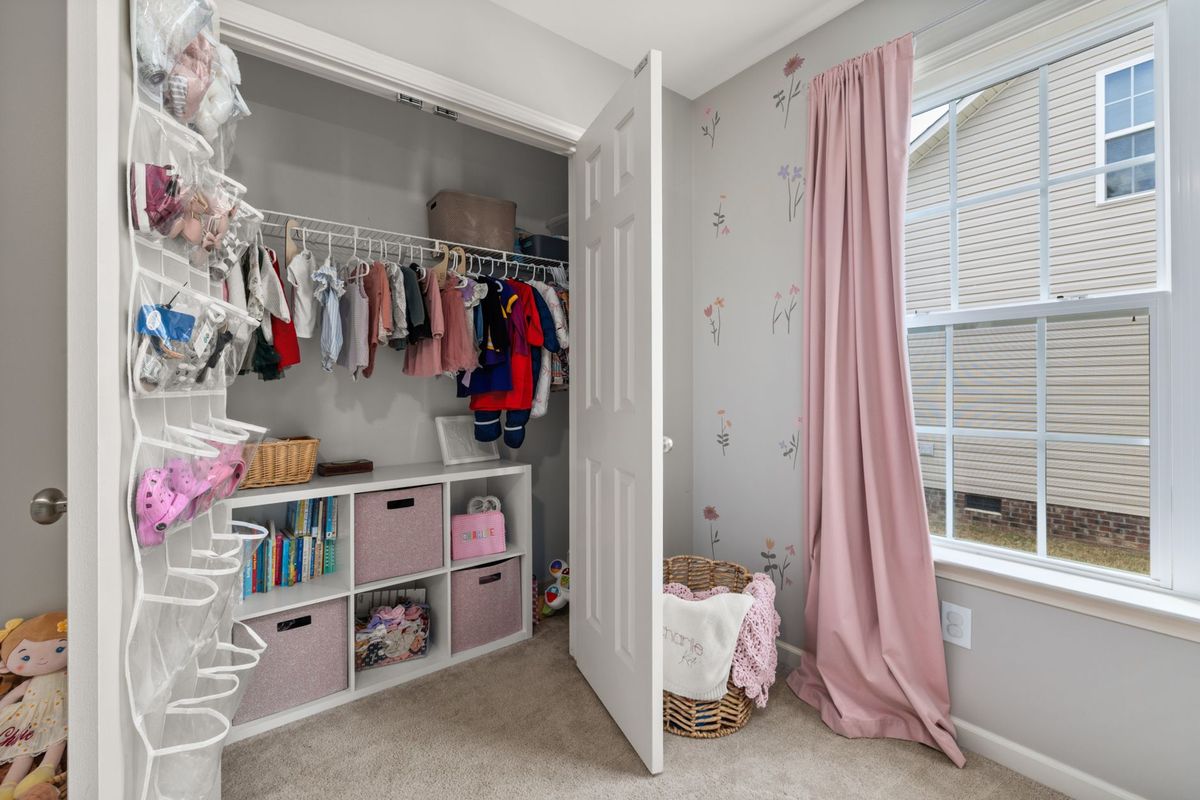
Low cube storage inside a closet hides the rotation stock behind doors and keeps the room clear. The doors close at the end of the day, which helps in small apartments. Copy it. put the current activities on the low cubes and the stored toys up high, out of reach.
7. A Mostly Empty Room
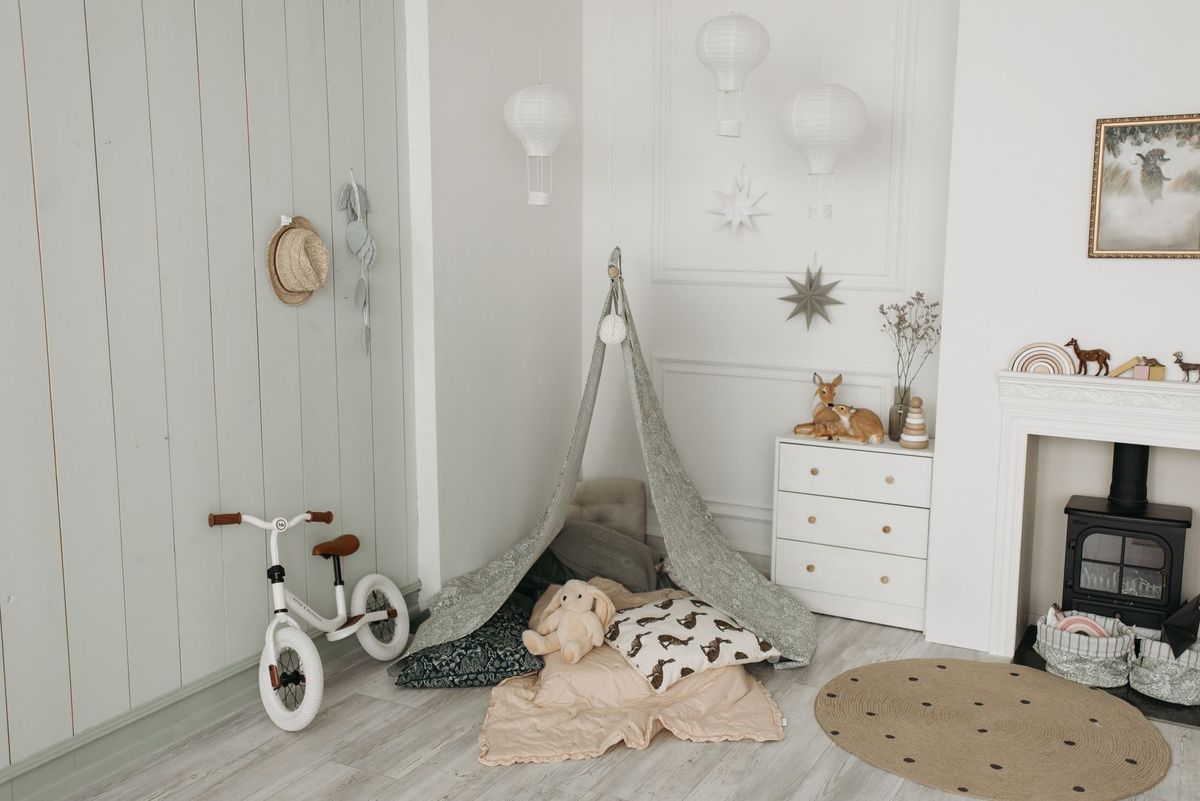
Few toys, open floor, a balance bike, a cozy tent. The emptiness is the point. A child can see everything available and has space to move. Copy it. take out half of what is in your play area this week and see what your child actually uses.
8. A Table and Chairs at Their Size
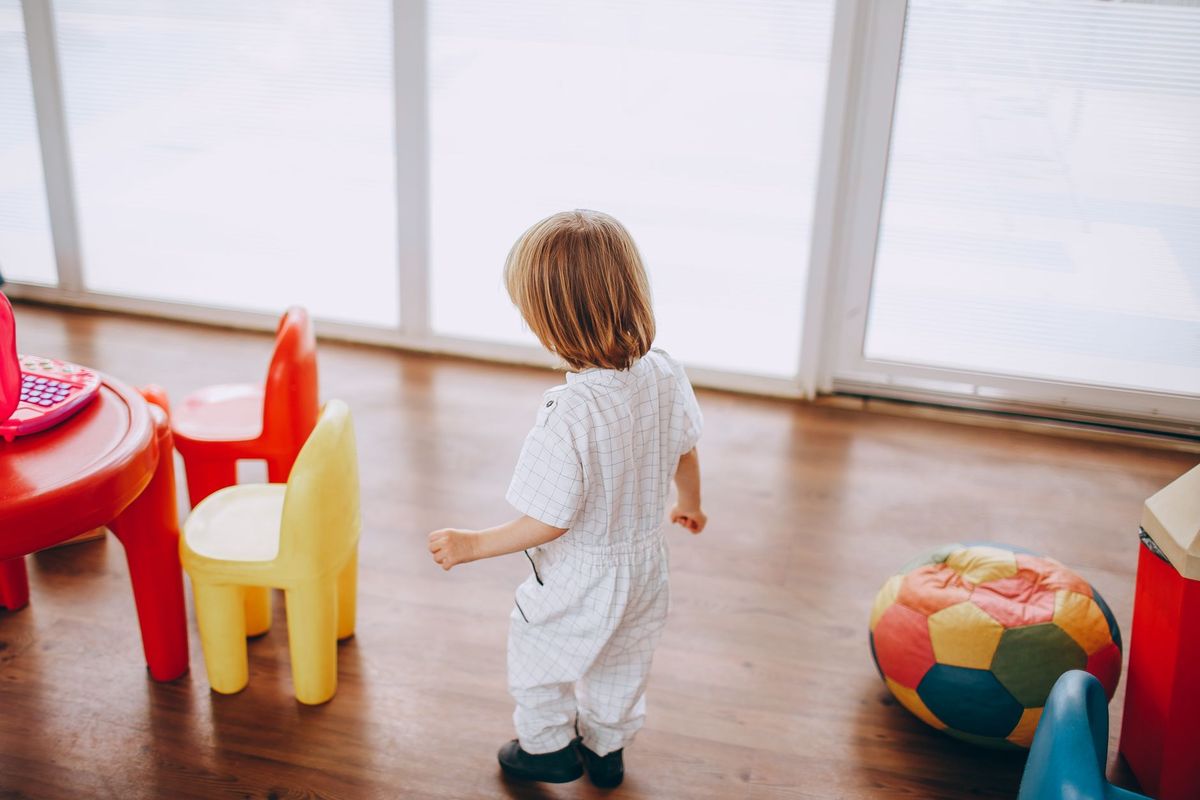
When your child’s feet touch the floor, they can sit longer and focus better. A small table is also where food, art and puzzles happen. Copy it. an affordable child table and two chairs, like the IKEA LÄTT ($49.99) in our IKEA guide.
9. Open Floor Between Low Bookshelves
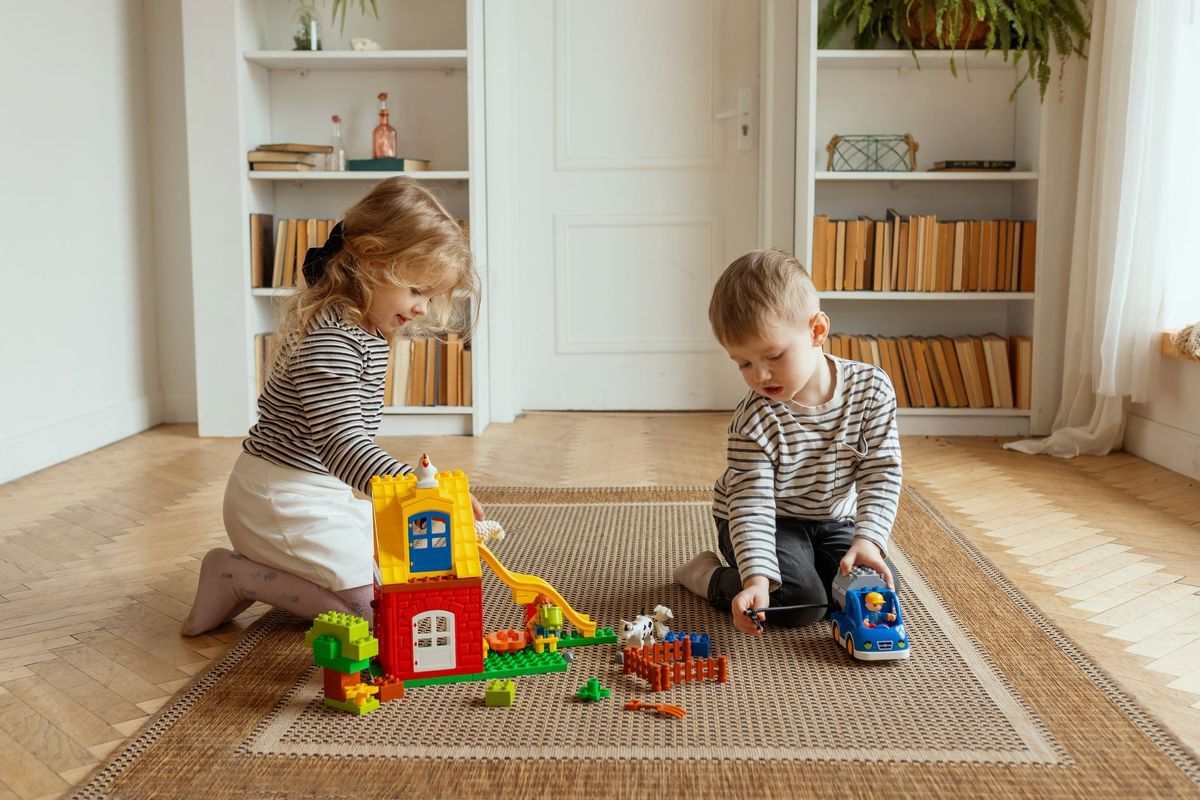
Shelves along the walls and a rug in the middle leave a large, clear floor where two children can build side by side. Storage stays at the edges; play happens in the middle. Copy it. push furniture to the walls before you buy anything new.
10. A Round Rug as a “Yes Space”
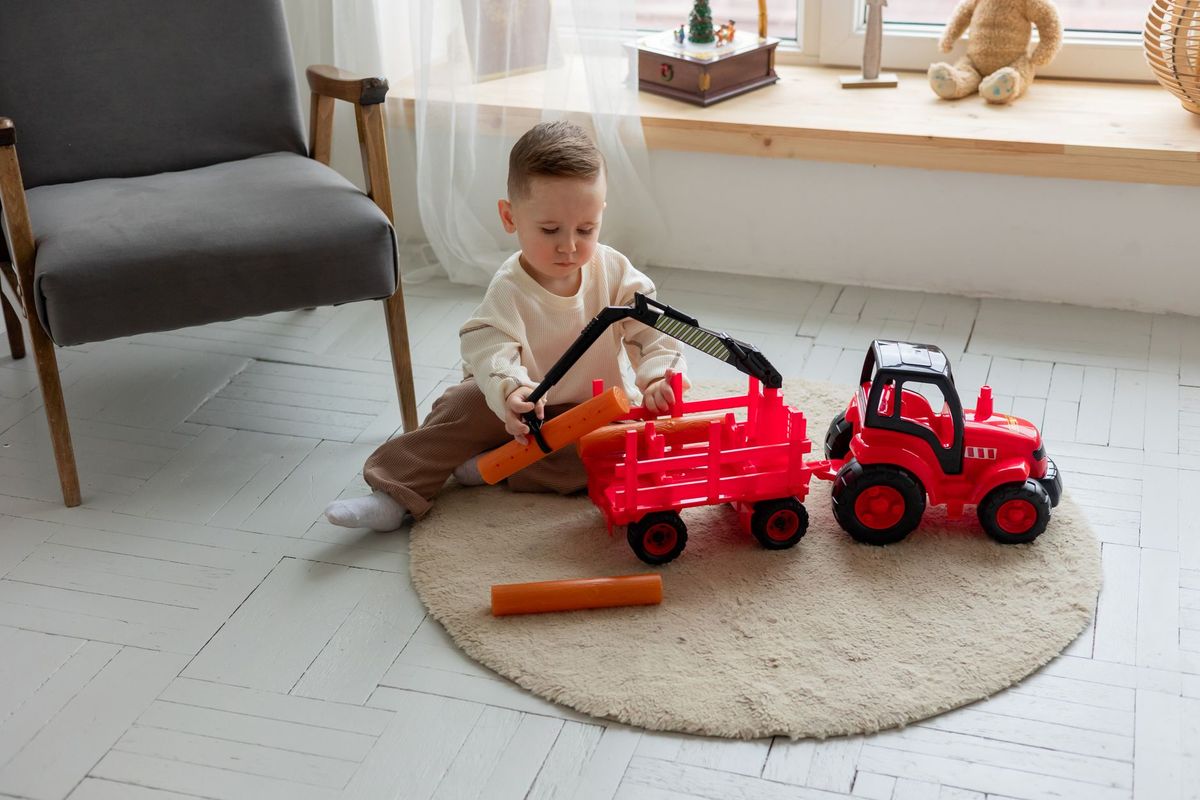
A yes space is an area where everything is safe to touch, so you don’t have to say no. A round rug by a window creates one in a few square feet. Copy it. one rug, one basket, nothing breakable within reach.
11. One Playroom for Children of Different Ages
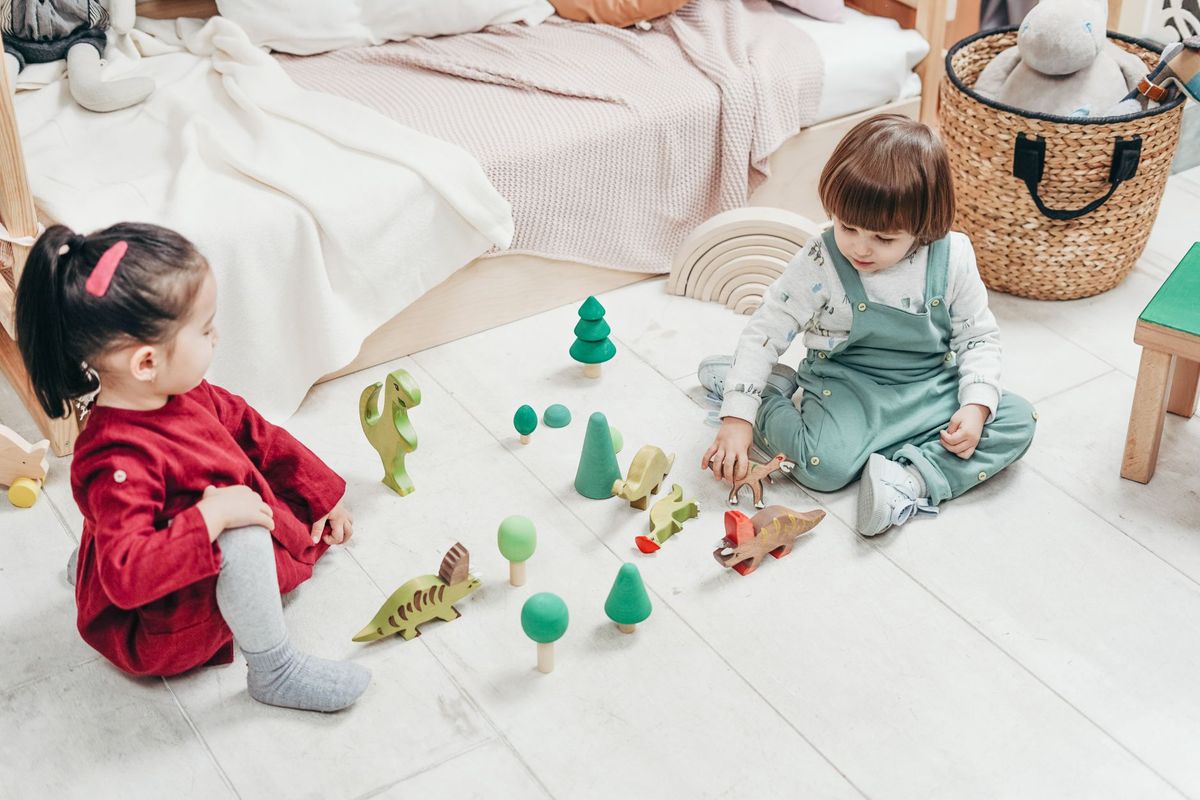
Siblings can share a space if each has their own level, with small parts and harder work up high for the older child, simple and mouth-safe things on the bottom shelf for the younger one. Copy it. see how to rotate for two ages in our toy rotation guide.
12. A Few Blocks, Nothing Else
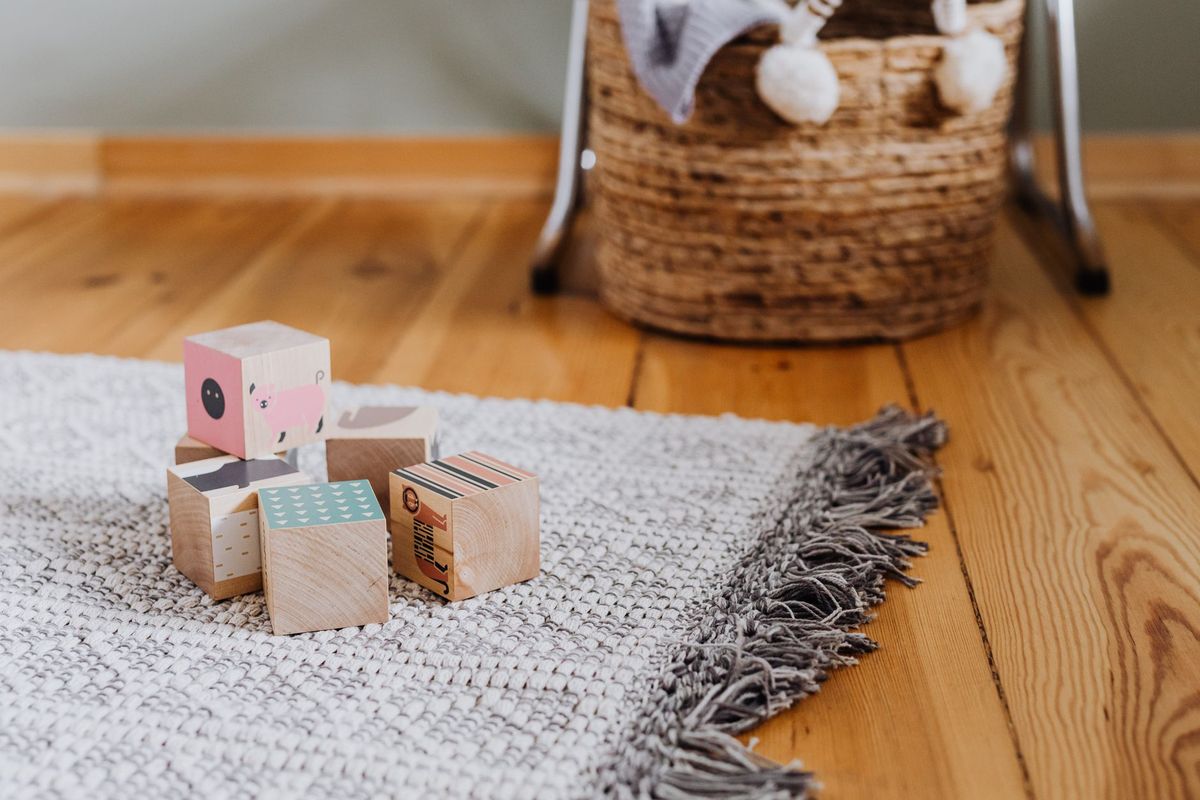
A handful of wooden blocks on a rug is a complete activity. Open-ended materials like blocks stay interesting for years because your child decides what they become. Copy it. one small basket of blocks instead of a big bin.
What to Put in a Montessori Playroom, by Age
| Age | Good choices |
|---|---|
| Baby, 0 to 12 months | A movement mat, a low mirror (shatterproof, secured), a treasure basket, a ball, one mobile over the play mat |
| Toddler, 1 to 3 years | Knobbed puzzles, posting and stacking toys, blocks, a push toy, a climbing triangle, books, one practical life tray |
| Preschooler, 3 to 6 years | Building sets, art supplies on a tray, early counting and letter materials, puzzles with more pieces, dress-up |
Keep the Walls Quiet
Soft, natural colors on the walls let the materials stand out. Put art at your child’s eye level, choose a few real plants out of reach or non-toxic ones, and use low-VOC paint if you repaint. Decor is the last thing to spend on.
Common Mistakes
- Buying furniture before editing toys. Remove first; you may need less storage than you think.
- Toy boxes and deep bins. Your child dumps everything to find one thing. Use shallow baskets and trays.
- A room that is only for play. Toddlers want to be near you; a living-room corner often gets more use.
- Unanchored shelves. Anchor every piece, even low ones (CPSC Anchor It).
- Copying a photo. Watch what your child does in the space for a week, then adjust.
Questions Parents Ask
What Makes a Playroom Montessori?
Everything at your child’s height, a few visible choices, a place for each thing, and freedom to choose and move. The style of the furniture doesn’t matter.
How Many Toys Should Be in a Montessori Playroom?
Around 6 to 8 activities out at a time for a toddler, plus books. Store the rest and rotate weekly or when interest drops.
Do I Need a Separate Playroom?
No. A corner of the living room or bedroom with a rug and a low shelf is enough, and often works better because your child is near you.
The Everyday Montessori Toddler
Book 2 of the Montessori for Real Life series, for 18 months to 3 years. Tantrums, limits without punishments and “me do it,” with simple steps for real homes. Out November 17, 2026.
Launch price $6.99 $4.99 Kindle · $14.99 $12.99 paperback
Sources
- Montessori, M. The Absorbent Mind (1949): the prepared environment.
- U.S. Consumer Product Safety Commission, Anchor It.
- Photos from Pexels (free licence).