
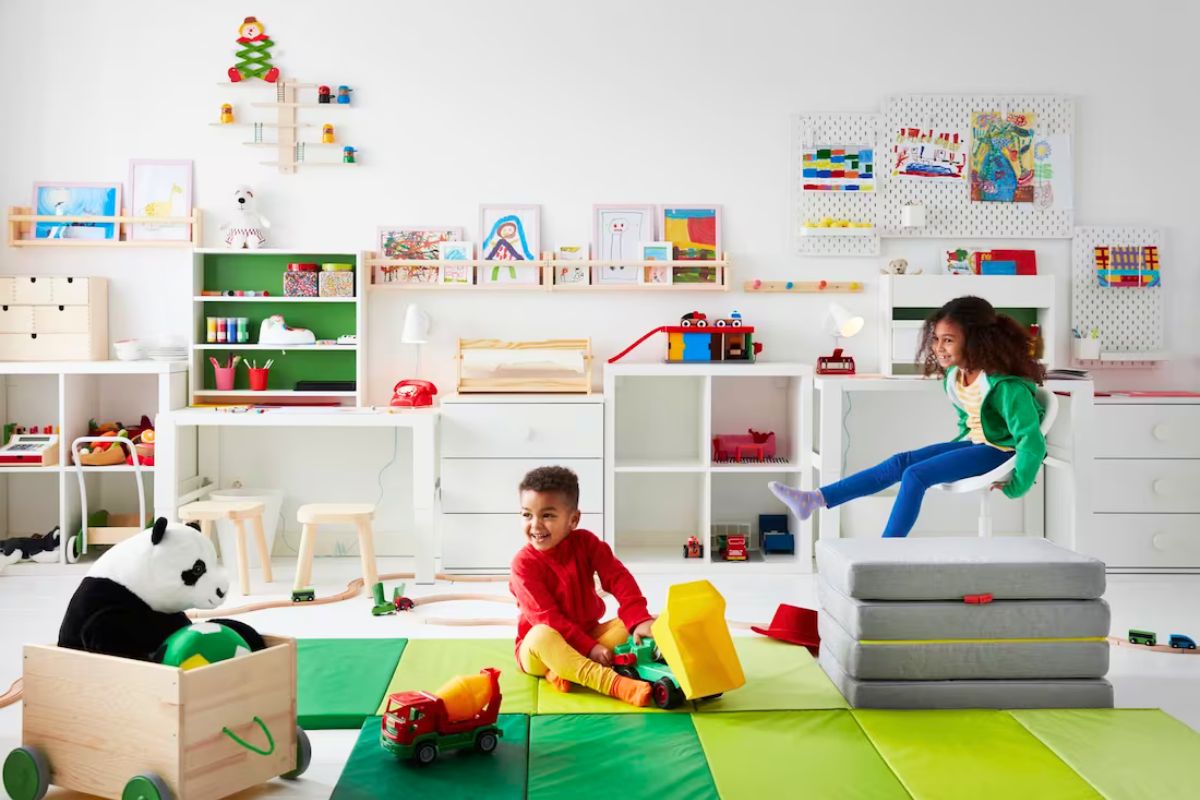
Setting up a Montessori space doesn’t mean emptying your bank account. IKEA has become my secret ally as a mom trying to create an environment where my kids can grow independently, without the guilt of overspending or the pressure of perfection.
The beauty of pairing IKEA with Montessori principles? You’re not buying into an expensive aesthetic. You’re simply giving your child furniture at their height, storage they can actually reach, and tools that say “you’re capable” instead of “wait for mom.”
Perfection isn’t the goal, not everything needs to be picture-perfect or “Instagram-worthy.” What matters is creating small pockets of independence throughout your home where your child feels confident exploring, choosing, and yes, sometimes making a mess.
Transparency Note
This post contains affiliate links to products I genuinely use and recommend. When you purchase through these links, I may earn a small commission at no extra cost to you. This helps support my blog and allows me to continue sharing honest parenting resources.
Storage That Actually Works for Little Hands

Here’s what I’ve learned, the best storage isn’t necessarily the prettiest. It’s the stuff your toddler can open, carry, and put back without calling for you fifteen times. These IKEA pieces have survived spilled water, toy avalanches, and my kids’ creative “reorganizing” sessions.
Low Shelves That Change Everything
Once I switched from tall toy boxes to low, open shelves, mornings became less chaotic. My daughter could actually see her options, make choices, and, miracle of miracles, sometimes even put things back where they belonged.
These cube shelves work sideways (yes, turn them on their side!). Everything’s visible at kid-height. Mine has survived three years of toddler chaos and still looks decent. The cubes naturally limit how much stuff goes in each space, which helps both you and your kid stay sane.
The bins slide in and out easily, even for clumsy two-year-old hands. Skip the lids unless you really need them; they just become another thing to lose. Pro tip from countless failed attempts: use picture labels, not just words. My son recognized his “blocks bin” from the drawing long before he could read.
These bins fit the TROFAST system and actually snap closed (unlike every other toy bin that loses its lid). My kids can carry them around for cleanup, which somehow makes tidying feel like a game. Clear ones help them see what’s inside, colored ones hide the chaos, pick your battle.
Slides into your KALLAX cubes and adds four mini compartments. Perfect for puzzles, small toys, or all those tiny treasures kids collect. Keeps the cubes from becoming black holes where toys disappear forever.
This narrow wall shelf holds books facing forward, way better than those deep bookcases where everything disappears. Mounting it at toddler eye-level turned our hallway into an impromptu reading nook. Just rotate the books weekly or they’ll keep grabbing the same three.


Baskets, Bins & Real-Life Organization
Fancy organizing systems are lovely in theory. In practice? Sometimes you just need a basket your kid can grab and dump. These have held up through the daily tornado that is family life.
Sturdy pine crate that holds up to rough handling. Perfect for outdoor toys, sports equipment, or stuffed animals. Light enough for kids to drag around but solid enough not to fall apart. We use ours for dress-up clothes, survived three years of costume changes.
Water hyacinth basket that’s soft on the edges, no sharp corners or rough wood. Great for blankets, plush toys, or that ever-growing collection of random comfort items. The handles make it easy for kids to carry around, which mine do constantly for some reason.
Clean, simple white boxes that don’t scream “kid stuff.” Perfect for art supplies, craft materials, or bathroom items. They slide into shelves nicely and stack when not in use. I appreciate that they look decent in our shared spaces? not everything needs to be primary colors.
Technically for pictures, but brilliant for displaying books spine-out or standing up small toys. I mounted two of these in my son’s room and suddenly he could see all his books instead of just the top one in the pile. Game changer for bedtime book selection.
Technically for recycling, but works great for toy storage. The lid folds back and stays open, and they stack to save floor space. We use these for blocks, cars, and all those random building toys. Bonus: they’re durable enough to survive being used as stepping stones in elaborate floor games.


Mobile & Wall-Mounted Solutions
Sometimes the floor is full, or you need storage that moves with your kid’s ever-changing interests. These pieces add flexibility without taking up precious space.
Rolling cart with wheels that actually work. My daughter pushes this thing all over the house, loading and unloading toys like she’s running some kind of mobile shop. The bins are deep enough to hold a decent amount but not so deep that everything disappears to the bottom.
Customizable pegboard system that grows with your needs. We use this for art supplies, hooks for scissors, containers for markers, small shelves for paint. Everything’s visible and accessible. Fair warning: you’ll spend way too long arranging and rearranging it, but that’s half the fun.
Meant for paperwork, but perfect for puzzles, activity trays, or flat learning materials. The pull-out sections make it easy for kids to see and grab what they want. We keep ours on a low shelf and rotate different activities through it weekly.
Specialized Storage & Creative Displays
These are the pieces that solve specific problems or add that little extra touch that makes a space feel intentional instead of chaotic.
This clever piece works as both a dollhouse and a display shelf. When the dolls lose their appeal (which they will, temporarily), it transitions to holding small collections, plants, or whatever your kid is currently obsessed with. Smart dual-purpose design that justified the purchase to my practical brain.
Front-facing book display that actually holds a decent number of books. The storage bins underneath catch everything else, bookmarks, stuffed reading buddies, the random toys that migrate everywhere. Makes book selection visual and accessible, which is the whole point.
Simple bamboo tray that’s the perfect size for presenting activities Montessori-style. We use these for everything from sorting games to snack prep to “special projects.” Having a dedicated tray somehow makes activities feel more official and contained, less mess spreading across the entire table.
Little hanging containers that attach to rails or pegboards. Perfect for small supplies, crayons, markers, paintbrushes, hair ties, whatever tiny things need a home. My kids can actually find what they’re looking for now, which is a small miracle.
Sold as a shoe tray, but works brilliantly for wooden blocks, toy cars, or craft supplies. The raised edges contain spills and messes. Water-resistant, so it’s great for messy activities. Sometimes the best solutions come from using things in ways they weren’t intended.
Technically for organizing pants or scarves, but genius for dress-up clothes, play silks, or keeping costumes visible and accessible. Hangs in the closet or on a low rod. Watching my kids independently pick out and put away their dress-up clothes feels like a parenting win.
From One Parent to Another
Don’t overthink the labels. A quick photo printed from your phone works just as well as fancy laminated labels. Keep the most-used stuff on the bottom shelf, yes, it’ll get messy fastest, but that’s actually the point. And remember: “accessible” doesn’t mean your entire toy collection needs to be out. Rotation is your friend.


Play Spaces That Grow With Them

The Montessori approach talks about “prepared environments,” which sounds fancy but really just means, give kids spaces where they can do stuff independently. These pieces have made our home work better, not perfectly, but better.
Solid wood, adjustable height, and those removable bins underneath are actually useful. My kids use this for everything from playdough to puzzles to “running a restaurant” (which involves a lot of play food and even more negotiating). The bins catch all the tiny pieces that would otherwise end up in the vacuum.
Ridiculously affordable and perfectly sized for toddlers. The chairs are light enough for a two-year-old to move around, which means yes, they become part of every imaginative game. Expect to find them in the hallway, under the dining table, and stacked into towers.
This became the designated “reading chair” without me even trying. Something about having their own comfy spot makes kids more willing to sit and look at books. The bentwood design has held up to some truly impressive jumping experiments (which I did not approve of, but they happened anyway).
Double-sided (chalk on one side, paper on the other) and adjustable height. Fair warning: this will get messy. Chalk dust, paint drips, marker experiments, it’s all happening. The paper roll attachment means you’ll always have a fresh canvas ready. Watching your kid stand there, fully focused on their “masterpiece,” makes it worth the cleanup.
Similar to the FLISAT but with a different aesthetic. The storage compartment underneath swallows toys, art supplies, or whatever chaos your kid is currently into. The white-grey top hides marker stains better than you’d think (believe me, I’ve tested this extensively).
Cheap, lightweight, and surprisingly useful for floor activities. My kids use these as portable work surfaces for puzzles, coloring, or elaborate Lego constructions. The low profile means they can comfortably work while sitting on the floor, and the tray contains the mess to one area.
Simple, safe mirror perfect for nurseries or play areas. Babies and toddlers are fascinated by their reflections, it’s early self-awareness development disguised as entertainment. Mount it low enough for floor time, and watch your baby discover themselves. Genuinely sweet to witness.
Meant for drying plates, but brilliant for organizing books, tablets, or activity cards. Holds things upright and visible. We use ours for current library books, makes them easy to see and grab without knocking over the whole pile.
Sturdy little wooden stool that matches the FLISAT table. Light enough for kids to move around, solid enough not to tip easily. My kids drag these everywhere, extra seating, makeshift table, stepping stool, building block in elaborate fort constructions. Multi-purpose champion.
Cushioned mat that folds up when not in use. Great for tumbling, rough play, or just having a soft spot to crash. Also works as extra floor seating when friends come over. The bright blue isn’t for everyone aesthetically, but functionally? It’s earned its keep.
Reality Check
Your play area doesn’t need to look like the catalog photos. In fact, it probably shouldn’t, those rooms are too perfect to actually play in. Rotate activities every week or two to keep things interesting, and don’t be afraid to put stuff away entirely when it’s not working. Sometimes less really is more, especially when you’re trying to maintain your sanity alongside fostering independence.


Practical Life: The Daily Skills That Matter

This is where Montessori gets real. Teaching kids to do everyday things for themselves, getting dressed, washing hands, helping in the kitchen. Not because it’s faster (spoiler: it’s absolutely not), but because it builds genuine confidence.
This humble wooden step stool is everywhere in Montessori homes for good reason. Solid, stable, and light enough for kids to move themselves. My three-year-old drags this around for everything, brushing teeth, “helping” cook, reaching light switches. Some parents hack two of these into a learning tower, but honestly, this works fine as-is with supervision.
Before you roll your eyes at “just another toy kitchen”, this one’s different. It’s sized right for toddlers through early elementary, it’s sturdy enough to last through multiple kids, and honestly? Mine use it more than I expected. The play kitchen becomes a laboratory for sorting, pretending, and learning to clean up after themselves.
Four wooden knobs mounted low enough for kids to reach. Sounds simple, but having a designated spot for their jacket, bag, or apron makes a difference. My daughter takes pride in hanging up her things (most days). On bad days, at least the hooks are there waiting.
The pull-out unit means my kids can actually see and reach their clothes. Getting dressed independently took forever to happen in our house, but having accessible storage helped. The hanging rail is adjustable, so it grows with them, or you can start with it low and raise it over time.
Child-safe mirror with a soft plastic frame, no sharp edges or breakable glass to worry about. Perfect for nurseries where babies are exploring their reflections during tummy time. Also great in bathrooms at kid-height so they can see themselves brushing teeth or washing face. Independence starts with visibility.
Simple kid-sized apron that actually stays on. Makes cooking or crafting feel official and protects clothes from the inevitable mess. My kids take putting on their aprons seriously, it signals “we’re doing something special.” Small ritual, big impact on their engagement.
Kitchen Helpers (The Real Kind)
Letting kids help in the kitchen is messy, slow, and occasionally frustrating. But the pride on their face when they pour their own water or mix ingredients? Worth it.
Small bamboo cutting board that’s actually kid-manageable. My five-year-old uses this to practice cutting soft foods with a safe knife. It’s light enough to carry to the table but stable enough not to slide around. Also holds up well to the inevitable accidents.
Set of two stainless steel whisks, one small enough for toddler hands. Perfect for mixing pancake batter, scrambling eggs, or just playing in water. Watching my three-year-old concentrate on whisking is surprisingly delightful. Real tools build real confidence.
Three-piece child-sized silverware that’s real metal, not plastic. Spoon, fork, and knife sized for little hands learning to feed themselves. Yes, they’ll make a mess. Yes, food will end up everywhere. But that’s how they learn. Table manners start with appropriate tools.
Yes, real glass. Yes, it might break. But teaching kids to handle things carefully is part of the process. These small glasses are perfect for little hands learning to pour and drink independently. We’ve only broken two in three years, not bad odds, considering.
Simple, stable potty without unnecessary bells and whistles. Easy to clean (you’ll appreciate this), comfortable to sit on, and light enough for kids to move themselves. Potty training is challenging enough without complicated equipment. This one just works.
The Honest Truth
Teaching practical life skills takes patience you didn’t know you had. There will be spills, broken things, and moments where you wonder why you didn’t just do it yourself. Push through. The day your kid successfully makes their own snack or cleans up without being asked, that’s when you’ll get it. Small wins, but they matter.
Sleep Spaces That Support Rest & Independence

Montessori bedrooms prioritize low beds so kids can get in and out independently. This sounds lovely until you realize it also means they can get OUT in the middle of the night. But overall? Worth it for the autonomy it builds.
Starts as a low bed, flips to become a loft bed as they grow. This flexibility saved us from buying multiple beds. When it’s low, toddlers can climb in and out safely. When they’re older and (theoretically) past the midnight wandering phase, flip it for extra play space underneath.
Pairs with any low bed frame. The slats allow airflow, which helps with mattress longevity (trust me, toddler beds need all the help they can get). Simple, functional, and you can’t really mess this up, which is reassuring when assembling furniture at 11pm.
Designed specifically for junior beds, firm enough to be supportive but not uncomfortable. More importantly: it fits the weird IKEA bed sizes. The cover is removable and washable, which you’ll appreciate the first time there’s a nighttime accident.
Sleep Reality Check
Low beds are amazing for independence, but they don’t magically solve bedtime battles or early wake-ups. Keep lighting soft and calming (we use a simple nightlight, nothing fancy). Let your child pick their bedding so they feel ownership over their space. And yes, baby-proof the room because they WILL explore at 2am when you’re exhausted.

Montessori Furniture Alternatives Worth Considering
While IKEA offers great budget options, sometimes you want to invest in heirloom-quality pieces from specialty Montessori brands. This retailers provide handcrafted alternatives built to last generations.
- Montessori & Me – Premium natural hardwood furniture designed specifically for Montessori principles. Their front-facing bookshelves and weaning sets are beautifully crafted.
- The Montessori Room – Canadian-made classroom furniture with lifetime warranties. Perfect for families who want investment pieces that will last through multiple children.
- Woodesa – Handcrafted wooden furniture made in Europe. Higher price point, but the quality and sustainability practices make it worthwhile for many families.
Making It Work in Your Actual Home
The Instagram-perfect Montessori homes are beautiful. They’re also unrealistic for most of us. Between siblings sharing rooms, small spaces, and the reality that we still need to live in our homes, compromises happen. And that’s completely okay.
Start with one area. Maybe it’s a corner of the living room with a small shelf and some books. Maybe it’s lowering the hooks in the entryway. You don’t need to renovate your entire house or spend thousands of dollars.
The core principle is simple: can your child reach it? Can they see their options? Can they make choices and put things away independently (even if they don’t always do it)? If yes, you’re on the right track.
What I wish I’d known from the start: Montessori at home isn’t about perfection or expensive materials. It’s about trusting your kid to do more than you think they can. It’s about pausing before helping, even when it’s faster to just do it yourself.
Some days it works beautifully. Other days everyone’s crying and the kitchen is a disaster. Both are part of the process. IKEA just makes the setup part easier and more affordable, so you can focus on the actual parenting.
Your Montessori space will look different from mine, and that’s exactly as it should be. Build what works for your family, your budget, and your space. The rest is just details.