
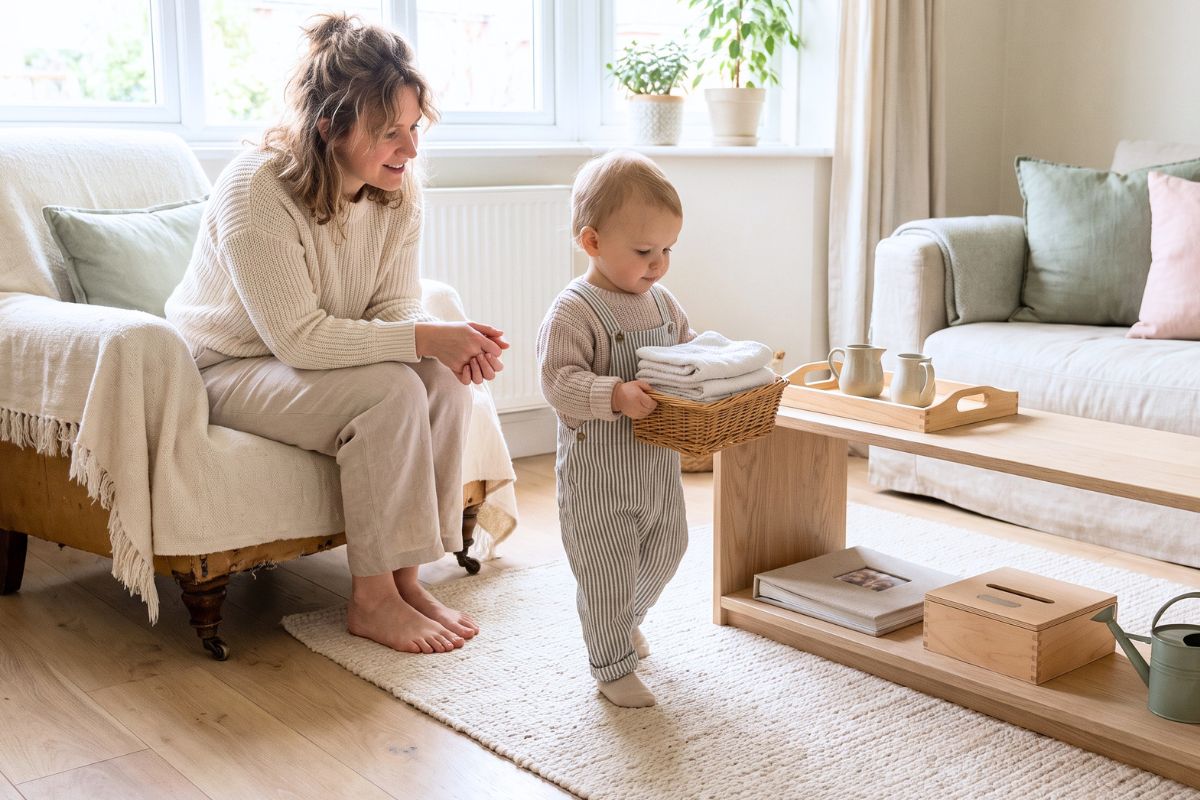
A small space does not need a smaller mountain of toys. It needs fewer visible choices and storage that makes each one easy to reach without emptying everything onto the floor.
The best Montessori toy shelf for a small home is usually low, open, narrow, and boring in the best possible way. It holds the current work while the rest stays somewhere else.
What to Know Before You Begin
- Two shelves are often enough for toddlers
- Open space between activities helps children see choices
- Shallow shelves keep materials from disappearing at the back
- Hidden rotation storage can live elsewhere
- Anchor any unit that invites climbing
Seven Shelf Styles That Work in Real Rooms
The right choice depends on wall width, depth, and whether the same room must still function for adults.
1. Narrow Two-Tier Shelf
A two-tier unit around twenty-four to thirty inches wide fits beside a sofa or at the end of a bed. It can hold four to six activities without dominating the room.
Choose a model with open sides and enough depth for a standard tray.
2. Long Low Bench Shelf
A long, low unit uses wall width instead of height. It creates a visual line that feels calm and keeps every activity at one level.
The top can hold a plant or two baskets, but it should not become a second crowded shelf.
3. Horizontal Cube Unit
A two-by-two cube shelf offers space for large baskets and bulky toys. Leave at least half the cubes open so materials remain visible.
Deep cubes can hide small activities. Use shallow trays near the front rather than pushing everything back.
4. Wall-Mounted Low Shelf
A securely installed wall shelf keeps the floor clear and can sit exactly at the child’s reach. It works for a few books, puzzles, or trays.
It must be mounted for the expected load and should never become a climbing step.
5. Corner Shelf
A compact corner shelf can hold four activities while using a part of the room that often stays empty. Rounded models keep the walking path softer.
Check how far the front edge projects into the room before buying.
6. Rolling Cart With Open Trays
A stable cart can move between a living room and storage closet. Each level becomes a small shelf rather than a deep bin.
Locking wheels are essential. A cart that moves when touched defeats independent use.
7. DIY Board-and-Crate Shelf
A smooth board secured over two sturdy crates creates a low, inexpensive shelf. The crates can face forward for baskets or backward for adult storage.
Sand edges, secure the parts, and test for tipping before use.
Quick Comparison
Safety note: Anchor shelving that can be climbed, keep heavier materials on the lowest level, and avoid placing tempting objects on top of tall units.
A Small Shelf Can Carry the Whole Room
The shelf does not need to hold the toy collection. It only needs to hold today’s choices. Four purposeful activities, one basket of books, and open floor space will usually support better play than twelve crowded cubbies.
When the room starts feeling busy, remove items before buying more storage. Montessori organization begins with editing, not containers.