
My son walked into his first-grade Montessori classroom expecting desks, textbooks, and a teacher at the front of the room. Instead, he found three sixth-graders hunched over a detailed timeline of human history they’d created. A group of second-graders was conducting a science experiment with water and different materials. Two fourth-graders were planning a field trip to a local farm, complete with a budget and transportation schedule they’d researched themselves.
He looked at me, confused. “Is this really school?” Yes, I told him. But it’s school that looks completely different from what most of us experienced as children.
Montessori Elementary at a Glance
Montessori elementary serves children ages 6 to 12, typically divided into Lower Elementary (6-9) and Upper Elementary (9-12). The approach shifts dramatically from early childhood, reflecting the developmental changes happening at this age.
- Age Range: 6-12 years (often split into 6-9 and 9-12)
- Core Focus: Cosmic education, research, abstract thinking
- Learning Style: Self-directed projects, collaborative work, “going out” trips
- Key Shift: From concrete to abstract thinking
- Social Development: Peer collaboration becomes central
- Average Cost: $15,000-$20,000 per year (varies significantly)
Why Elementary Looks So Different from Early Childhood
If you visited a Montessori kindergarten and then walked into an elementary classroom, you’d think you were in a completely different school system. The difference isn’t arbitrary. It reflects profound developmental changes happening around age 6.
Dr. Montessori observed that around age 6, children undergo a dramatic shift. They move from being focused on their immediate environment to becoming curious about the wider world. They start asking “why” about everything. They become intensely social, caring deeply about friendships and fairness. They develop the ability to think abstractly and imagine what they haven’t directly experienced.
Montessori elementary responds to these changes. While early childhood classrooms emphasize sensorial exploration and practical independence, elementary classrooms focus on imagination, reasoning, and understanding how everything in the universe connects. It’s called “cosmic education,” and it’s fundamentally different from what happens in younger classrooms.
The Second Plane of Development (Ages 6-12)
Montessori identified four developmental planes, each with distinct characteristics. The second plane (ages 6-12) is marked by:
- Reasoning mind and imagination
- Intense social awareness and desire for peer relationships
- Moral development and concern with justice
- Abstract thinking capabilities
- Boundless energy and curiosity about the world
What Cosmic Education Actually Means
The first time I heard the term “cosmic education,” I thought it sounded vague and mystical. But after watching it in action, I realized it’s actually the most practical approach to elementary education I’ve seen.

Cosmic education means teaching children that everything in the universe is interconnected. Instead of studying math, science, history, and geography as separate subjects, children explore how these disciplines weave together to explain our world. A single project might involve history research, mathematical calculations, scientific observations, and creative writing.
It starts with what Montessori called the “Great Lessons,” five dramatic stories told at the beginning of each school year. These aren’t lectures. They’re engaging narratives with demonstrations and materials that spark curiosity and lead to months of follow-up research.
After hearing the first Great Lesson about the creation of the universe, my son became obsessed with volcanoes. This led to weeks of research, a detailed model he built, experiments with baking soda and vinegar, reading about Pompeii, calculating eruption force, and eventually a presentation he gave to the class. One story sparked months of integrated learning across multiple subjects.
A Day in an Elementary Classroom
Elementary schedules look different from early childhood but maintain the core principle of long, uninterrupted work periods. Here’s what a typical day might include.
Lower Elementary Schedule (Ages 6-9)
8:00-8:30am: Arrival and Morning Work
Children arrive, complete morning routines, and begin independent work or reading.
8:30-11:30am: Morning Work Period
Three-hour block for lessons, research projects, and individual or small-group work. The guide gives lessons throughout this time to individuals or small groups.
11:30am-12:00pm: Lunch
Often family-style, with conversation and community building.
12:00-12:30pm: Outdoor Time/Recess
Physical activity and free play.
12:30-2:30pm: Afternoon Work Period
Continued work, often including art, music, physical education, or cultural studies. Some schools have specialists for these areas.
2:30-3:00pm: Community Meeting/Closing Circle
Group sharing, discussing plans for the next day, reflection.
What strikes visitors most is how independently children work. A seven-year-old might spend an hour researching ancient Egypt, taking notes, and creating a timeline. Two nine-year-olds might collaborate on a geometry problem using specialized materials. A group of eight-year-olds might be planning their upcoming “going out” trip to a local museum.
The teacher circulates, giving lessons when children are ready, answering questions, and observing progress. But there’s no whole-class instruction. No one sits at desks waiting for the teacher to move to the next topic. Everyone works at their own pace on what they need.
What “Going Out” Actually Means
This is one of the most distinctive features of Montessori elementary, and it’s completely different from traditional field trips.
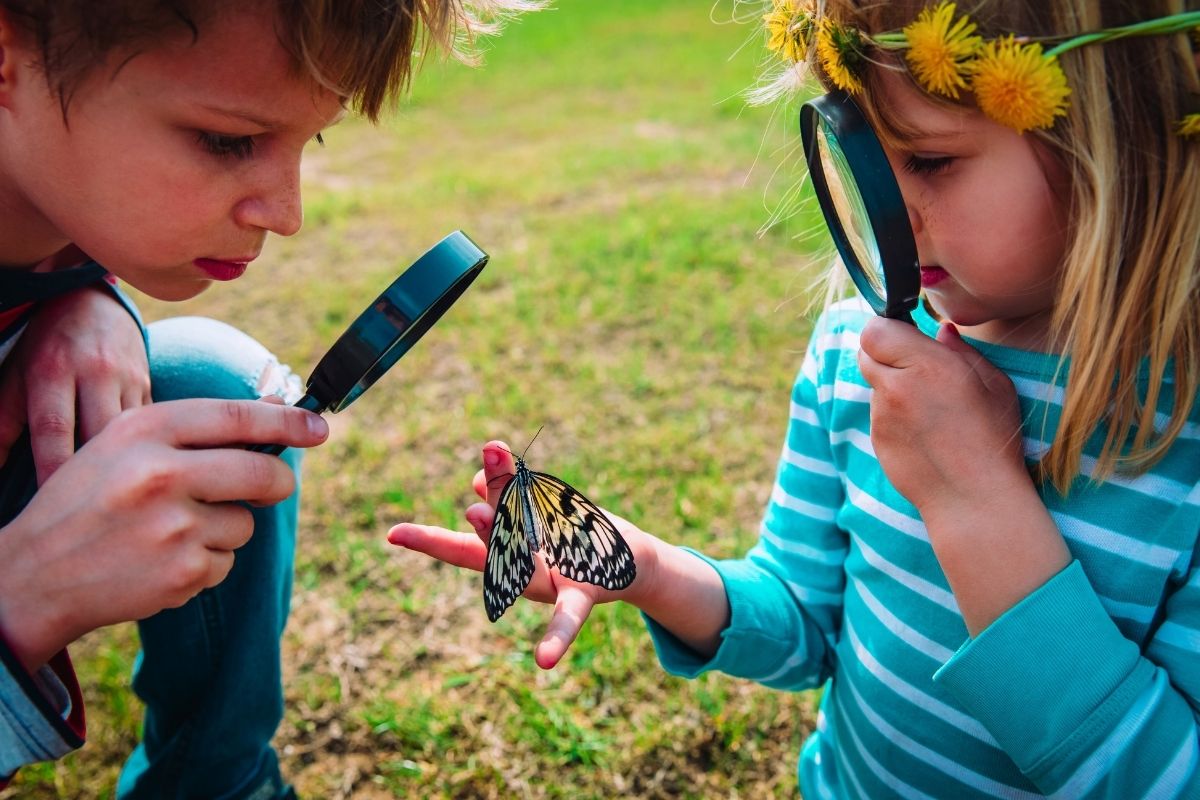
In traditional schools, teachers plan field trips and students tag along. In Montessori elementary, students plan their own “going out” experiences. When a child (or small group) becomes deeply interested in a topic, they research where they could learn more, contact that place, arrange the visit, figure out transportation, and sometimes even fundraise for expenses.
My son and two classmates became fascinated by local architecture. They researched historic buildings, called the city historical society to arrange a tour, mapped the route, and presented their findings to the class afterward. The guide accompanied them, but they did all the planning and execution.
Skills Developed Through Going Out
- Research and information gathering
- Communication with adults and experts
- Planning and organization
- Budgeting and practical math
- Grace and courtesy in public settings
- Responsibility and follow-through
These experiences teach life skills that no classroom lesson could replicate. Children learn that the world outside school is full of resources and experts willing to help. They practice speaking professionally on the phone. They navigate public spaces. They connect classroom learning to real-world application.
The Three Streams of Elementary Curriculum
Montessori elementary balances three interconnected streams of learning. Together, they create a complete education that addresses both fundamental skills and broader understanding.

First Stream: Mastery of Fundamental Skills
Yes, Montessori students learn to read, write, spell, and do math. The difference is they often master these skills through hands-on materials and self-directed practice rather than worksheets and tests.
Math continues with concrete materials before moving to abstract work. Students might use bead frames for complex calculations, geometric solids for understanding shapes, or fraction circles for understanding parts of a whole. Grammar is taught with color-coded symbols and hands-on analysis. Spelling and vocabulary develop through reading, writing research reports, and word study.
Second Stream: Key Knowledge Areas
This includes the Great Lessons and their follow-up studies: exploring the universe, life on Earth, human history, language development, and mathematical thinking. Students study geography (starting with the Earth as a whole, then continents, then countries), biology, history, and cultural studies.
The approach is always whole-to-parts. Before studying your country, you study the world. Before studying a period in history, you understand the timeline of all human history. This gives children a framework for organizing knowledge.
Third Stream: Individual Research and Passions
Children choose topics that fascinate them and dive deep. A child obsessed with whales might spend months researching cetaceans, their evolution, habitats, threats they face, and conservation efforts. Another might explore ancient civilizations, medieval castles, or the solar system.
These aren’t superficial projects. Students conduct real research, take detailed notes, create presentations, and share their expertise with classmates. This stream builds research skills, discipline, and the joy of becoming an expert in something you care about.
Why This Matters for Later Learning
By the time children leave Montessori elementary, they know how to research a topic, organize information, manage their time, work collaboratively, and present findings. These are the skills that matter in middle school, high school, college, and careers. The specific facts they learned about ancient Rome or fractions are less important than knowing how to learn anything they need to know.
Homework and Assessment
Two questions parents always ask: what about homework? And how do you know what your child knows without tests and grades?
Homework in Montessori elementary is minimal. The philosophy is that school work happens at school during those long work periods. Home time is for family, play, rest, and pursuing personal interests. Some schools assign light homework (20-30 minutes of reading, occasional research), but it’s nothing like the hours of homework traditional students often face.
Assessment happens through observation and documentation. Teachers keep detailed records of lessons given, materials mastered, and skills demonstrated. They take photos of projects, save work samples, and note progress. Instead of report cards with letter grades, parents receive narrative reports describing their child’s growth, strengths, and areas for continued development.
Some schools also use standardized tests to track academic progress and prepare students for potential transitions to traditional schools. But these aren’t the focus. The real assessment happens daily through observation and documentation of authentic work.
Social Development and Collaboration
Elementary children are intensely social. Montessori doesn’t fight this. Instead, it harnesses that social energy for learning.

Children work in small groups constantly. They collaborate on research projects, help each other understand difficult concepts, and present findings together. The mixed-age classroom means younger children learn from observing older students, and older children reinforce their knowledge by teaching younger classmates.
But collaboration is taught explicitly. Children learn how to divide tasks fairly, resolve disagreements, give constructive feedback, and work with people who think differently than they do. These aren’t assumptions. They’re skills the guide helps children develop through modeling and practice.
What Social Learning Looks Like
A typical day might include a nine-year-old teaching a six-year-old how to use fraction circles, three eight-year-olds collaborating on a history timeline, two ten-year-olds practicing a presentation they’ll give to the class, and a mixed-age group planning their upcoming going out trip. The classroom buzzes with productive conversation, not silent individual work.
Montessori Elementary vs. Traditional Elementary
Parents often want to understand how Montessori elementary compares to what their child would experience in traditional school.
The Practical Side: Costs and Options
Montessori elementary programs are less common than early childhood programs, which affects both availability and cost.
Expect to pay slightly more than for early childhood programs. National averages range from $15,000 to $20,000 per year, with significant variation by location. Major cities can exceed $30,000, while smaller communities might offer programs for $10,000 to $15,000.
Finding Montessori Elementary Programs
Not all Montessori schools offer elementary programs. Many stop at kindergarten. Some continue through age 9 (lower elementary) but not 12 (upper elementary). Before enrolling your child in Montessori kindergarten, ask whether the school offers elementary education if you’re considering staying with Montessori.
Public Montessori elementary programs do exist, particularly in larger cities. These are tuition-free but often have long waitlists and lottery admissions.
What Comes Next: Preparing for Middle School
Most Montessori students transition to traditional schools after elementary. Montessori middle and high schools exist but are rare.
Children who complete Montessori elementary typically adapt well to traditional middle schools. They bring strong research skills, self-discipline, ability to work independently and collaboratively, and confidence in their learning abilities. Some need time adjusting to lectures, standardized tests, and grades, but most find their footing quickly.
For families who can access Montessori adolescent programs, the transition is natural. The approach continues to match developmental needs, with even more emphasis on real-world work, community contribution, and self-directed learning.
Questions Parents Ask About Elementary
Here are the concerns that come up most frequently when parents consider Montessori elementary.
Will my child learn everything they need for standardized tests?+
Montessori students typically perform well on standardized tests despite not drilling for them. They have strong foundational understanding rather than memorized facts. Some schools incorporate test prep in upper elementary to familiarize students with the format, but the focus remains on deep learning, not test-taking strategies.
What if my child only wants to research one topic all year?+
The guide balances children’s interests with ensuring they experience all curriculum areas. If a child wants to research dinosaurs for months, that’s wonderful. But the guide will also present math lessons, language work, and geography studies. The individual passion projects are one stream, not the entire curriculum. Deep interests are celebrated, not discouraged, but children still engage with fundamental skills across all areas.
Is there any structure, or is it just free play all day?+
There’s enormous structure, just not in the traditional sense. The guide tracks every child’s progress and ensures they receive lessons in all areas. There are expectations about completing work, treating materials respectfully, and contributing to the community. Children have freedom within limits, not unlimited freedom. What looks like play is actually purposeful work with educational materials designed to build specific skills.
How do I know my child is being challenged enough?+
Communication with the guide is important. Good Montessori teachers provide regular updates on what lessons they’ve given and what materials your child is working with. You should see your child tackling progressively more complex work. If you have concerns, schedule a conference. The individualized nature of Montessori means advanced children can work well beyond grade level, while those who need more time can master concepts at their own pace.
Why Elementary Matters
Watching my son progress through Montessori elementary has been remarkable. He’s learned more than I expected academically. He reads voraciously, tackles complex math problems, writes research reports, and can explain concepts like photosynthesis and plate tectonics in detail.
But what impresses me most is how he approaches learning. When he encounters something he doesn’t understand, he doesn’t give up or wait for someone to explain it. He finds resources, asks questions, and figures it out. When he’s fascinated by something, he dives deep, becoming a real expert. When he works with others, he knows how to collaborate, compromise, and contribute.
These aren’t skills you can teach through worksheets or lectures. They develop through years of practicing independence, pursuing interests, conducting real research, and taking responsibility for your own learning. That’s what Montessori elementary provides.
Whether your child continues in Montessori or transitions to traditional middle school, these years build a foundation that will serve them for life.
Sources & References
- Lillard, A. S. (2017). Montessori: The Science Behind the Genius (3rd ed.). Oxford University Press. DOI: 10.1093/acprof:oso/9780190613976.001.0001
- American Montessori Society. (2024). Elementary Programs. Retrieved from https://amshq.org
- Montessori, M. (1948). From Childhood to Adolescence. Clio Press Ltd.
- Rathunde, K., & Csikszentmihalyi, M. (2005). Middle school students’ motivation and quality of experience: A comparison of Montessori and traditional school environments. American Journal of Education, 111(3), 341-371. DOI: 10.1086/428885
- Dohrmann, K. R., Nishida, T. K., Gartner, A., Lipsky, D. K., & Grimm, K. J. (2007). High school outcomes for students in a public Montessori program. Journal of Research in Childhood Education, 22(2), 205-217. DOI: 10.1080/02568540709594622
- Marshall, C. (2017). Montessori education: A review of the evidence base. npj Science of Learning, 2(1), 11. DOI: 10.1038/s41539-017-0012-7
- Culclasure, B., Fleming, D. J., Riga, G., & Sprogis, A. (2018). An evaluation of Montessori education in South Carolina’s public schools. The Riley Institute at Furman University. Retrieved from https://www.furman.edu/riley-institute/