
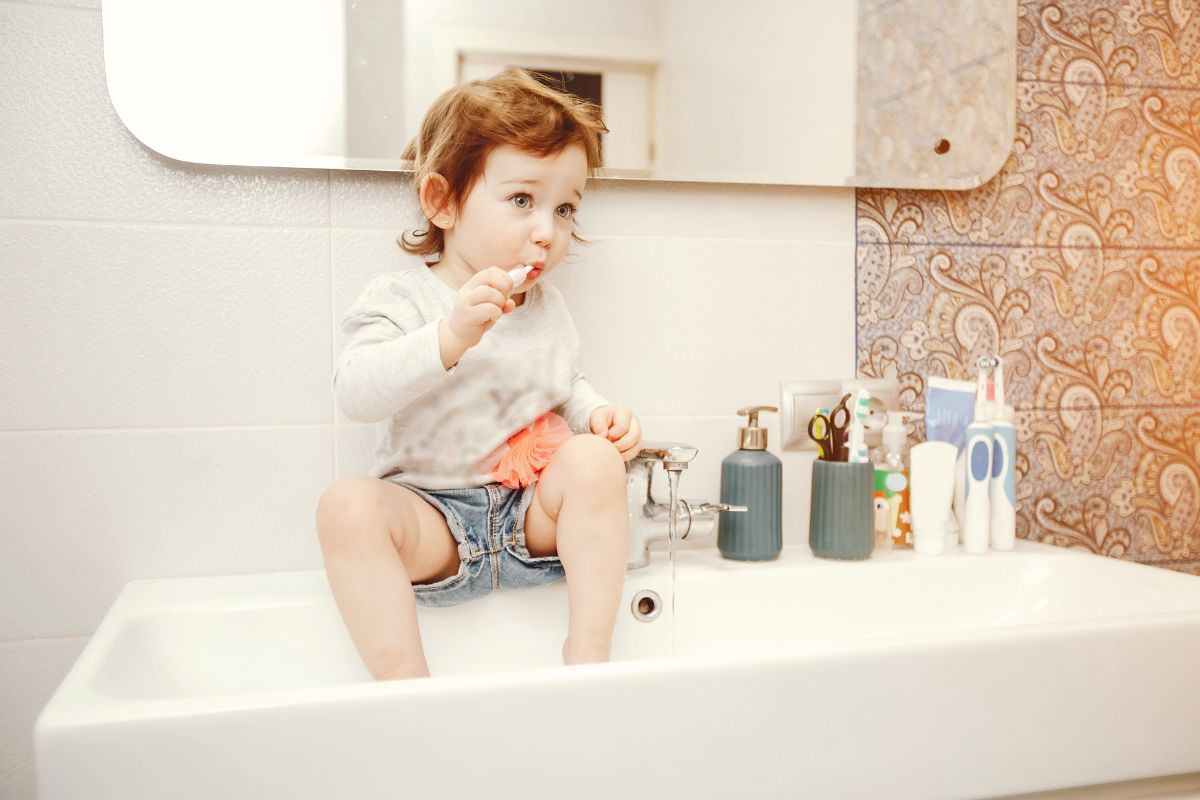
The bathroom is the room in most homes most completely designed for adults. The sink is at elbow height. The light switch is shoulder height. The soap dispenser requires adult grip strength. And somehow we expect a two-year-old to learn independence in there.
The Montessori approach to the bathroom is not about buying a curated list of products. It is about making specific, incremental changes to the environment that match what your child can actually do right now, then stepping back to let them do it.
At a Glance
- 12-18 months: Handwashing access: step stool, foam soap, low hook for their towel
- 18 months to 2 years: Teeth, face, hair: a small tray at their height with what they need
- 2-4 years: Toilet independence: low potty or insert, reachable paper, mirror at standing height
- The principle throughout: Modify the environment once, then step back. Don’t manage, observe.
- What you don’t need: A dedicated kids’ bathroom, expensive products, or a complete renovation
Why the Bathroom Is One of the Best Rooms in the House
Every practical life skill happens in the bathroom: handwashing, face washing, teeth brushing, hair combing, toileting, dressing and undressing. It is where children interact with their own body, learn routines, and build the kind of quiet confidence that comes from doing real things for themselves.
The challenge is that almost nothing in a standard bathroom is set up for a child under four. Montessori does not ask you to buy a new bathroom. It asks you to look at the existing one through your child’s eyes, at their height, and make the smallest changes that close the gap between what they want to do and what the environment makes possible.
These modifications also serve the physical care principles that begin from infancy. The child is an active participant in their own care, not a passive recipient. The bathroom is where that principle grows into genuine daily independence.
Stage 1: Handwashing (12-18 Months)
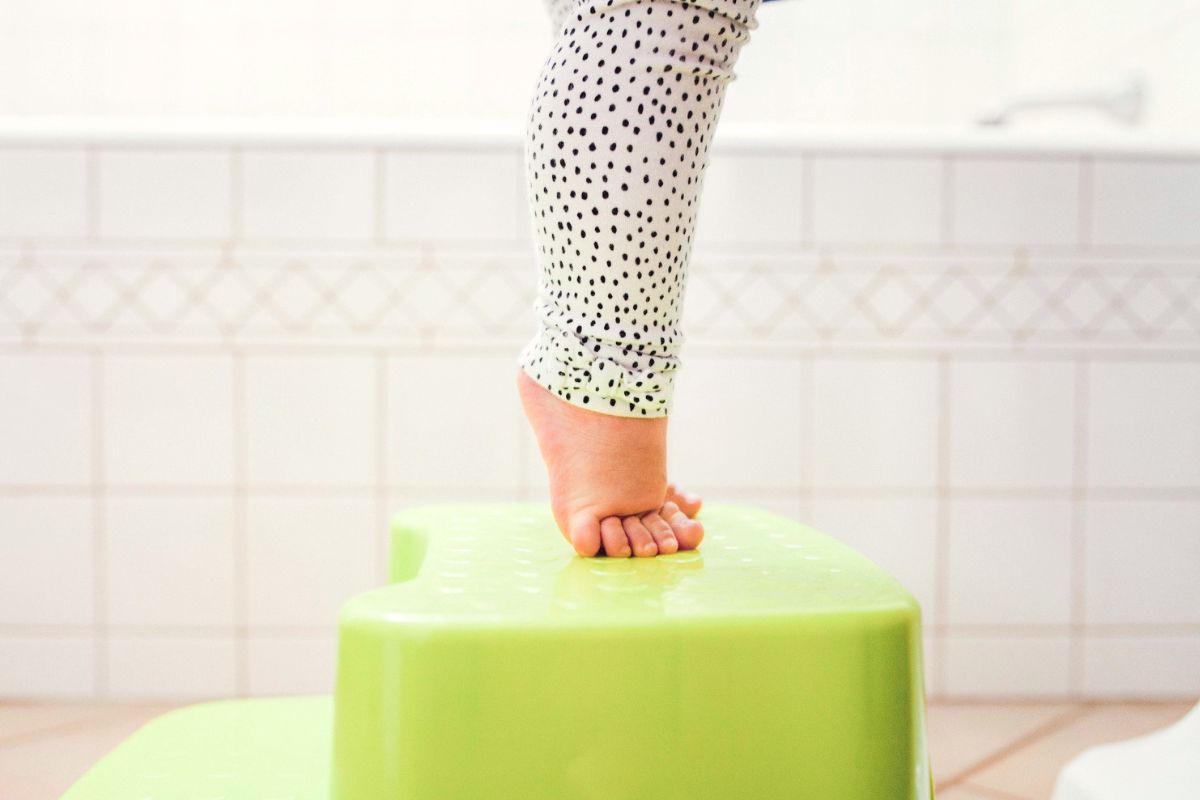
The first Montessori change in the bathroom is almost always the same: make handwashing accessible. A child who can stand and walk wants to wash their own hands. The sink is the obstacle.
The minimal setup
- Step stool: Sturdy, wide enough for real stability, tall enough to bring the child to sink level. Two-tier if your sink is standard height. The IKEA BEKVÄM ($25) is the one most Montessori families use.
- Foam soap dispenser: A foam pump requires significantly less grip strength than liquid soap and produces less waste per pump. A small pump refilled with diluted castile soap works well.
- Faucet extender: A small silicone attachment that brings the water 10-15 cm closer to the front of the sink. Optional, but useful if your child’s arms are short relative to your sink depth.
- Low hook: At the child’s shoulder height, for their dedicated hand towel. One hook, one small towel. They hang it back up themselves after drying.
That is it for this stage. Introduce handwashing slowly: show the sequence once, let them try, stay nearby without directing. Within a few weeks most children between 12 and 18 months will go to the step stool independently when they want to wash their hands.
Stage 2: Face, Teeth, and Hair (18 Months to 2 Years)
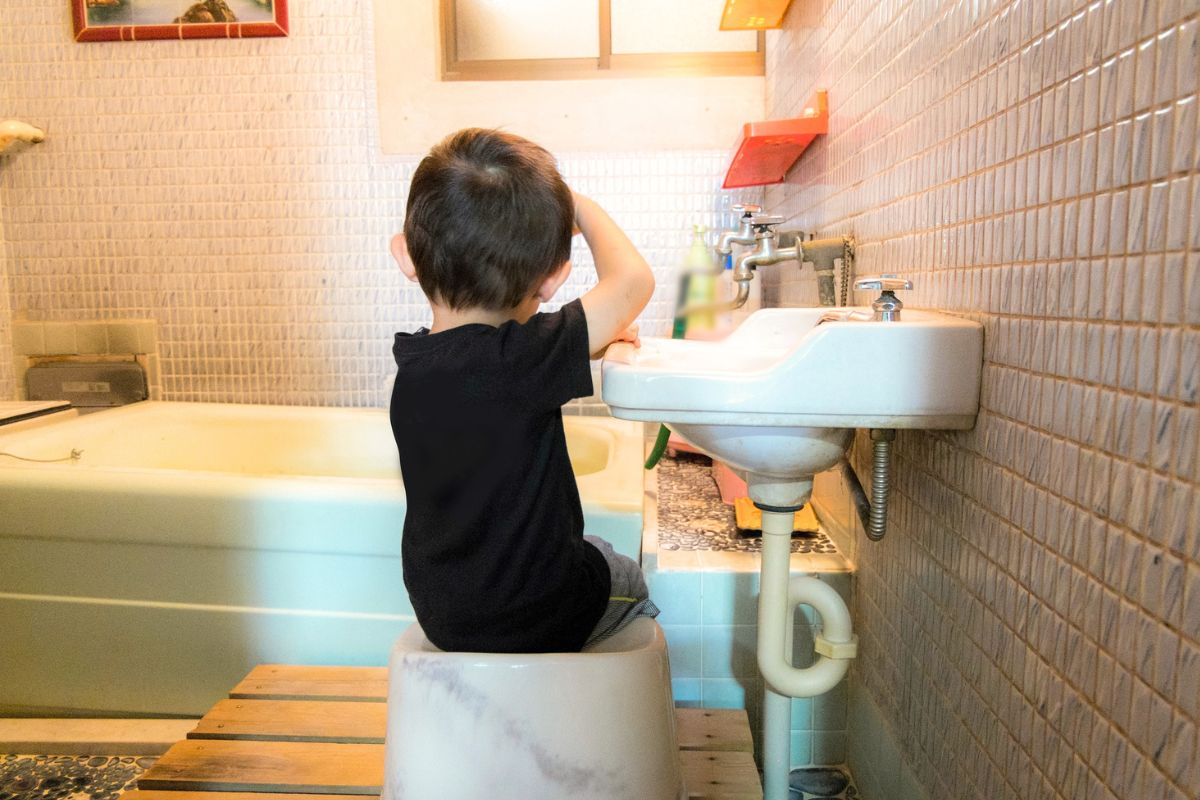
Once handwashing is established, a natural next step is the full morning hygiene routine. The Montessori approach sets this up as a small, dedicated tray or shelf section at the child’s height, containing only what they need for their routine and nothing else.
The care of self tray
A small wooden tray or section of counter reserved at the child’s level contains: their toothbrush and a small pump of child-safe toothpaste, a small rinsing cup, a face cloth folded neatly, and a comb or hairbrush. Not a drawer with twelve things inside it. An open tray where everything is visible and has a defined place.
A shatterproof mirror at their standing height beside the tray is what makes this stage click. Children this age are intensely interested in their own face and movements. Seeing themselves brush their teeth, rinse, and comb their hair in real time creates a feedback loop that makes the routine genuinely engaging rather than a battle.
Keep adult toiletries out of this section entirely. Visual clutter from adult items sends the implicit message that this space is not really theirs.
Stage 3: Toilet Independence (2-4 Years)
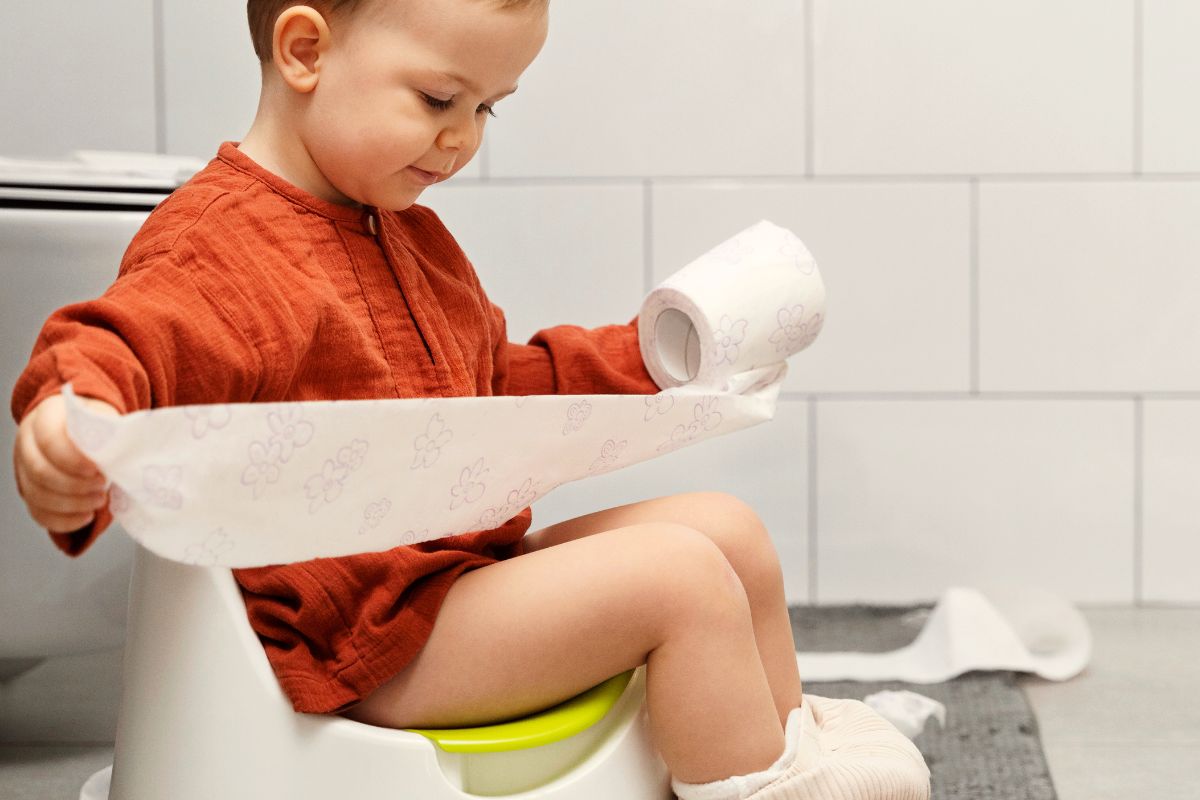
Montessori calls this toilet learning rather than potty training. The distinction matters as the child is learning a process, not being trained to perform on cue. The environment does most of the work.
Toilet setup for genuine independence
- Child-sized potty or toilet insert: A floor-level potty for 18-24 months; a toilet insert with a step stool at 2-3 years. The key is that the child can get on and off without help, and their feet touch something solid when seated.
- Toilet paper within reach: The roll should be accessible from the seated position without stretching. A simple holder mounted slightly lower than standard works.
- Clothing that comes off fast: Elastic waists only during toilet learning. Leggings, jeans with buttons, rompers and overalls all work against the child getting there in time on their own.
- A small bucket or basket: For accidents: a change of underwear and trousers within the bathroom means the child can manage the aftermath with your support rather than depending on you to fetch everything.
The Montessori principle on accidents: matter-of-fact, not punitive. “Your trousers are wet. Let’s change together.” The child participates in cleaning up. Not as punishment: it is part of understanding what happened and what comes next.
Bath Time: Keep It Simple
Bath time in a Montessori bathroom follows the same principle as the toy shelf: fewer items, rotated regularly, with purpose. Three to four bath toys at a time, stored in a simple mesh bag or small basket at child height near the tub. The child chooses, plays, and puts things away at the end of bath time.
A small pitcher for rinsing hair is one of the most useful bath items at this age: it gives the child something purposeful to do (pouring, rinsing) while the practical task of hair washing happens. A washcloth they control for their face is another small transfer of agency. These are not games. They are participation in their own care.
What to rotate out: Electronic bath toys that make noise and light up, foam letters stuck to the wall in large numbers, stacked rings with nowhere defined to live. A bathroom with five rotating toys that have a clear home is more engaging than one with twenty competing for the edge of the tub.
The Modifications That Matter Most
If you make only three changes to your bathroom today, make these:
Independence Grows in Small Rooms Too
You do not need a second bathroom, a renovation, or a specific brand of step stool. You need a firm surface at the right height, a mirror at the right level, and the habit of stepping back after you show your child how something is done.
The bathroom teaches handwashing, yes. But it also teaches sequence, perseverance, body awareness, and the quiet satisfaction of doing a real thing completely on your own. That is not a small lesson to learn before breakfast.