
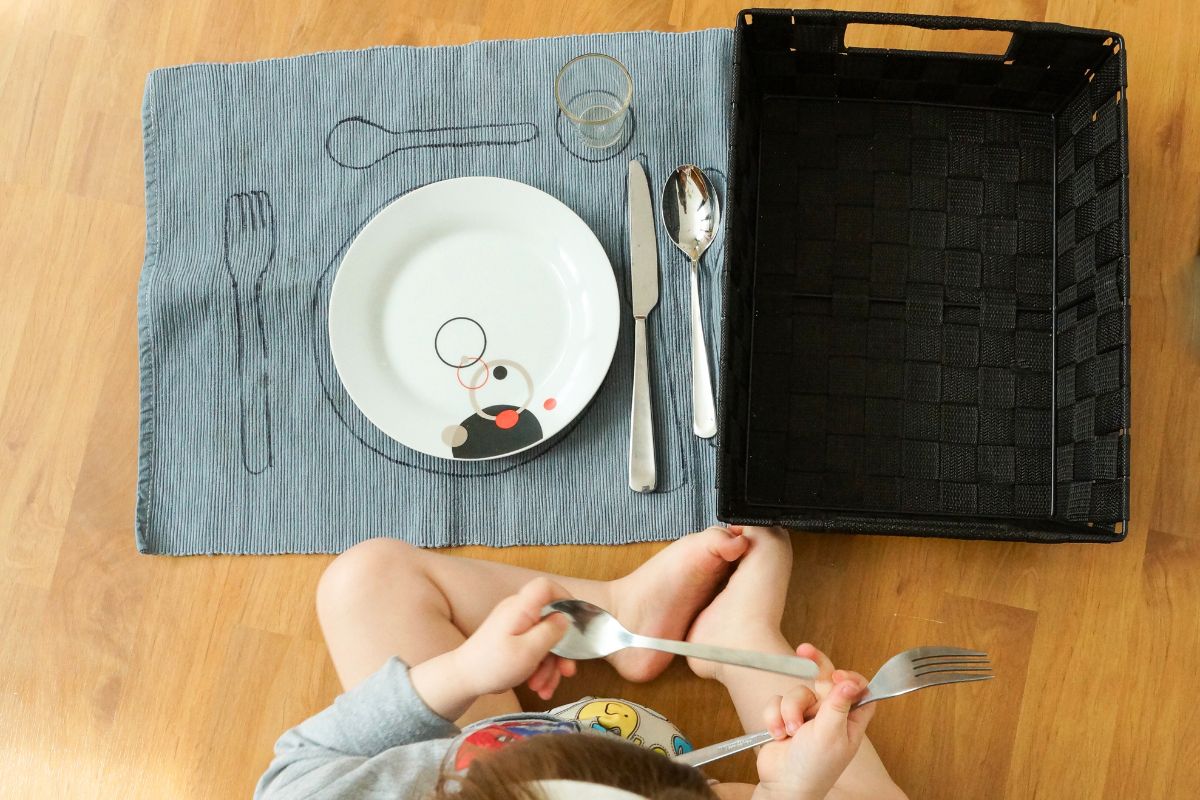
A child can know exactly where the fork belongs and still wait for an adult to place it there. That is the small problem a Montessori placemat is meant to solve. It turns an invisible sequence into something the child can see and check independently.
The useful part is not the cute design. It is how you introduce the mat, how little you say while the child works, and when you quietly remove it. This guide gives you the five-minute lesson, a free printable, and a clear way to tell whether the placemat is helping or becoming a crutch.
Quick Reference
- Useful age: Often around 2.5 to 6 years, but readiness matters more than age.
- The real purpose: Help the child remember the position and sequence of a simple place setting.
- What to place on it: Only the items your family actually uses for that meal.
- Lesson length: About five minutes, with one slow demonstration.
- Best sign it is working: Your child notices and corrects a misplaced item without asking you.
- When to remove it: Once the child sets the place correctly on several ordinary days.
What a Montessori Placemat Is Actually For
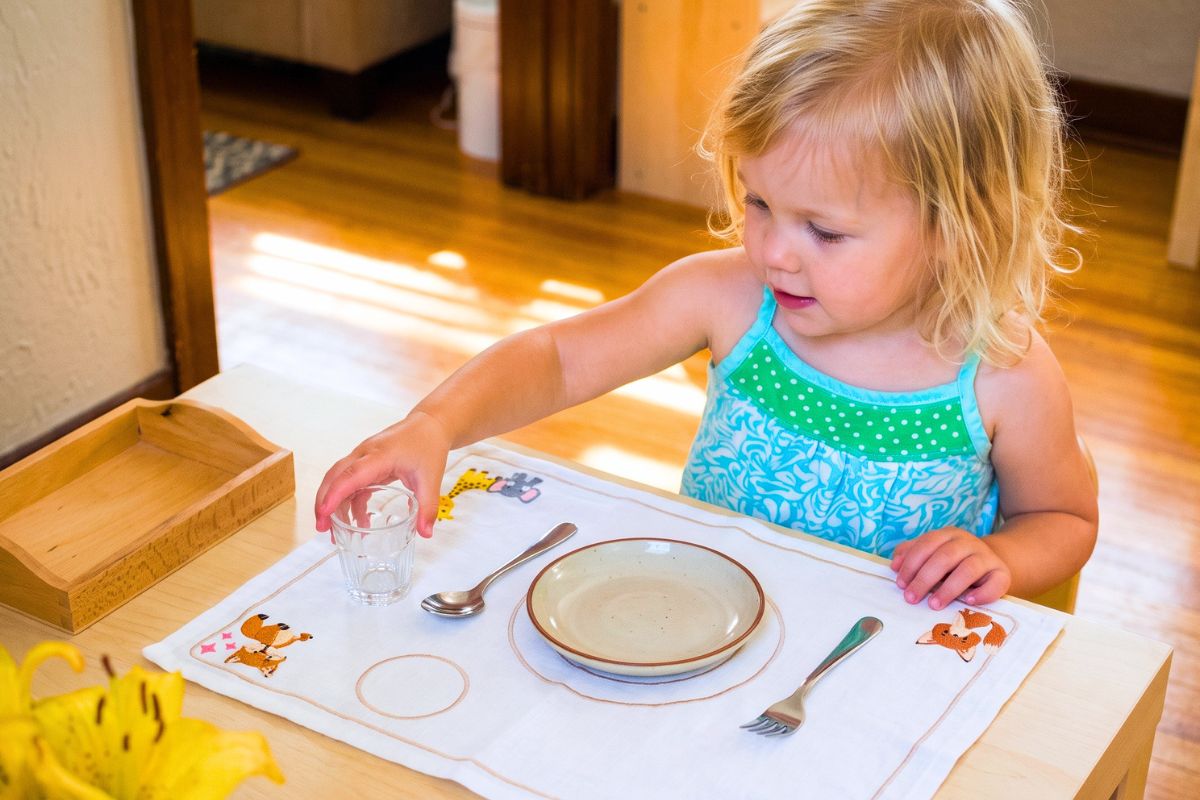
In Montessori education, setting the table belongs to Practical Life. The point is not to produce a miniature etiquette expert. The child is taking part in a real household task with a visible beginning, a sequence of movements, and a useful result.
The outlines on the placemat act as a simple control of error. The child can see that the cup does not match its space or that the fork is on the wrong side. That visual feedback reduces the need for an adult to correct every movement.
The useful distinction: The placemat teaches where the objects go. It does not automatically teach sitting through a meal, trying new food, using a napkin, or speaking politely. Those are separate skills and should not be piled into the same lesson.
Is Your Child Ready to Use One?
You do not need to wait for perfect coordination. The child only needs enough control and interest to carry one item at a time and place it deliberately.
Ready sign 1: Your child regularly tries to carry plates, cups, napkins, or spoons during meal preparation.
Ready sign 2: They can follow a short sequence such as “take the cup and put it on the table.”
Ready sign 3: They can place an object down rather than dropping or throwing everything immediately.
Not ready yet? Let your child carry the napkins or place one spoon at each seat. Participation can begin before a full table-setting lesson.
Choose the Simplest Version That Matches Your Meals
A useful placemat reflects the table your child actually sees. It does not need every possible utensil. A plate, cup, fork and spoon are enough for many families. If you usually eat from a bowl, use a bowl outline. If chopsticks are part of family meals, include them. Practical Life should reflect the child’s real community, not a decorative idea of formal dining.
Download the Free Montessori Placemat
Print at the largest size your table and printer allow. A3 or 11 × 17 inches gives most child-sized dishes enough room. A4 or US Letter can work with a small plate and compact cutlery.
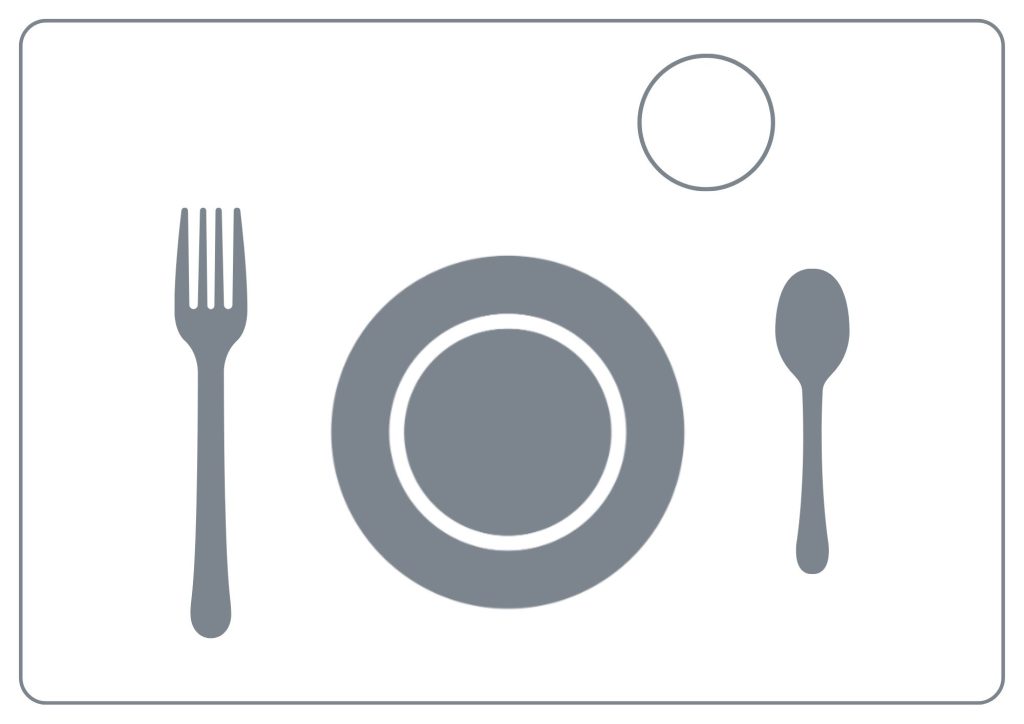
Plain Placemat
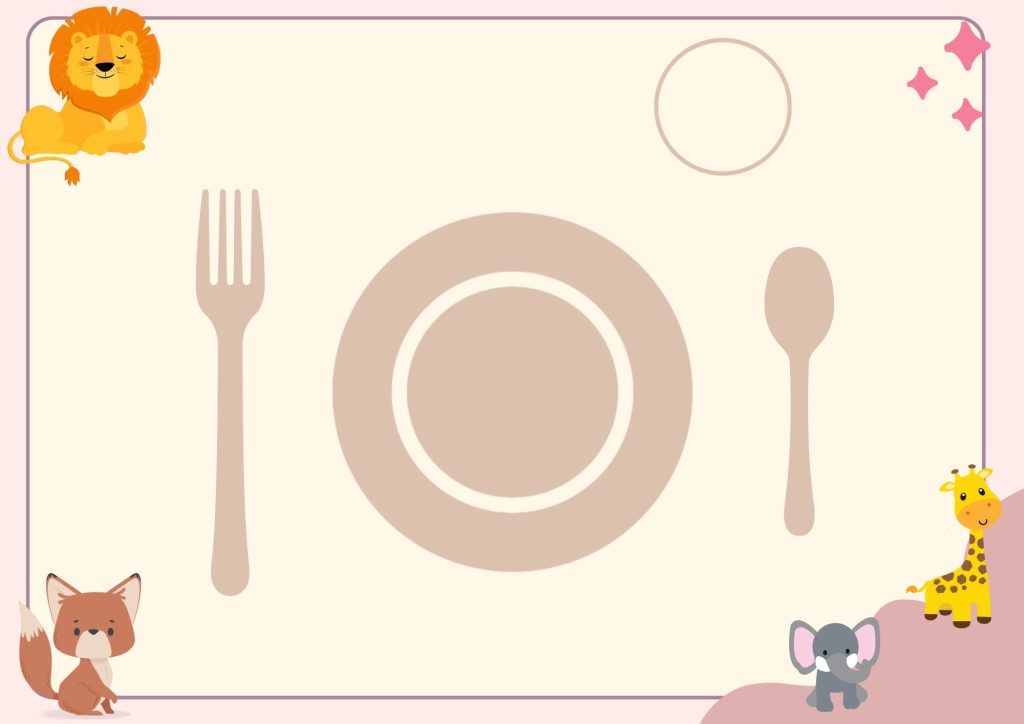
Animal Placemat
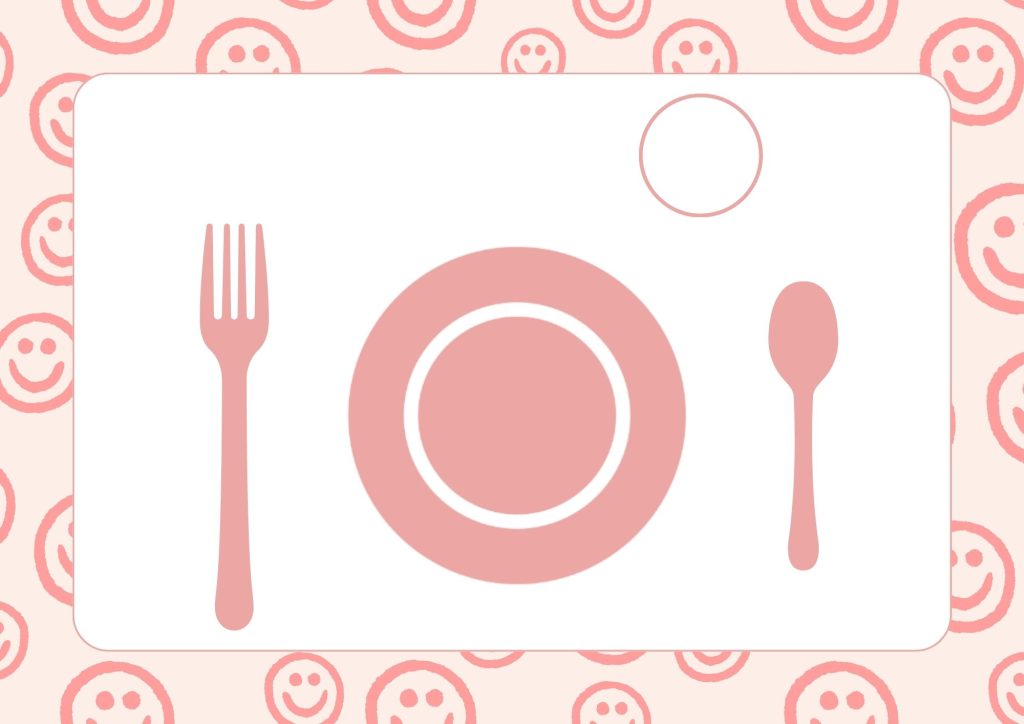
Happy Placemat
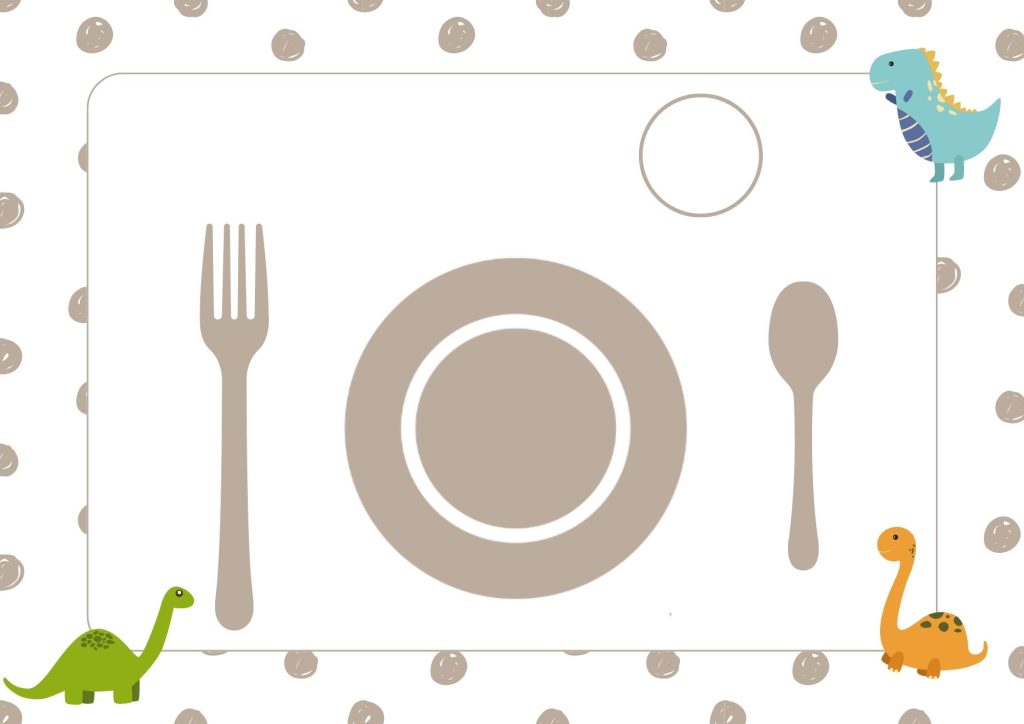
Dinosaur Placemat
Before laminating: Place your child’s real plate and cutlery on the printed sheet. If the objects overlap or the cup sits near the edge, enlarge the print rather than expecting the child to work around a cramped layout.
The Five-Minute Presentation
Choose a calm moment before a snack, not the busiest family dinner of the week. Put the mat on an empty table and keep the required items on a low tray or shelf nearby.
1
Invite: “I am going to show you how to set your place.”
2
Carry one item: Bring the plate with two hands and place it slowly over its outline.
3
Complete the setting: Repeat with the cup, fork, spoon and napkin. Pause briefly after each item.
4
Reset: Return the objects to the tray in reverse order.
5
Offer a turn: “Now you can try.” Then stop talking unless help is genuinely needed.
What to say after a mistake: Nothing at first. Wait. The outline may give enough information. If the child asks, point to the relevant shape rather than moving the object for them.
Use Real Objects, but Reduce the Risk
Real objects make the task meaningful, but “real” does not mean fragile at any cost. Start with a small sturdy plate, a short cup with a wide base, and blunt child-sized cutlery. Pour only a small amount of water until carrying becomes reliable.
When to Remove the Placemat
The goal is not perfect use of a special mat. The goal is independent participation at an ordinary table.
Once your child has placed the objects correctly on three to five normal occasions, try a plain placemat. Do not announce a test. Simply set out the same tray and observe. If the sequence falls apart, bring the visual guide back for a few more days.
The success signal: Your child can set a simple place on a plain surface, notice when something is missing, and complete the task with little or no adult prompting.
Questions Parents Ask Most Often
Is a Montessori placemat suitable for a two-year-old?+
It can be, especially for a child already interested in carrying dishes. Start with two objects rather than a full place setting. A child who mainly throws, drops or mouths the items may benefit from simpler carrying and matching activities first.
Should the fork always go on the left?+
Use the arrangement that makes sense in your family and culture. The Montessori value comes from order, purposeful movement and participation, not from enforcing one universal dining convention.
Do I need to laminate the printable?+
No. A clear reusable document sleeve, a wipe-clean table cover, or a print mounted beneath transparent contact paper can work. Lamination is useful for repeated meals, but test the size with real dishes before sealing it.
Will this improve picky eating?+
Not directly. Taking part in meal preparation can make the routine more predictable and give a child a meaningful role, but a placemat is not a treatment for selective eating or feeding difficulties.
The Short Version
Use the placemat as a temporary visual map. Present one calm, slow sequence with the dishes your family actually uses, then allow the outlines to do most of the correcting.
Once your child can set the place reliably, replace the printed guide with a plain mat. The printable has done its job when it is no longer needed.
Sources & References
- Association Montessori Internationale. The Guidelines for the Prepared Adult in Supporting Exercises of Practical Life. Retrieved from Montessori AMI.
- American Montessori Society. (2023). Practical Life Through the Ages, Part One: Early Childhood. Retrieved from https://amshq.org.
- American Montessori Society. Montessori Early Childhood Programs. Retrieved from https://amshq.org.
- Montessori, M. (1949). The Absorbent Mind. Theosophical Publishing House.
- Lillard, A. S. (2017). Montessori: The Science Behind the Genius (3rd ed.). Oxford University Press. DOI: 10.1093/acprof:oso/9780190613976.001.0001