
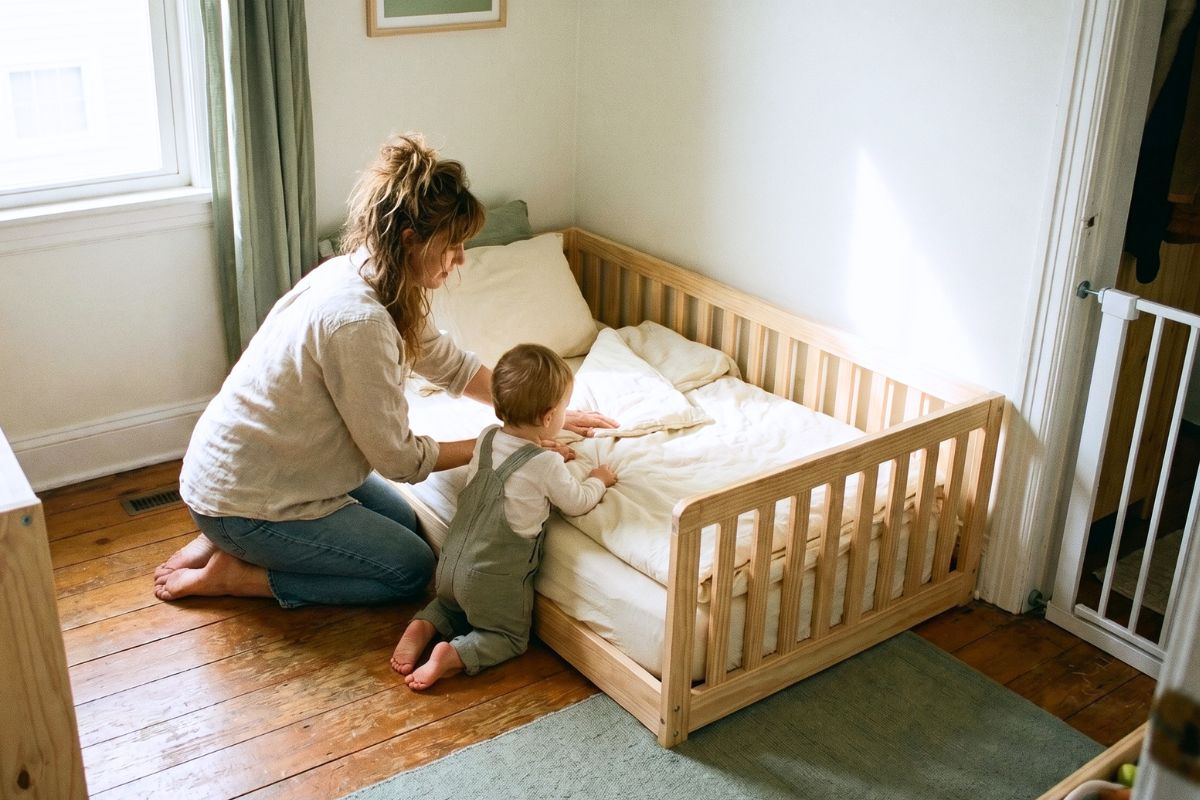
The internet often presents the Montessori floor bed as one perfect wooden frame in one perfect nursery. Real homes are less tidy. Rooms are small, floors get cold, mattresses need airflow, siblings share space, and sleep safety matters more than a photograph.
A floor bed is not automatically Montessori and it is not automatically right for every age. The useful question is whether the whole sleep environment supports safe rest, free movement, and a routine the family can actually maintain.
What to Know Before You Begin
- Infant sleep guidance comes before Montessori preference
- The entire room must be treated as the sleep space
- Airflow under and around the mattress matters
- Keep cords, gaps, furniture, and climbable hazards away
- Choose the simplest setup that works for the room

Seven Practical Setups
These options begin with the room and the child rather than a particular frame.
1. Simple Mattress on a Ventilated Base
A firm mattress on low slats or a breathable base creates the least visual bulk. It is easy for a mobile toddler to enter and leave.
Lift and inspect the mattress regularly, especially in humid rooms.
2. Low House Frame Without Decorative Clutter
A simple house-shaped frame can define the sleep area without raising it far from the floor.
Avoid hanging lights, fabric canopies, cords, or heavy decorations from the frame.
3. Floor Bed With One Low Rail
A low rail on the open side can create a boundary while preserving a wide entry point.
Check every gap around the mattress and frame so the child cannot become trapped.
4. Corner Floor Bed
Placing the bed near two walls can save space, but the mattress should not create trapping gaps and the room must allow ventilation.
Do not wedge soft bumpers or pillows into gaps. Solve the fit with the correct frame and mattress size.
5. Floor Bed With Under-Mattress Slats
A very low slatted frame lifts the mattress slightly while keeping access easy. It improves airflow and makes cleaning underneath more realistic.
6. Shared Room With Separate Low Sleep Zones
Two low beds can sit on opposite walls with a clear path and individual baskets for bedtime books.
Keep one child’s bedding, cords, and small objects out of the younger child’s reach.
7. Temporary Travel Floor Setup
A familiar firm travel mattress in a fully checked room can preserve a low independent sleep routine away from home.
Hotel rooms and guest rooms often contain cords, unstable furniture, gaps, and reachable objects that require a complete inspection.
Quick Comparison
Safety note: For babies, follow current safe sleep guidance from your pediatric authority. The American Academy of Pediatrics recommends a firm, flat sleep surface in a safety-approved crib, bassinet, portable crib, or play yard. Do not use this article to replace infant sleep advice.
The Room Matters More Than the Frame
A floor bed is only one part of the environment. Secure furniture, covered outlets, inaccessible cords, safe windows, clear pathways, appropriate sleep clothing, and a stable temperature matter more than whether the frame looks Montessori.
Choose the setup that makes the room safer and the routine calmer. A plain low slatted base can be a better decision than an elaborate frame that adds gaps, fabric, and climbing opportunities.