
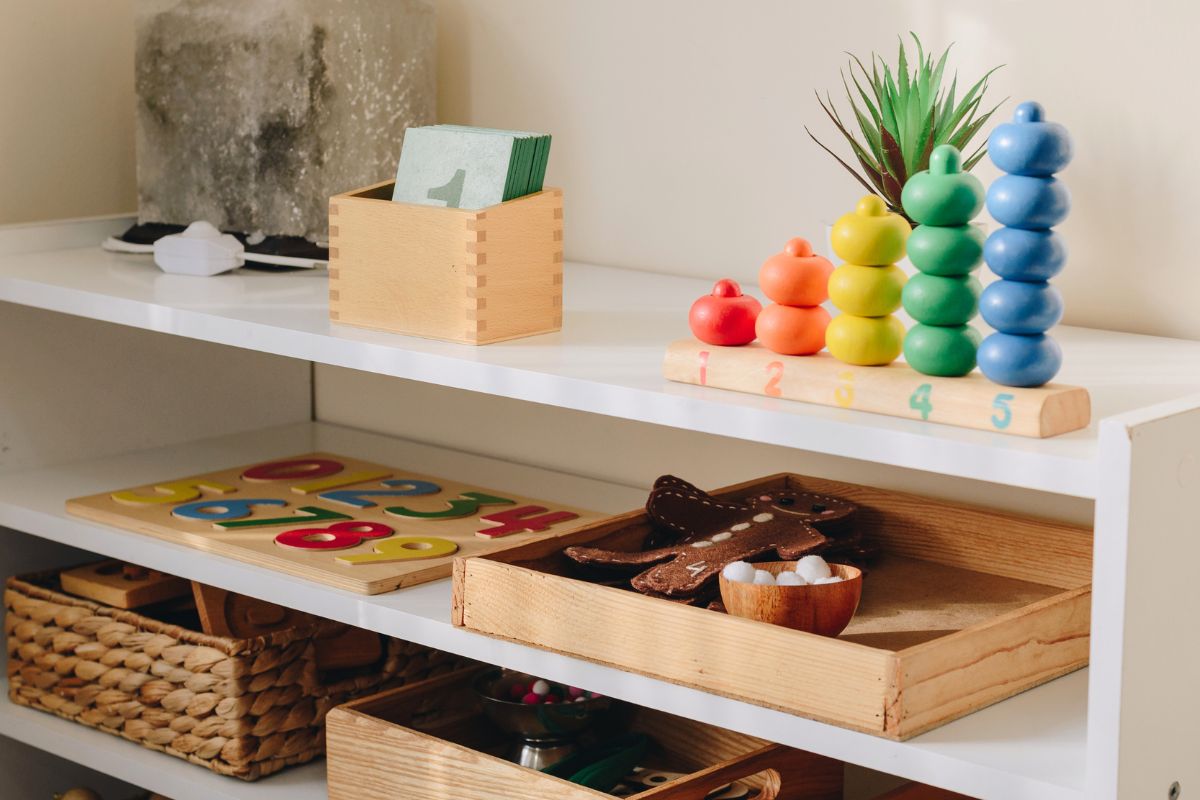
A two-year-old shelf does not need eight wooden toys that all practice the same pincer grip. It needs variety across movement, language, problem solving, creativity, and practical life.
The shelf below is a complete starting point. Eight choices are enough to feel generous while remaining clear enough for a child to choose and return independently.
What to Know Before You Begin
- Offer one activity for each major type of work
- Use trays for loose pieces
- Choose realistic images and familiar language
- Rotate when work becomes too easy or consistently ignored
- Keep favorite open-ended materials longer
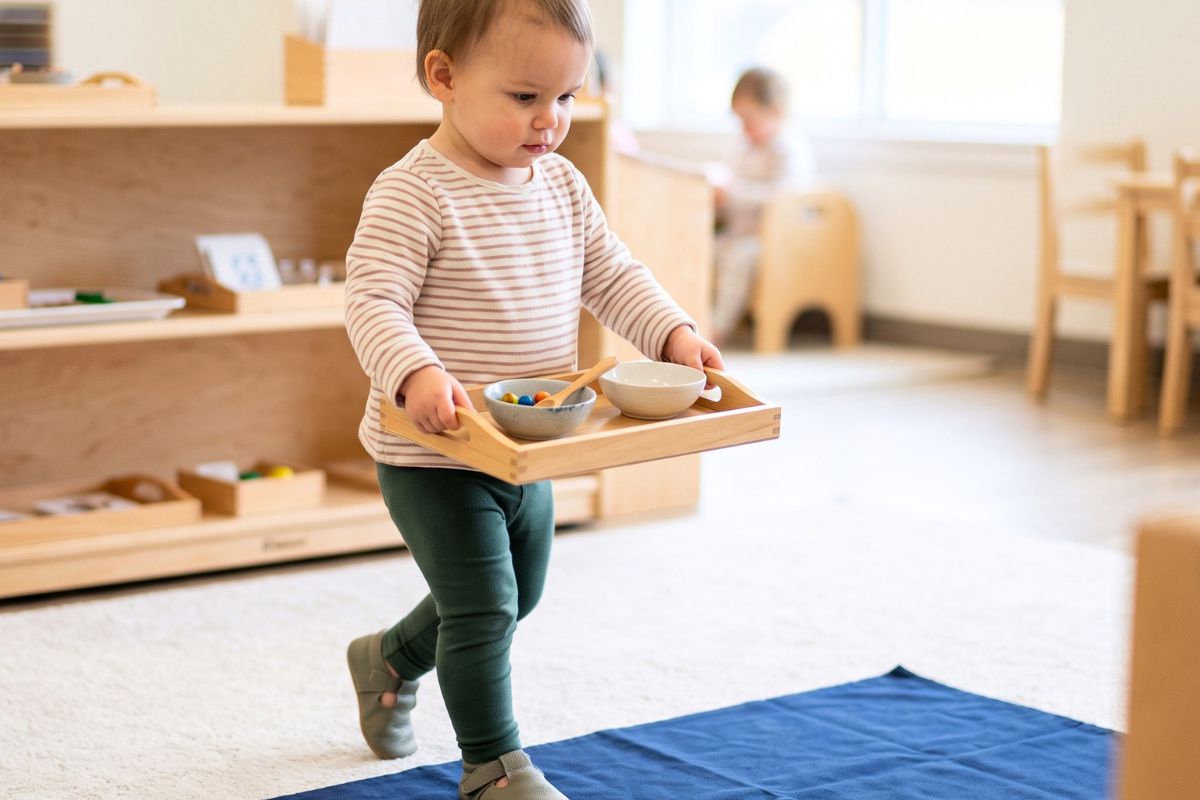
A Balanced Shelf With Eight Choices
This mix supports the whole child rather than turning every shelf space into another puzzle.
1. One Four-Piece Peg Puzzle
Choose realistic animals, vehicles, or household objects with large knobs.
2. One Posting Activity
Use a box with a wide slot and large wooden discs or jar lids.
3. One Language Basket
Place three familiar objects from one category in a basket. Name them, match them to photos, or ask for one at a time.
4. One Art Tray
Offer thick crayons and a small stack of paper, or a water painting board with one brush.
5. One Practical Life Tray
Choose a short real task such as spooning large beans, folding cloths, washing one toy, or arranging flowers.
6. One Building Material
Offer a small basket of blocks, magnetic tiles sized for the age label, or nesting boxes.
7. One Music Choice
A hand drum, shaker pair, or simple bells allow the child to create and stop sound.
8. One Movement Invitation
A beanbag to carry, a pull toy, a small basket to transport, or a nearby balance path brings the whole body into the room.
Quick Comparison
Safety note: Keep small parts off the shelf, check every activity after use, and choose art and sensory materials that match the child’s age and current mouthing habits.
Balance Matters More Than Matching
The shelf does not need eight coordinated trays. It needs eight different invitations. A puzzle, a cloth, a basket of blocks, and a family photo album can belong together because they meet different needs.
Keep what is repeated, remove what is dumped, and change only one or two choices at a time. That makes rotation easier for both the child and the adult.